




Red Striped Kilim Rug
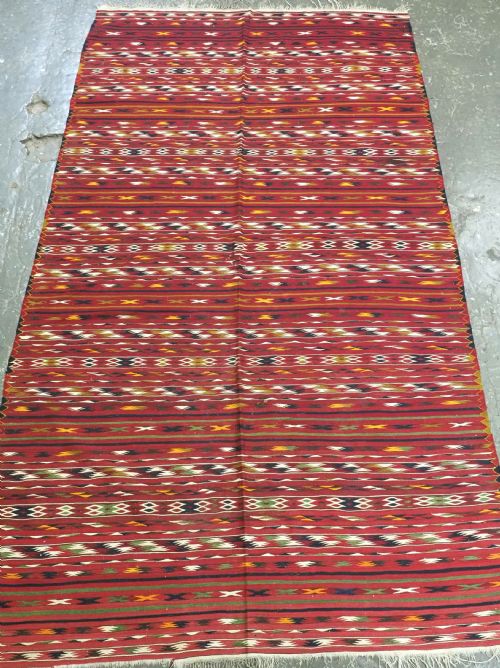
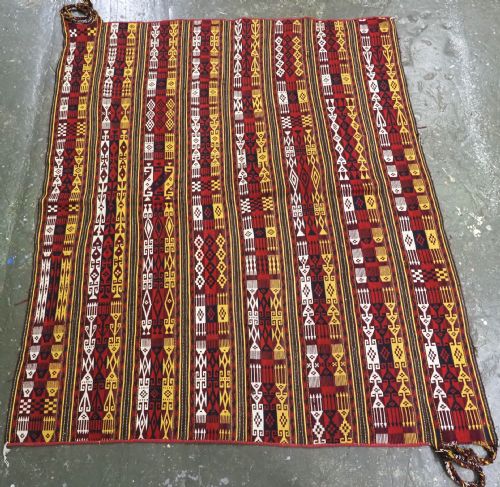
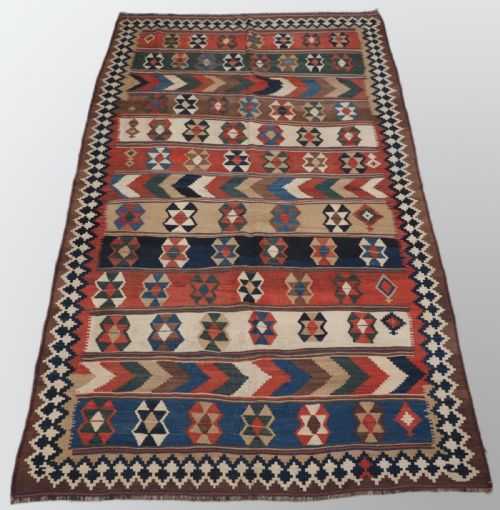
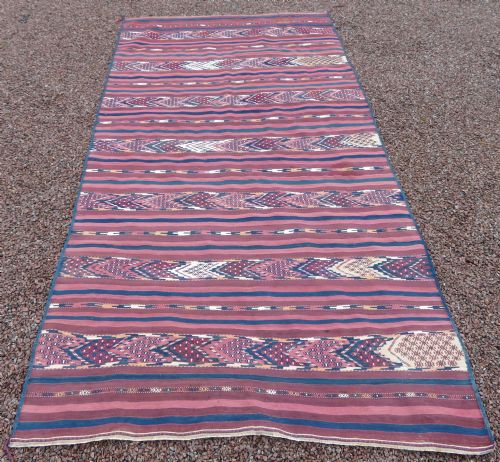
These red striped kilim rug examples are flat-woven tribal textiles that bring bold geometric colour and historic nomadic character directly to a floor.
Red Striped Kilim Rug
When you search for a red striped kilim rug, you encounter flat-woven textiles produced by tribal and nomadic groups across Persia, Central Asia, and the Caucasus. These pieces include utilitarian items such as bread sofreh, grain bags, tent bands, and larger floor coverings created for daily nomadic life. Most examples span the late nineteenth century and the early decades of the twentieth century, reflecting traditional weaving patterns passed down through generations.
How they were made
Weavers constructed these flat-weaves primarily using hand-spun wool and cotton foundation threads, occasionally incorporating goat hair, leather, or metal for structural strength and reinforcement. The lack of a pile distinguishes these kilims from traditional knotted carpets, relying instead on interlocking or slit-tapestry weaving techniques to form crisp geometric boundaries.
Makers achieved their characteristic hues by employing natural dyes, which produced deep reds and varied secondary tones that age with distinct patination. Certain pieces utilise specialised flat-weave variations such as the cicim technique, adding supplementary decorative thread wrapping directly onto the foundation structure.
Materials recorded across these flat-weaves include hand-spun wool, cotton, natural dyes, goat hair, leather, and metal elements.
What varies in quality
The integrity of the natural dyes and the precision of the banded or chevron layouts govern the visual impact of each textile. Variations in tribal execution mean that regional idiosyncrasies, from Caucasian Shirvan pieces to Persian Qashqai or Uzbek Gajeri items, display different levels of artistic spontaneity within their structural geometry.
The Red Striped Kilim Rug Glossary
- Kilim
- A flat-woven textile made without a pile by tightly interweaving warp and weft threads. This technique produces a lightweight, reversible fabric historically used for floor coverings, wall hangings, and storage bags.
- Sofreh
- A utilitarian woven spread utilised for food preparation, serving bread, or kneading dough within nomadic households. These textiles frequently exhibit striking linear and banded geometric compositions.
- Mafresh
- A large rectangular storage bag or travel container woven in flat-weave or pile techniques by Turkmen and other nomadic tribes. They were often made in two matching parts and joined together.
- Cicim
- A decorative flat-weave technique where supplementary colourful threads are embroidered or wrapped through the warp threads during the weaving process. This creates a raised pattern over the base fabric.
- Warp
- The stationary vertical threads stretched onto a loom that form the foundational skeleton of the textile. Weft threads are passed horizontally across these warp strands to lock the design in place.
Red Striped Kilim Rug: Frequently Asked Questions
What is a red striped kilim rug?
A red striped kilim rug is a flat-woven textile produced by nomadic and tribal weavers in regions such as Persia, Central Asia, and the Caucasus. These pieces feature linear bands and geometric patterns created without a pile.
They were originally made for domestic use inside tents and homes, serving as floor coverings, blankets, or containers before being preserved as decorative antiques.
How do I care for an antique kilim?
Care for antique flat-weaves by vacuuming them gently without a rotating brush roll to prevent pulling the wool threads. Using a breathable underlay helps keep the textile stable and prevents slipping on hard floors.
Keep them out of direct, prolonged sunlight to protect the natural dyes from fading, and consult a specialist textile conservator for professional cleaning when necessary.
How can I tell different tribal designs apart?
Tribal attribution relies on specific structural traits, dye palettes, and geometric motifs characteristic of particular regions and groups like the Qashqai, Uzbek, or Yomut Turkmen. For instance, Gajeri kilims from Uzbekistan often display bold graphic striping, while Caucasian pieces from Shirvan utilise distinct regional colour combinations.
Examining the tightness of the weave, the handling of hand-spun wool, and secondary materials like goat hair provides further clues to a piece's geographical origin.