
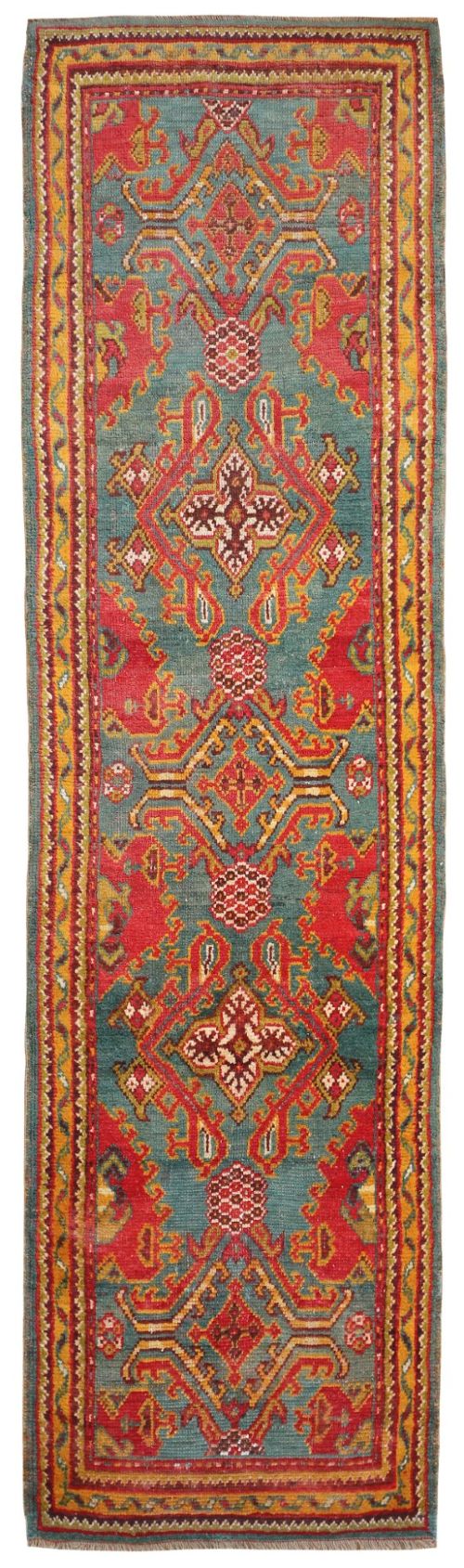



Vintage Ushak Rug
A vintage ushak rug brings warmth and historic pattern to a room through its characteristic muted palette and large-scale floral motifs.
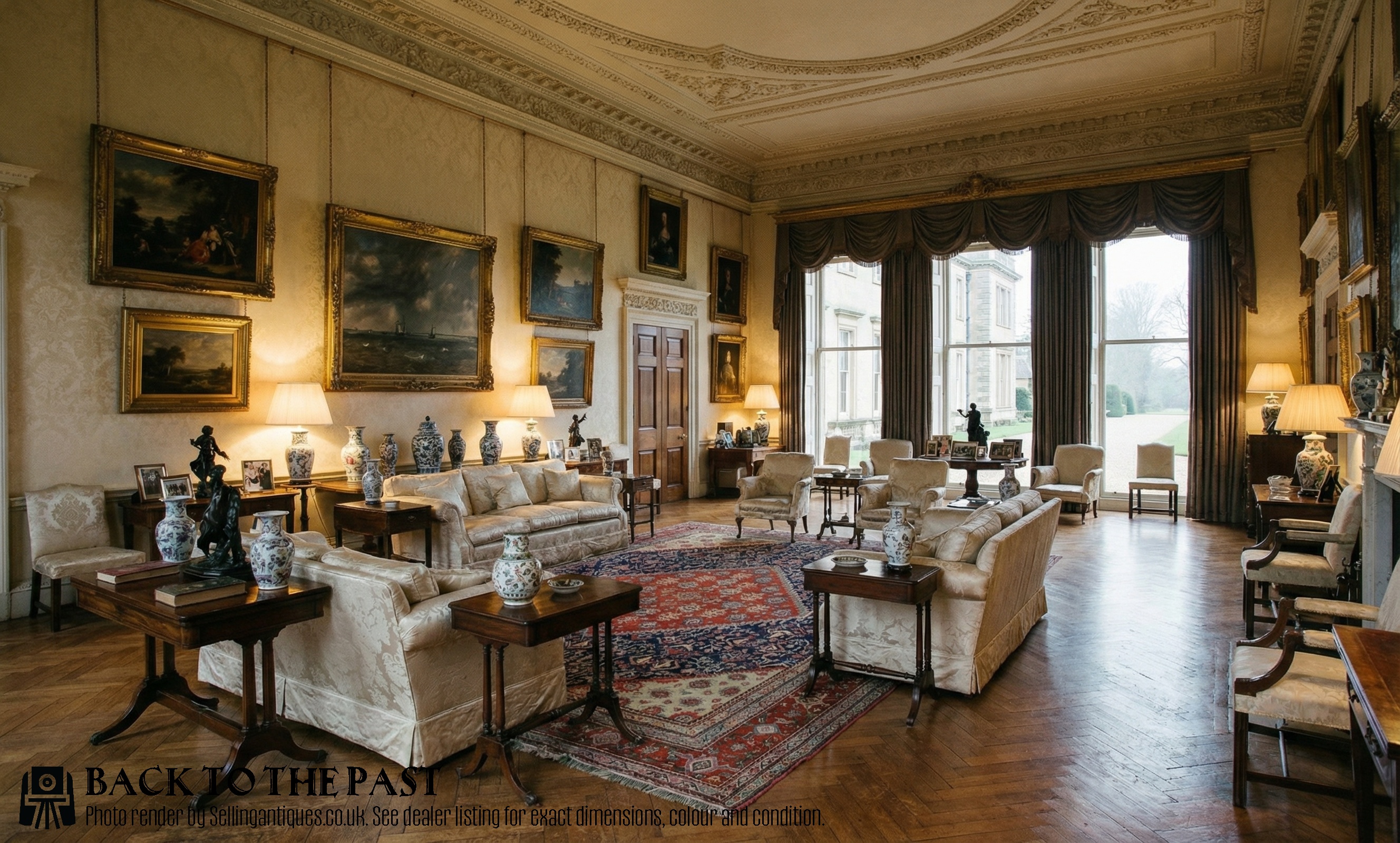
Vintage Ushak Rug
A vintage ushak rug represents a tradition of Anatolian weaving, appearing across formats from small area rugs to expansive carpets and long runners. These floor coverings bridge centuries of Ottoman design, often featuring central medallions or all-over botanical layouts.
Most examples encountered here originate from the nineteenth and early twentieth centuries, including pieces dating through the Victorian era up to the nineteen-twenties. Buyers frequently select large decorative carpets or narrower runners to anchor domestic spaces.
Beyond traditional floor textiles, the category occasionally encompasses seating such as armchairs upholstered in authentic carpet fragments. Such pieces combine historical weaving traditions with functional nineteenth-century furniture forms.
How they were made
These textiles rely principally on natural wool foundations and pile, occasionally incorporating finer angora wool for added softness and a distinct surface sheen. Cotton is also utilised within the structural warps and wefts to provide stability and precise geometric framing.
Weavers employed traditional hand-knotting techniques characteristic of the region, building up dense piles that withstand generations of use. The integration of wood and brass appears specifically when these woven surfaces are applied to upholstered armchairs.
Some weavers quietly incorporated tiny intentional flaws into their symmetrical medallions, believing only divine work could achieve perfection.
What varies in quality
The degree of wear and the preservation of the original pile fundamentally dictate the visual impact of each textile. Examples with even, low pile retain the soft colour transitions that define the aesthetic.
Design clarity and the harmony of the faded palette distinguish finer examples from standard production. The subtlety of the vegetable dyes and the balance of the central medallion structure show the skill of the original workshop.
The Vintage Ushak Rug Glossary
- Ushak
- A traditional style of rug originating from the town of Ushak in western Anatolia, known for large floral designs and soft colour palettes. These carpets were produced for both domestic use and export.
- Kilim
- A flat-woven carpet or rug produced without a pile, created by tightly interweaving warp and weft strands. This technique results in a lightweight textile with crisp graphic patterns.
- Runner
- A long, narrow carpet format designed specifically for hallways, corridors, or alongside furniture. These pieces maintain the same decorative motifs as larger carpets scaled down for linear spaces.
- Medallion
- A large, symmetrical central ornament placed in the field of a carpet. It serves as the primary focal point around which the surrounding floral or geometric motifs are arranged.
- Angora
- A fine, soft fibre derived from angora goats, utilised in specific luxury rugs to impart a lustrous finish. This material enhances the tactile quality and light-reflecting properties of the pile.
Vintage Ushak Rug: Frequently Asked Questions
Where were vintage ushak rugs made?
These rugs were woven in the historic carpet-producing town of Ushak in western Turkey, formerly part of the Ottoman Empire. The tradition spans generations of Anatolian craftsmanship.
Production methods and design vocabularies developed locally, drawing on Ottoman artistic heritage before these textiles found widespread popularity in European and British homes.
How do I clean a vintage ushak rug?
Gentle surface cleaning and regular light vacuuming without a rotating brush help maintain the wool pile. Professional specialist cleaning is recommended for deep maintenance.
Avoid harsh chemical detergents or excessive moisture, as traditional natural dyes can react poorly to aggressive washing techniques.
What is an angora ushak?
An angora ushak incorporates fine angora wool into the pile construction rather than standard sheep wool alone. This material gives the rug a distinctive silky sheen.
These pieces often display a particularly soft handle and delicate light-reflecting qualities across their muted floral designs.
Are all ushak rugs large carpets?
While many survive as large decorative carpets or expansive floor coverings, the category includes diverse formats. You will find smaller area rugs, delicate kilims, and narrow runners.
Certain pieces even appear integrated into nineteenth-century furniture, such as club armchairs upholstered directly in carpet fragments.