



Traditional Ushak Floor Carpet
A traditional ushak floor carpet brings warmth and Anatolian heritage to a room through time-softened wool and large-scale geometric designs.
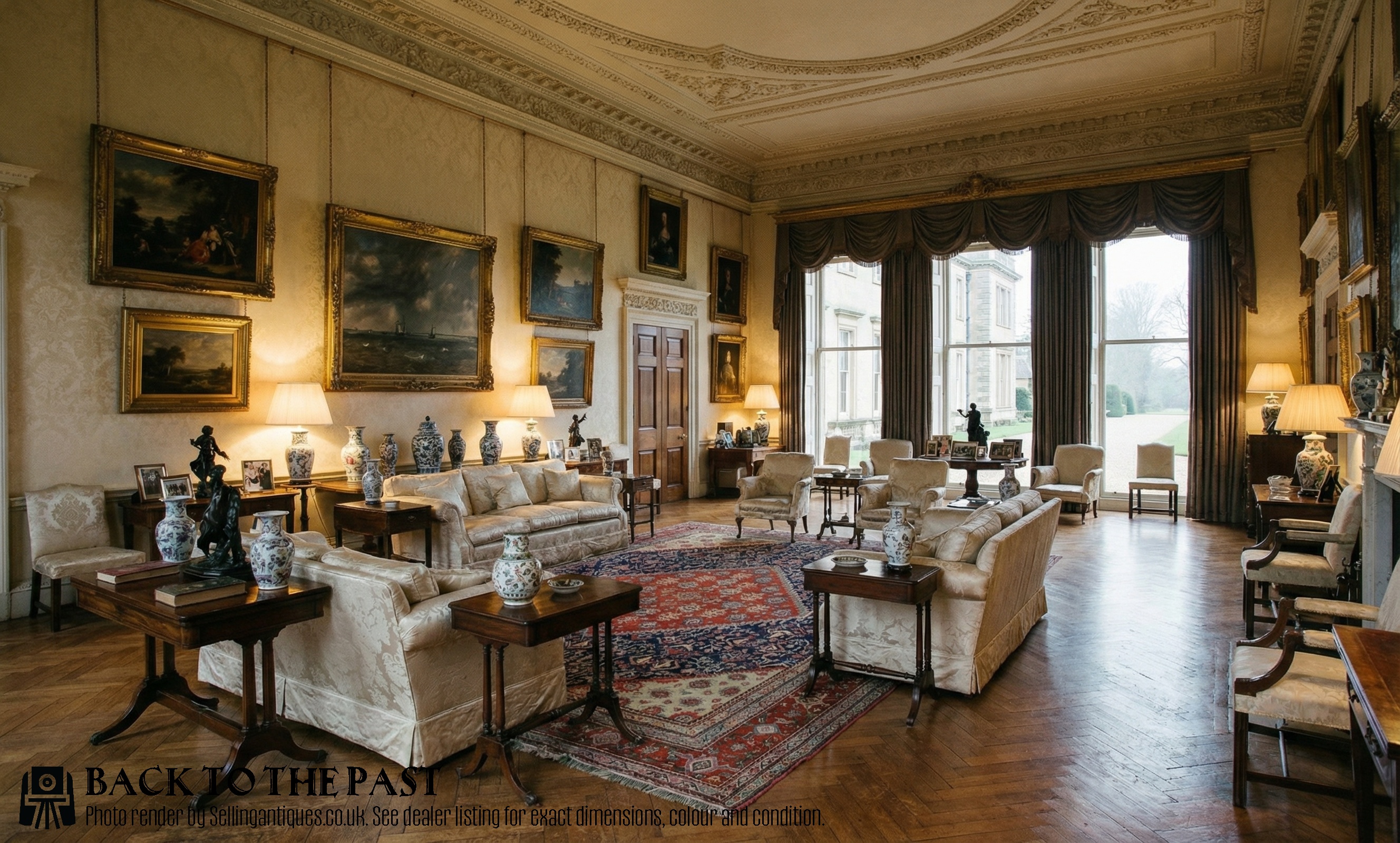
Traditional Ushak Floor Carpet
When you search for a traditional ushak floor carpet, you are looking at large rugs and runners originating from western Anatolia, often bearing the distinct influence of Ottoman design. These floor coverings date from the nineteenth and early twentieth centuries, spanning decades from the eighteen-seventies into the nineteen-twenties.
The most common version you will meet on this page is the large room-size carpet or wide format piece, alongside occasional runners and smaller kilims. These examples display the muted palettes and characteristic medallions associated with Turkish Oushak and Anatolian weaving traditions.
How they were made
These floor carpets rely on natural wool and cotton foundations, with certain examples utilising softer angora wool for added texture and pile depth. Weavers knotted these materials by hand on upright looms using traditional Turkish techniques that produced resilient, medium-pile floor coverings.
Dyes were derived from natural sources, yielding the characteristic faded ivory, muted reds, and soft secondary tones that define the regional palette. The resulting textiles combined sturdy cotton warp and weft threads with durable wool surface piles designed for heavy domestic use.
Listings here feature pieces dated from 1870 to 1920, incorporating wool, cotton, and angora wool across runner and carpet formats.
What varies in quality
Quality in these floor coverings rests upon the refinement of the drawing and the balance of the composition within the field. Stronger examples exhibit deliberate proportion in their central medallions and borders, whereas simpler pieces show more repetitive or less articulate motifs.
The choice of material also dictates the tactile character of the piece, with finer angora wool spinning offering a distinct handle compared to standard wool piles. Preservation of the original scale and border integrity separates standard room-size rugs from exceptional oversized carpets.
Maples
The Traditional Ushak Floor Carpet Glossary
- Ushak
- A town in western Anatolia renowned for producing distinctive knotted carpets with large-scale geometric and floral designs. These rugs often feature soft colour palettes and prominent central medallions.
- Kilim
- A flat-woven carpet or rug produced without a pile by tightly interweaving warp and weft strands. This technique creates a lightweight textile with reversible patterns.
- Angora wool
- A fine, soft animal fibre utilised in specific regional carpets to yield a lustrous pile surface. It provides a distinct tactile quality compared to standard sheep wool.
- Warp
- The vertical foundation threads stretched lengthwise on a loom that hold the structure of the rug. Cotton is typically used for this purpose in Anatolian weaving.
- Medallion
- A large central ornamental motif placed in the middle of the carpet field. It serves as the primary focal point of the design.
Traditional Ushak Floor Carpet: Frequently Asked Questions
How do I date a traditional ushak floor carpet?
Dating relies on stylistic markers, dye characteristics, and structural analysis typical of late nineteenth and early twentieth-century production. Examining the wool type and weave density helps narrow the period of creation.
Most pieces on this page originate between the eighteen-seventies and the nineteen-twenties, reflecting the transition of Ottoman and Anatolian workshop traditions over those decades.
Are these carpets suitable for heavy traffic areas?
Their original construction using dense wool pile and sturdy cotton foundations makes them durable enough for everyday floor placement. Many survived decades of domestic use because the materials and knotting techniques were designed for resilience.
Placing an appropriate underlay beneath the carpet helps protect the foundation fibres and prevents slipping on hard floors.
What is the difference between an Ushak and an Oushak spelling?
Both terms refer to the same Anatolian weaving centre and style of carpet, with 'Oushak' representing an older transliteration common in Western trade. Both spellings appear interchangeably in historical and modern textile descriptions.
Neither spelling alters the origin, materials, or period of the piece you are examining.