




Vintage Twist Stem Glass
These vintage twist stem glass pieces bring tactile form and light refraction to a room, offering the collector both historic depth and decorative presence.
Vintage Twist Stem Glass
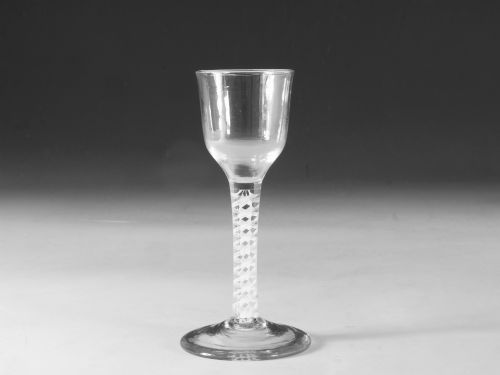
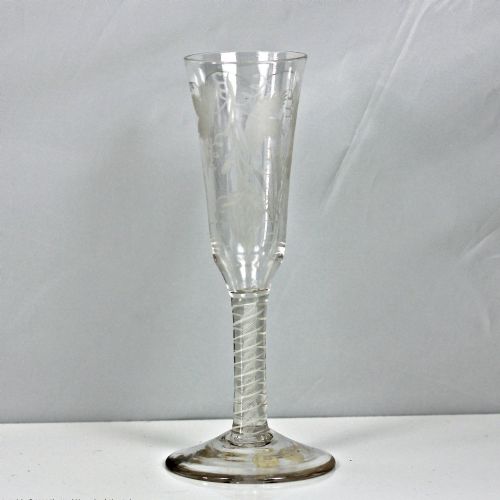
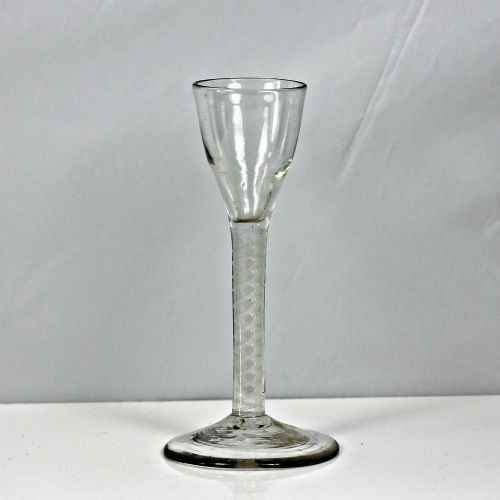
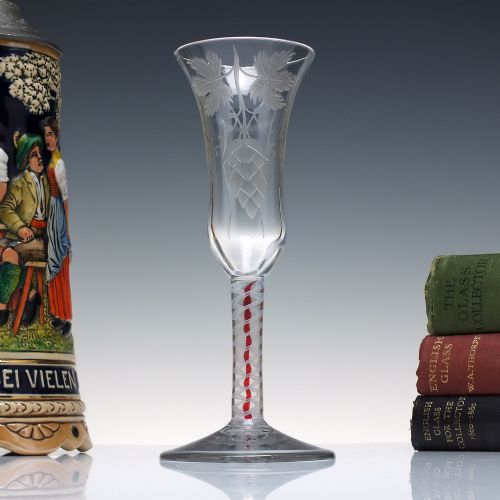
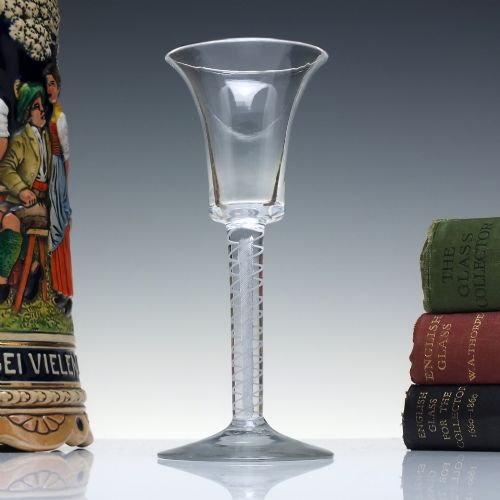
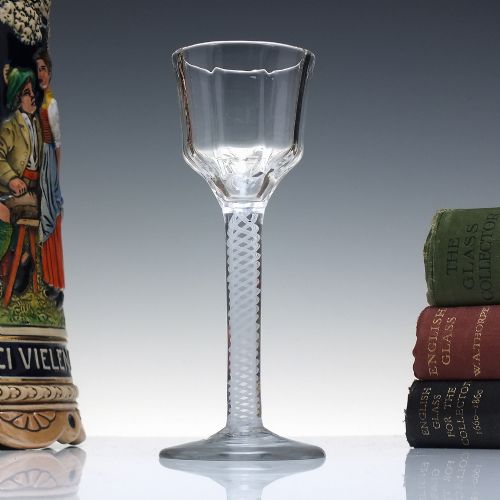
A vintage twist stem glass encompasses drinking vessels and decorative items featuring intricate internal threads within the stem, primarily drawing from eighteenth century Georgian traditions alongside later twentieth century interpretations. The selection frequently centres on wine glasses featuring opaque, mixed, or single series twists, alongside related forms such as oil lamps, ewers, and candlesticks.
The eighteenth century examples dominate the drinking vessel selection, often displaying ogee or flared bucket bowls accompanied by precise air or white enamel threads. Later twentieth century pieces translate this spiral motif into lighting and tableware, incorporating materials like chrome and brass to merge traditional glass techniques with period styles such as Art Deco and Edwardian design.
How they were made
The manufacture of these objects relies heavily on lead glass and hand-blown glass techniques, which allow artisans to manipulate molten material while maintaining structural clarity. Craftsmen draw and twist internal air bubbles or enamel rods within the stem before attaching the bowl and foot, creating complex optical patterns without surface etching.
Secondary structural elements incorporate brass, chrome, and enamel depending on the period, particularly in twentieth century lighting and decorative vases. These combined materials provide the necessary rigidity and visual contrast to support elongated glass stems and heavy domed or folded feet.
Vintage Twist Stem Glass Retail Price Guide 2026
Typical asking prices for vintage twist stem glass among the pieces listed under this phrase on Sellingantiques today, from the lower quarter to the upper quarter. They describe what is for sale here now, not the wider market.
Some nineteenth century Italian glassmakers hid tiny internal ladders inside their ewers just to test if anyone was paying attention.
What varies in quality
Quality in these pieces rests upon the precision and complexity of the internal twist formation, where tightly wound threads and crisp optical lines distinguish superior examples from simpler executions. The symmetry of the bowl, the absence of distracting bubbles within the main body, and the stability of the folded or domed foot further separate fine specimens from standard items.
The execution of decorative elements such as ribbing, engraving, or applied colour also dictates the standing of a piece within its category. Master glassmakers achieve a balance between weight and delicate proportion that lesser workshops fail to replicate.
Harry Powell for James Powell
The Vintage Twist Stem Glass Glossary
- Ogee bowl
- A bell-shaped drinking vessel profile with an S-curve contouring outward at the rim. This form appears frequently on eighteenth century wine glasses.
- Single series twist
- A stem containing only one set of internal threads, such as a single opaque white spiral or a single line of air bubbles. It represents an early phase of twist stem manufacture.
- Double series twist
- A stem featuring two distinct sets of threads intersecting within the clear glass column, often combining air twists with opaque white enamel strands.
- Fluted moulding
- Vertical parallel depressions pressed or blown into the surface of a glass bowl to catch the light. This technique adds texture to eighteenth century drinking vessels.
- Folded foot
- A base edge doubled back underneath itself during the hot-working process to provide extra strength and weight. It is a hallmark of superior early craftsmanship.
Vintage Twist Stem Glass: Frequently Asked Questions
What is an opaque twist?
An opaque twist refers to white or coloured enamel threads enclosed within the clear glass stem of a drinking vessel. These threads are spun during the manufacturing process to create intricate spiral patterns.
The technique gained popularity during the Georgian period, allowing glassmakers to produce highly decorative stems without relying on external cutting or engraving.
How do I date a twist stem glass?
Dating relies on examining the form of the bowl, the type of metal used in the glass composition, and the complexity of the internal twist. Eighteenth century pieces typically show characteristic pontil marks and specific bowl shapes like the ogee or flared bucket.
Later twentieth century interpretations often adapt the twist motif into lighting or heavier decorative items, using materials like chrome alongside clear lead glass.
Were these glasses used for wine?
Many of the smaller vessels functioned as wine glasses or ale glasses during the Georgian era. Their capacities were generally smaller than modern equivalent glassware, reflecting the drinking habits of the period.
Aside from dining use, the twist stem motif also appears in domestic oil lamps and decorative table items from later decades.
What is an air twist stem?
An air twist stem contains elongated bubbles or threads of air trapped inside the clear glass column, twisted into a spiral shape. This effect is achieved by drawing out air drawn from the hot metal during the blowing process.
It predates or coincides with the development of opaque enamel twists, offering a subtler, translucent play of light within the stem.