
Vintage Trestle Kitchen Table
A vintage trestle kitchen table brings weight, grain, and enduring utility to a room.
Vintage Trestle Kitchen Table
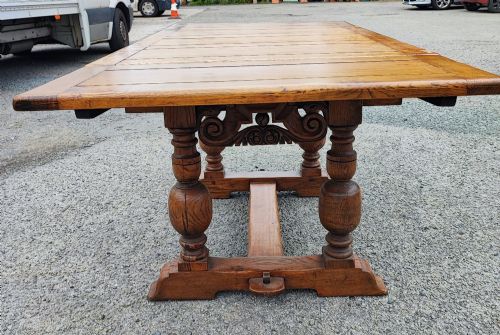
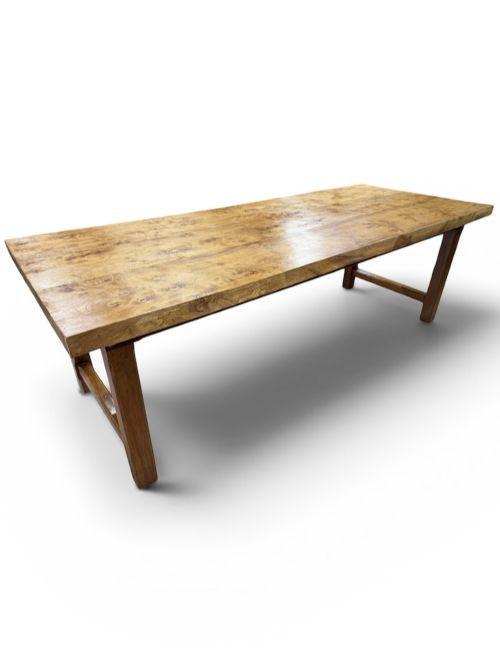
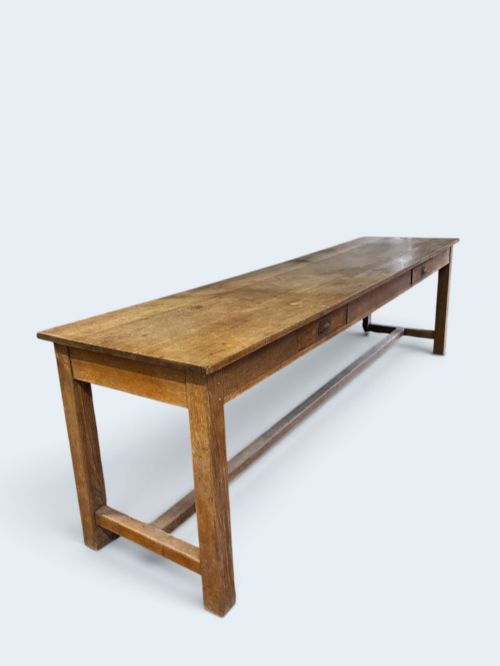
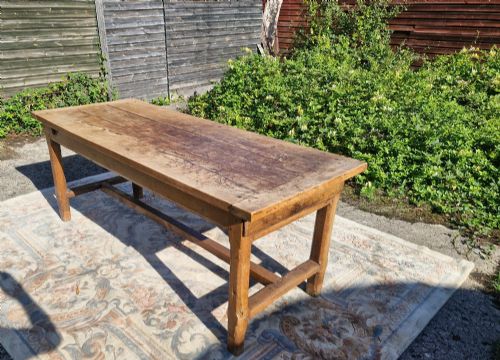
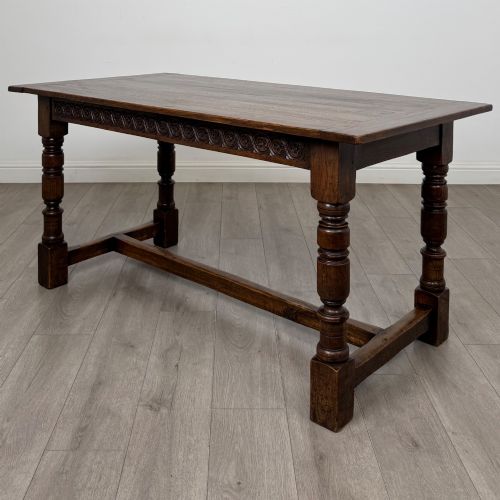
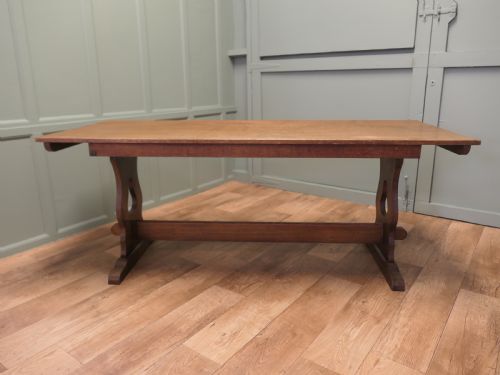
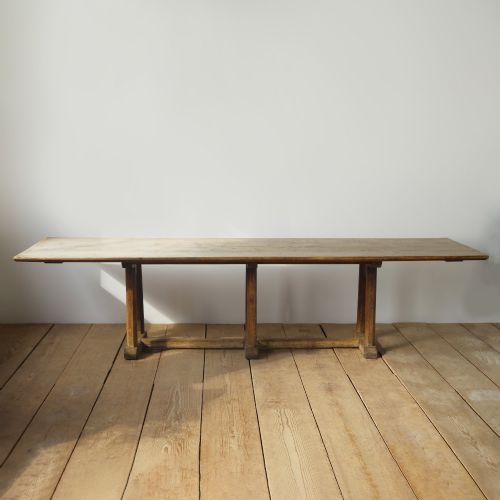
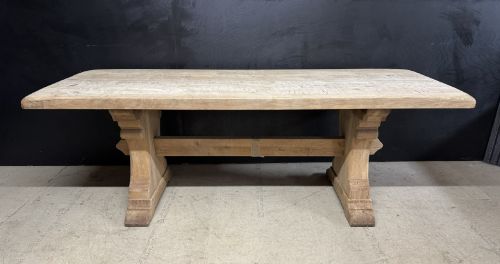
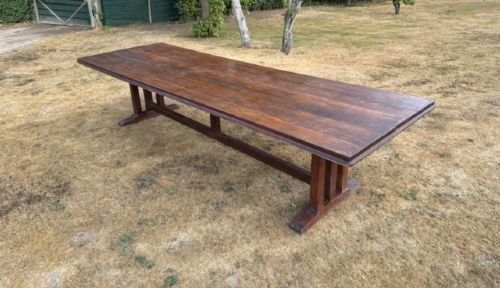
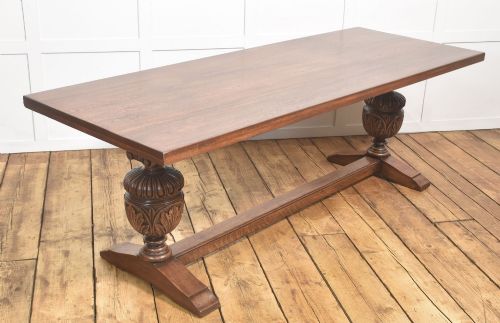
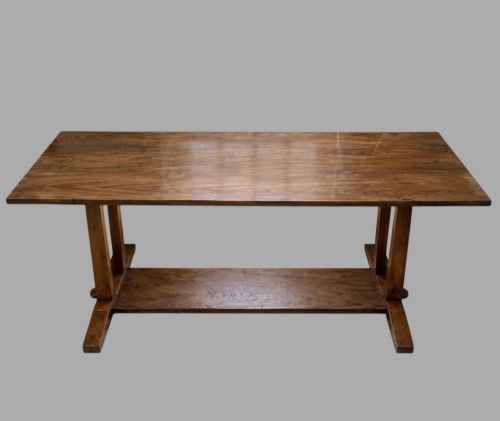
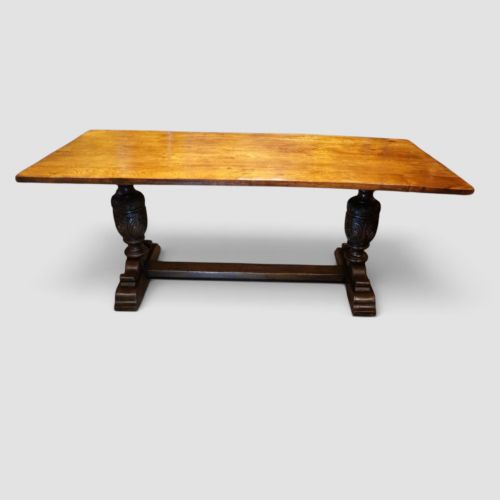
A vintage trestle kitchen table combines sturdy timber tops with supporting end uprights, offering the long spans and legroom that made these forms practical for communal dining. Buyers seek these pieces for their honest construction and capacity to anchor a busy kitchen or dining space with robust character.
The selections span the nineteenth century through the mid twentieth century, drawing on rustic farmhouse, Arts and Crafts, and Jacobean Revival traditions. Oak dominates the inventory, supported by pine, elm, and cherrywood timbers.
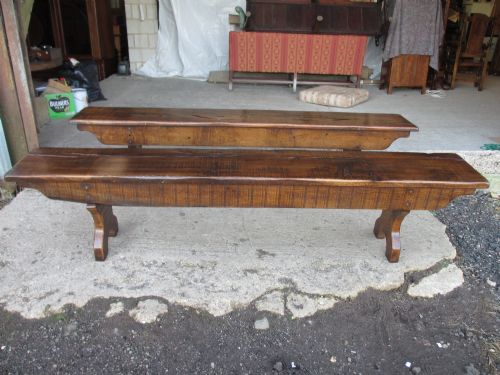
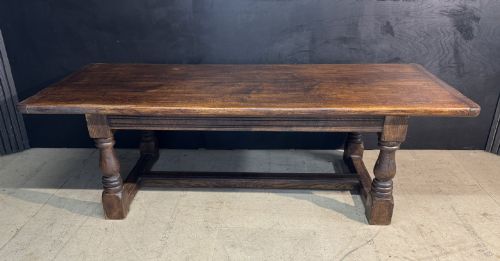
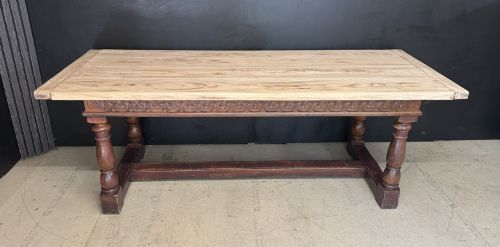
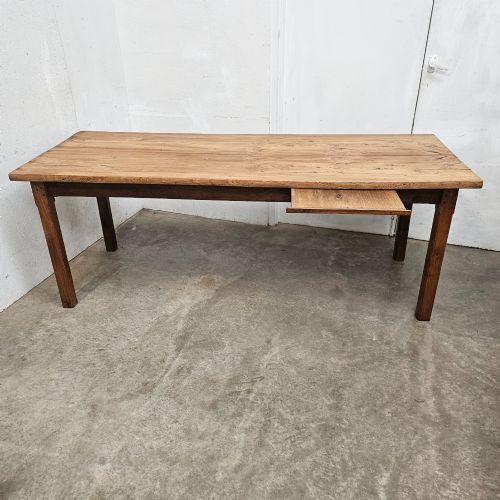
Most examples lean towards the refectory or farmhouse style, often featuring thick planks, draw leaves, or shaped trestle ends designed for stability. These tables carry the marks of active domestic or tavern service, from weathered surfaces to deep patinas.
Distinctions in Quality and Make
Quality rests in the selection of the timber, particularly the choice of quarter sawn oak or wide single boards for the tabletop, which display superior grain figures and structural stability. Tables built with pegged joints and heavy underframes demonstrate greater longevity than later or lighter iterations.
Proportion and execution separate standard utility pieces from finer architectural interpretations, such as those influenced by the Arts and Crafts movement or specific regional cabinetmakers. The integrity of the original surface finish, whether deep French polish or weathered scrubbed timber, dictates the visual harmony of the piece.
Tables once dined monks, tavern keepers, and Victorian families before finding their way into modern kitchens to collect flour dust and homework papers.
The Vintage Trestle Kitchen Table Glossary
- Trestle table
- A table consisting of two or more support frames connected by a longitudinal beam or stretcher under the top. This design maximises legroom along the length of the table.
- Refectory table
- A long, narrow dining table historically used in monasteries and great halls. In later periods, domestic versions adopted this format for everyday family dining.
- Draw leaf table
- A table equipped with sliding extension leaves stored underneath the main top. Pulling them out extends the surface length.
- Quarter sawn
- Timber cut radially from the growth rings rather than tangentially. This method produces a stable board with prominent medullary ray figuring.
- Mortise and tenon
- An interlocking joint where a protruding tongue fits tightly into a corresponding cavity. It forms the backbone of traditional frame construction.
Vintage Trestle Kitchen Table: Frequently Asked Questions
How do I clean a vintage oak tabletop?
Wipe surfaces with a damp cloth and mild soap, avoiding harsh chemical cleaners that strip natural oils. Dry thoroughly to protect the grain.
Apply a coat of clear beeswax periodically to nourish the wood and maintain a soft, protective sheen.
Will a trestle table fit in a modern kitchen?
Measure your space carefully, accounting for the width of the trestle feet and the chairs around the perimeter. Trestle bases offer flexible seating since legs do not obstruct the corners.
Consider the scale of the room against the thickness of the top to ensure balanced proportions.
What is the difference between a refectory and a farmhouse table?
Refectory tables traditionally feature formal stretchers and linear proportions rooted in monastic or tavern designs. Farmhouse tables lean towards rustic domestic utility with simpler, heavier framing.
Both terms often overlap in vintage listings depending on the specific maker and regional style.
How do I date an antique oak table?
Examine the underside and joints for tool marks, screw types, and timber seasoning methods. Hand sawn boards and pegged joinery point to earlier periods.
Stylistic cues such as heavy bulbous legs or plain chamfered trestles provide further clues to the decade of manufacture.