


Vintage Travel Timepiece
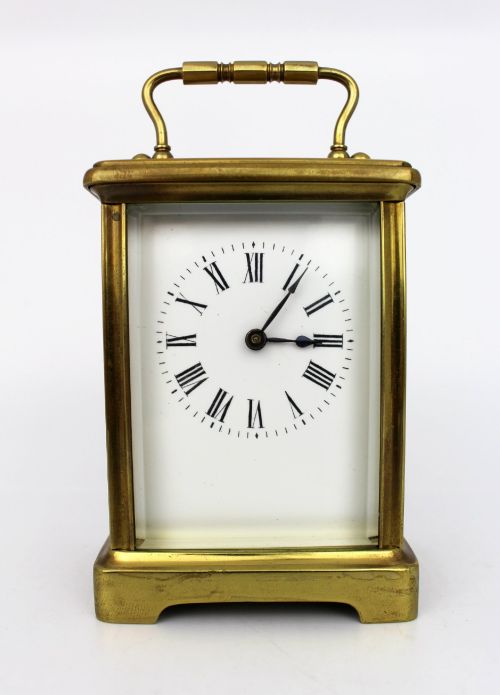
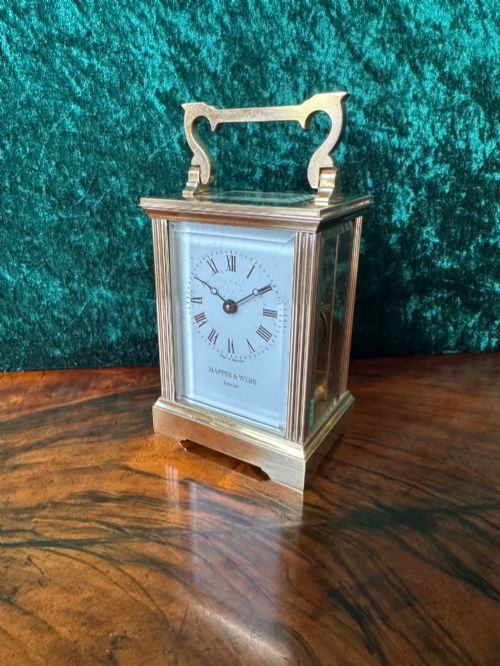
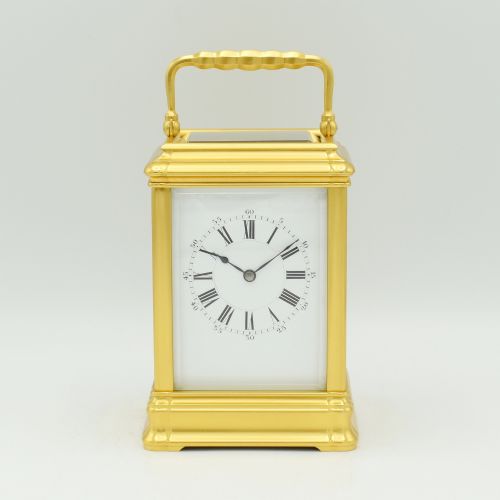
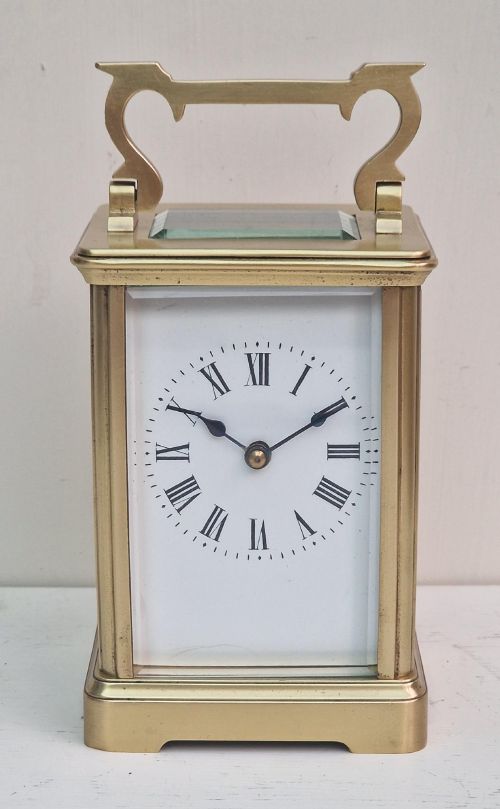
A vintage travel timepiece is a portable mechanical clock built to journey reliably, offering brass and leather construction from Victorian and Edwardian periods.
Vintage Travel Timepiece
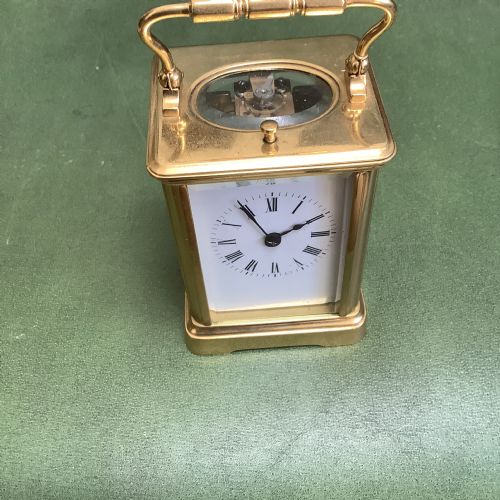
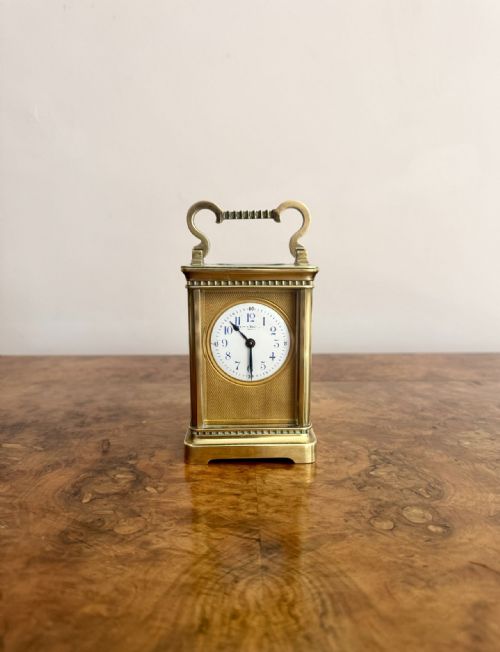
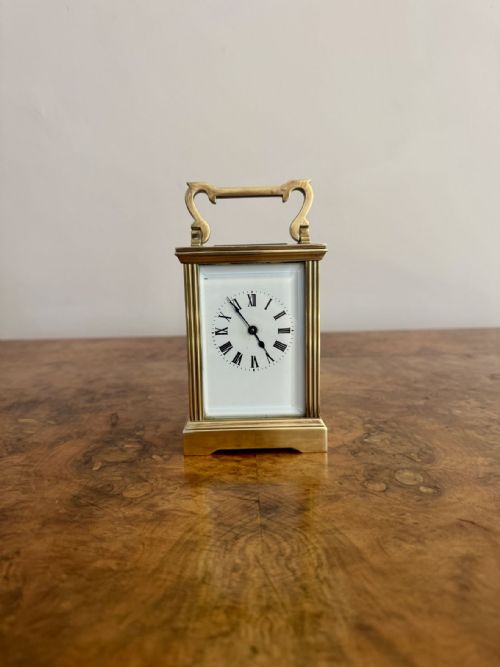
A vintage travel timepiece encompasses portable clocks housed in protective cases, predominantly taking the form of carriage clocks and pocket watches.
The pieces on this page span the late nineteenth century into the early twentieth century, originating from British workshops and French makers.
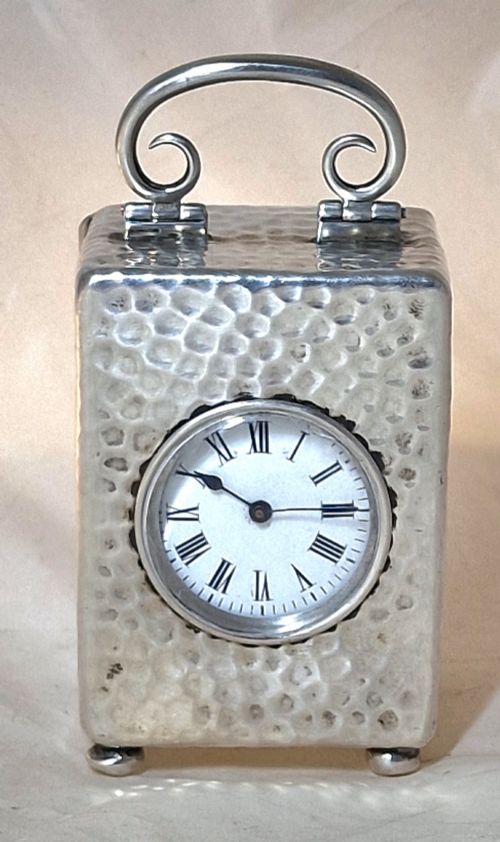
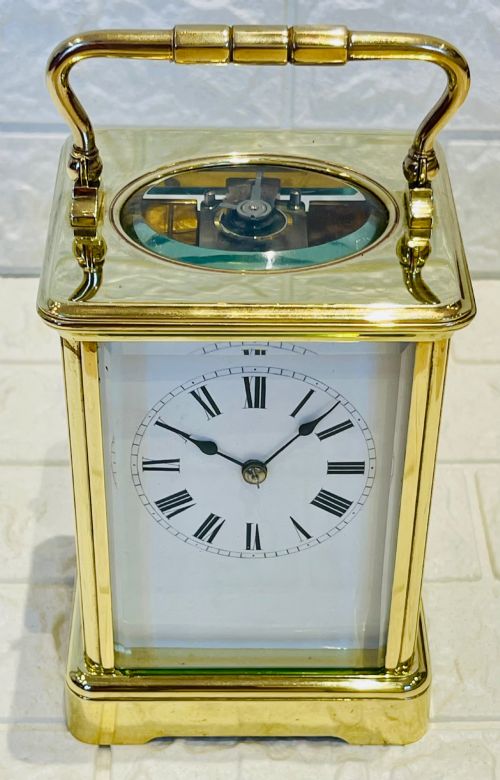
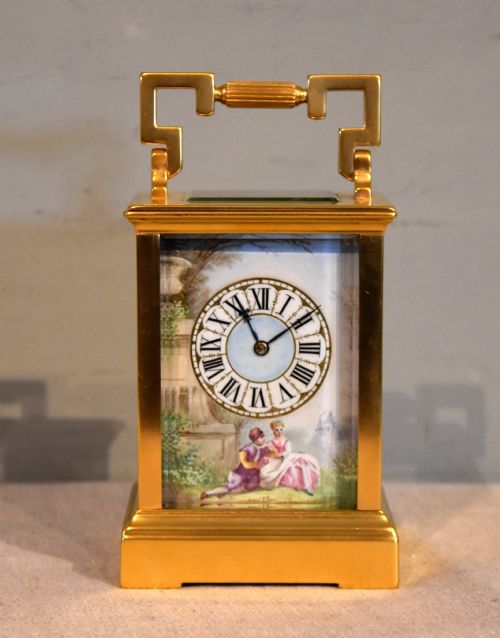
Carriage clocks dominate the selection, appearing in brass, gilt brass, and silver housings equipped with glass viewing panels.
Materials and construction
Makers utilised solid brass, gilt brass, and silver to construct heavy structural frames that protected delicate gear trains during transport.
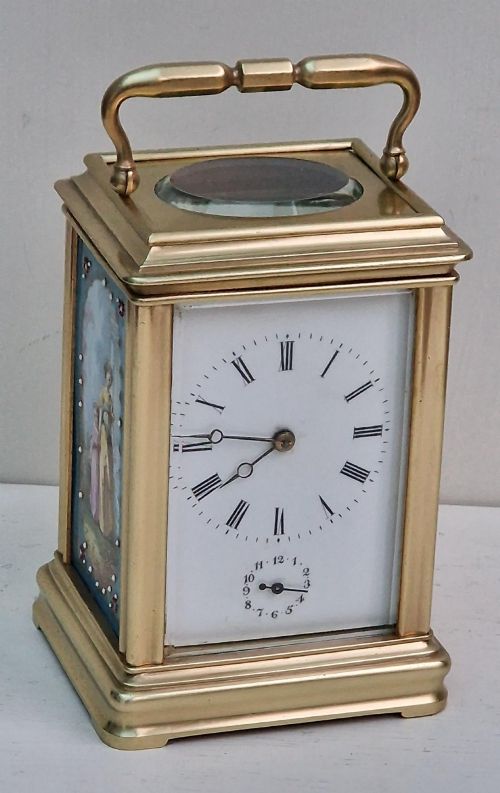
Glass panels were fitted to all sides to display the moving escapement, whilst enamel dials and porcelain panels provided crisp numeric markers.
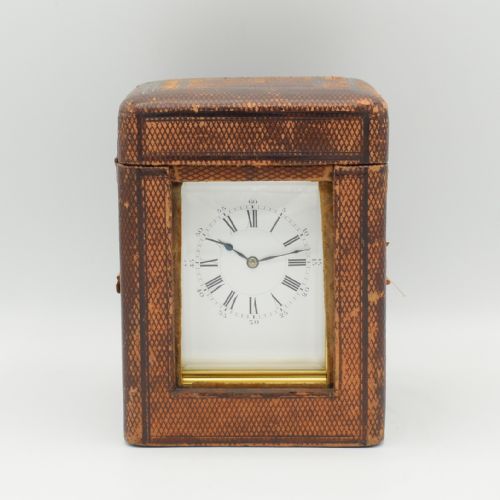
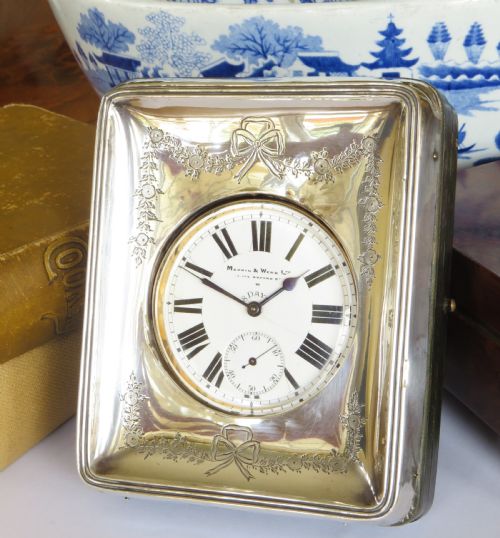
Outer leather travel cases accompanied many pieces, lined with velvet or silk to cushion the brass housing against the bumps of transit.
Some nineteenth century models feature hidden alarm functions that successfully woke sleeping travellers aboard swaying railway carriages.
Markers of distinction
The refinement of the movement sets examples apart, with repeat mechanisms, alarm functions, and eight day duration showing superior watchmaking skill.
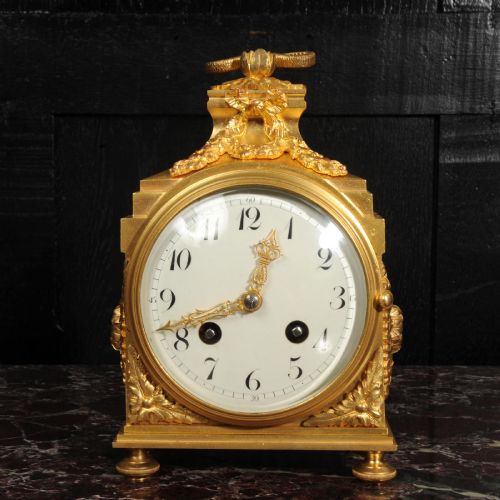
Decoration on the metal case separates standard models from high work, through hand engraving, porcelain paintings, and fully gilded finishes.
The survival of original components, from the winding key to the fitted leather travel case, determines the integrity of the piece.
Henri Jacot·Mappin and Webb·Pickford of London·T. Martin and Co·Antoine Redier·Duverdrey and Bloquel·Doxa
The Vintage Travel Timepiece Glossary
- Carriage clock
- A small, spring driven portable clock designed for officers on the move during the nineteenth century. These clocks feature heavy brass cases with glass panels.
- Platform escapement
- The small horizontal assembly holding the balance wheel and hairspring visible near the top of the dial. This component regulates the beat of the clock.
- Repeating movement
- A mechanism that sounds the hours and quarters on demand when a lever or button is pressed. This complication was useful during dark nights on the road.
- Ormolu
- Gilded bronze or brass applied to clock cases for a rich golden appearance. The technique involves treating the metal with a gold amalgam.
- Pendule d'officier
- A specific French military style of small travel clock featuring a distinctive top handle and robust proportions. They were carried by officers during campaigns.
Vintage Travel Timepiece: Frequently Asked Questions
How do I wind a carriage clock?
Most pieces require a matching key inserted into the arbours on the backplate to tension the mainspring.
Take care not to overwind the movement, stopping as soon as resistance is felt.
What is the difference between a timepiece and a clock?
A timepiece indicates the hours and minutes without including a striking train or alarm mechanism.
Clocks include additional complications that ring bells or gongs on the hour.
Were these clocks actually carried during travel?
Yes, travellers placed them in fitted leather cases lined with fabric to absorb the shocks of horse carriages and early trains.
Many surviving pieces retain these original outer cases for protection.
How can I date an antique travel clock?
Examine the style of the brass case, the shape of the escapement platform, and any maker signatures stamped on the backplate.
Victorian and Edwardian examples often show distinct aesthetic shifts from plain brass to heavily engraved gilt surfaces.