





Vintage Tool Chest
A vintage tool chest provides robust, functional storage with the honest, utilitarian character of nineteenth and early twentieth century craftsmanship.
Vintage Tool Chest
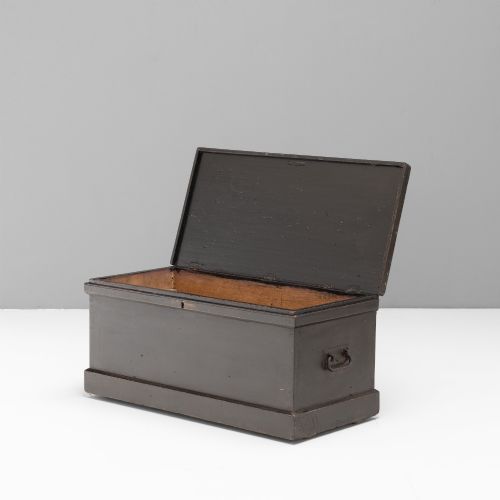
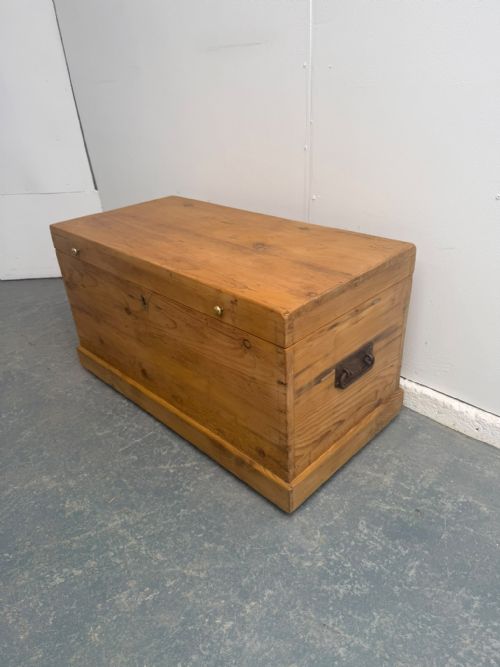
A vintage tool chest encompasses heavy-duty wooden trunks, carpenter boxes, and portable cabinets designed to transport and protect specialist equipment. The pieces seen here span periods from the Georgian era through the Edwardian years and the 1920s, reflecting the demands of tradesmen, shipwrights, and machinists.
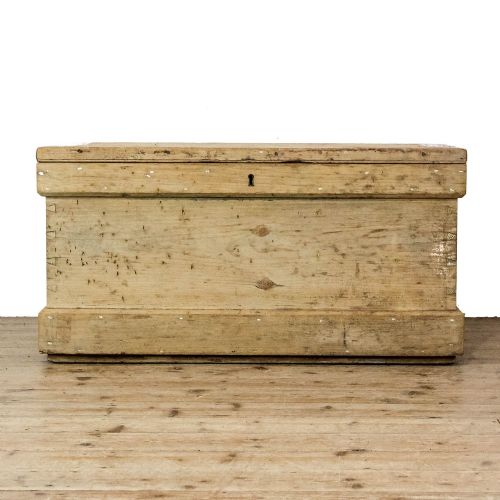
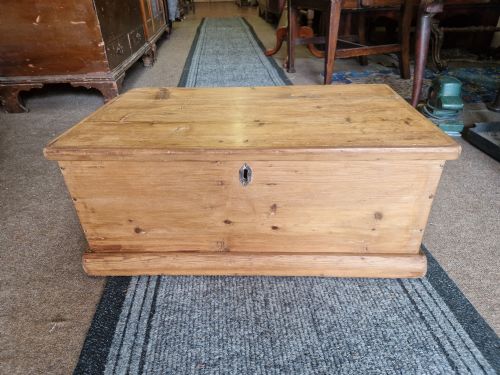
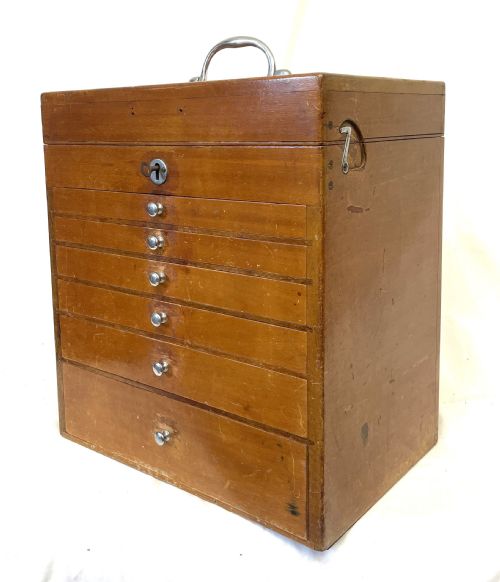
Pine forms the most common carcass material across these examples, often supplemented by pitch pine, mahogany, teak, and elm. Forms range from large rustic blanket boxes and seaman chests to fitted tabletop cabinets with multiple drawers and internal compartments.
Styles lean heavily towards the functional, encompassing rustic farmhouse, industrial loft, and Victorian maritime aesthetics. Buyers frequently encounter robust dovetail joints, iron hardware, and rope or brass lifting handles intended for practical transit.
Construction and materials
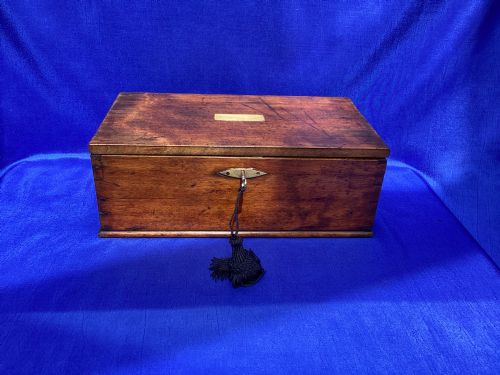
Makers constructed these chests primarily using solid woods like pine and mahogany, joined with tight dovetailing to withstand heavy loads and constant movement. Iron, brass, and gilt-brass provided structural reinforcement, corner brackets, and working locks to secure valuable contents.
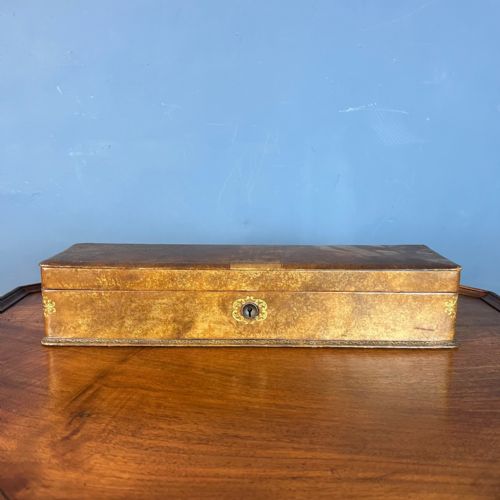
Surfaces received wax, paint, or ebonisation depending on the intended workplace, while specialised pieces featured tooled leather or fitted internal compartments. Iron and rope handles were integrated to manage the substantial weight of the contents and the timber frame.
Listings feature pieces constructed from pine, pitch pine, mahogany, teak, elm, and metal, spanning the Georgian, Victorian, and Edwardian periods.
Distinctions in quality
The standard of a piece rests on the precision of its joinery, particularly the tightness of the dovetails and the integrity of the solid wood construction. Finer examples retain their original locks, keys, and makers' plates, alongside complex internal fittings designed for specific trades.
Modest utility boxes show straightforward plank construction with basic iron hardware, whereas pieces by known makers or specialised workshops demonstrate superior timber selection and refined hardware mountings like brass bound edges.
Holtzapffel and Co·Gnome Et Le Rhone Engine Company·Manoah Rhodes & Sons Ltd
The Vintage Tool Chest Glossary
- Dovetail
- A joint formed by interlocking wedge-shaped fingers of wood. This technique provides exceptional tensile strength for heavy storage boxes.
- Pitch pine
- A dense, resinous pine variety frequently utilised for robust nineteenth-century trunks. It offers high durability and a distinct grain pattern.
- Ebonised
- Wood finished to resemble ebony through staining or painting. This treatment appeared frequently on nineteenth-century work trunks.
- Seaman chest
- A heavy timber trunk built for maritime use, often featuring painted decorations or rope handles for deck stability.
- Fitted interior
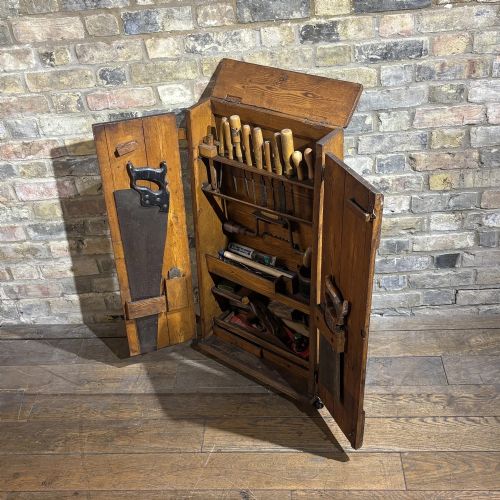
- An arrangement of internal trays, small drawers, and compartments designed to organise specialised tools.
Vintage Tool Chest: Frequently Asked Questions
What tools did these chests hold?
These chests stored hand tools and equipment for carpenters, cabinet makers, shipwrights, watchmakers, and engineers.
Each trade required specific internal layouts, ranging from open wells for large saws to multiple small drawers for delicate parts.
How do I date a pine chest?
Dating relies on construction methods, timber types, and hardware styles found on the piece.
Hand-cut dovetails, original brass or iron locks, and period paint finishes help narrow the decade of manufacture.
Can I use one as a coffee table?
Many people adapt sturdy pine trunks and carpenter boxes for use as living room coffee tables.
The flat top and durable wooden construction provide a practical surface alongside internal storage space.
What is a pitch pine trunk?
A pitch pine trunk is a storage box built from resin-heavy pine harvested for its exceptional strength.
These trunks often feature brass bindings or heavy iron hardware to withstand demanding environments.