


Vintage Timber Floor Light
These vintage timber floor lights bring height and warmth to a room, offering practical illumination with the character of older craftsmanship.
Vintage Timber Floor Light
When buyers search for a vintage timber floor light, they encounter standard lamps and floor lamps spanning the late nineteenth century through to the interwar period. The selection on this page relies heavily on designs from the Edwardian era and the Art Deco period, alongside occasional regional pieces.
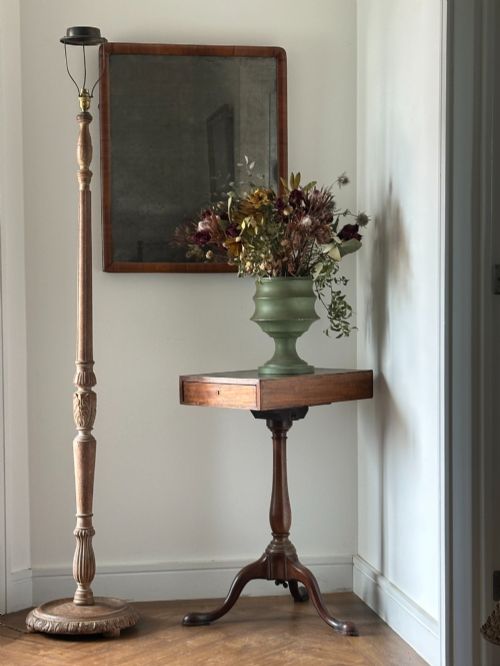
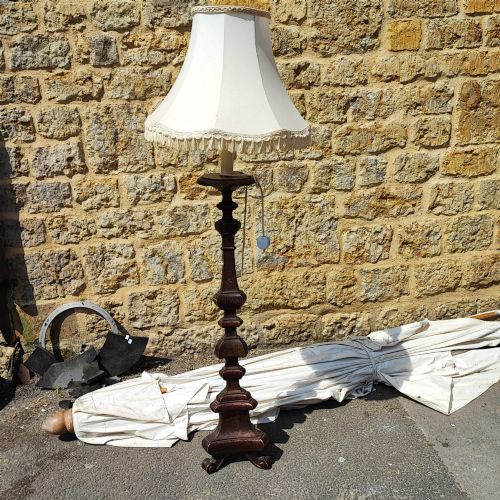
The dominant forms are tall standard lamps designed to stand beside armchairs or sofas, carrying fabric shades at the top of a turned or carved wooden shaft. Alongside standard lamps, the listings include related wooden items such as carved candle holders and occasional floor-standing mirrors.
Materials and construction
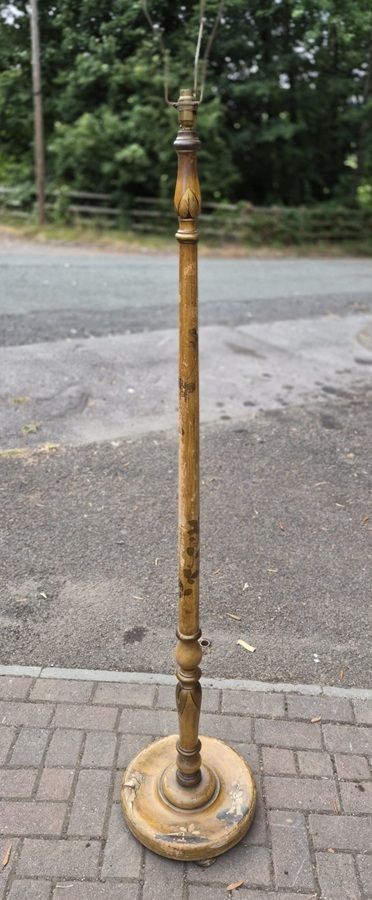
Carpenters and turners constructed these standards using solid timbers such as oak, mahogany, walnut, and dense Padauk wood. The shafts were frequently turned on a lathe to create reeded or fluted columns, while more elaborate examples received hand-carved ornamentation.
Metal components in brass frequently appear as decorative mounts, switch housings, or weighted bases designed to keep the tall wooden shafts stable. Fabric shades, either original or more commonly replaced, sit atop the wooden frame to diffuse the light downwards.
The listings span from the nineteenth century through to nineteen forty, with the nineteen-twenties and thirties providing the greatest concentration of Art Deco designs.
Assessing quality and proportion
Quality in these standards rests largely on the choice of timber and the crispness of the carving or turning. Dense woods like Padauk or finely figured walnut separate the better examples from simpler utility pieces made of softer woods.
Proportion and stability dictate the usefulness of a tall lamp. A well-balanced base prevents tipping, and the joinery where the shaft meets the foot determines whether the timber remains rigid over decades of use.
Whytock and Reid
The Vintage Timber Floor Light Glossary
- Standard lamp
- A tall floor-standing lamp base designed to support a shade at eye level. These pieces usually stand between five and six feet tall.
- Limed oak
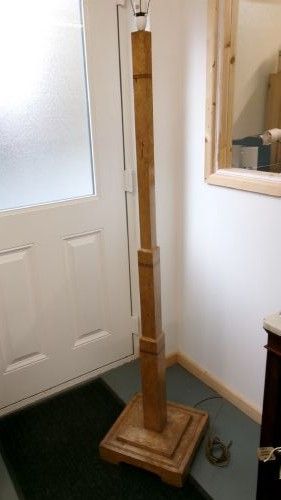
- Timber treated with a white pigment rubbed into the grain to highlight the texture. This finish is common on decorative pieces from the nineteen-twenties.
- Reeded column
- A decorative architectural motif featuring parallel convex mouldings carved along the vertical shaft. It adds visual texture to standard lamp stems.
- Stepped base
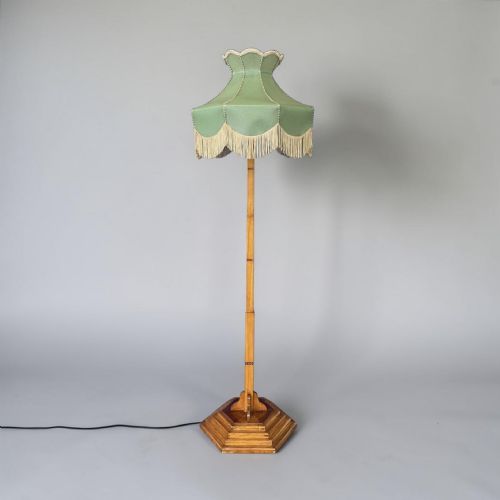
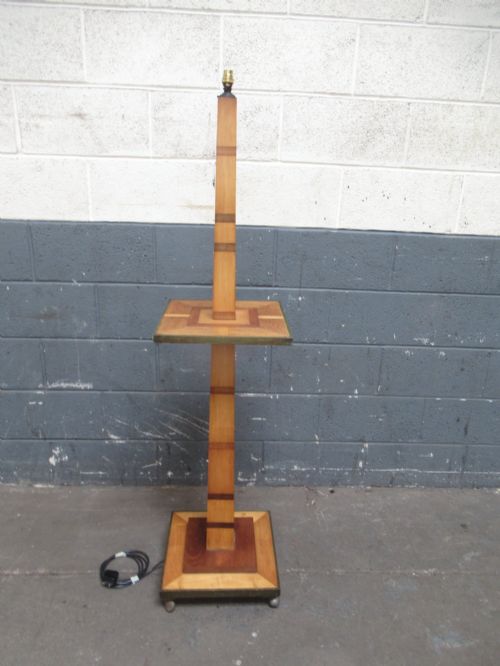
- A terraced pedestal foundation typical of Art Deco design. This geometry adds visual weight to the bottom of the lamp.
Vintage Timber Floor Light: Frequently Asked Questions
How do I date a wooden floor lamp?
Dating relies on stylistic clues, such as stepped geometric bases for nineteen-thirties Art Deco pieces or turned fluted columns for Edwardian examples. Materials also offer guidance, with certain tropical hardwoods appearing more frequently in turn-of-the-century imports.
Wiring is rarely original and is usually updated for modern safety, so examining the plug or flex does not help determine the age of the timber base.
Are these lamps stable enough for daily use?
Most standard lamps are weighted at the base, often with cast iron hidden beneath the wood, to prevent tipping. Heavier timbers like oak and Padauk also contribute to a solid centre of gravity.
Placement matters, however, and positioning the lamp away from high-traffic walkways protects both the tall shaft and the fabric shade from accidental knocks.
What is the difference between an Edwardian and an Art Deco standard lamp?
Edwardian standard lamps tend to feature traditional turned wood, intricate carvings, and influences from periods like Chinoiserie or classical revival styles. They lean towards decorative organic forms.
Art Deco lamps embrace clean lines, geometric stepped bases, and contrasting woods such as golden oak and dark ebony. The aesthetic prioritises streamlined modernism over ornate detail.
Can I use modern lampshades on these vintage bases?
Most vintage lamp standards use standard UK or international shade carrier fittings, making it straightforward to attach contemporary or reproduction fabric shades. The primary consideration is proportion.
Choosing a shade width that matches the visual weight of the wooden base ensures the lamp looks balanced when illuminated in a room.