




Early 20th Century Floor Lamp
An early 20th century floor lamp brings upright illumination and period character to a room, shifting from industrial searchlights to polished brass standards.
Early 20th Century Floor Lamp
An early 20th century floor lamp is a tall vertical lighting fixture designed to stand directly on the floor, providing ambient or task illumination. Buyers browsing this selection encounter upright standards dating from the Edwardian era through the nineteen-twenties.
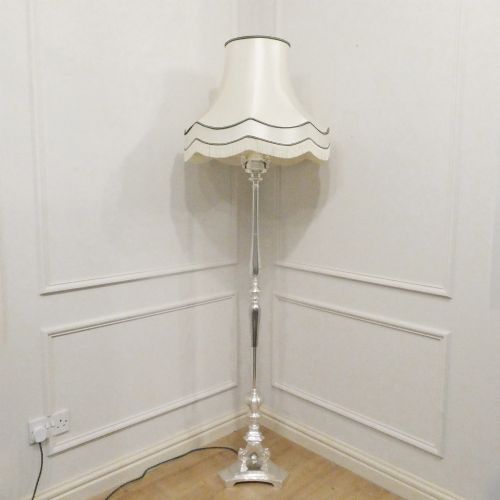
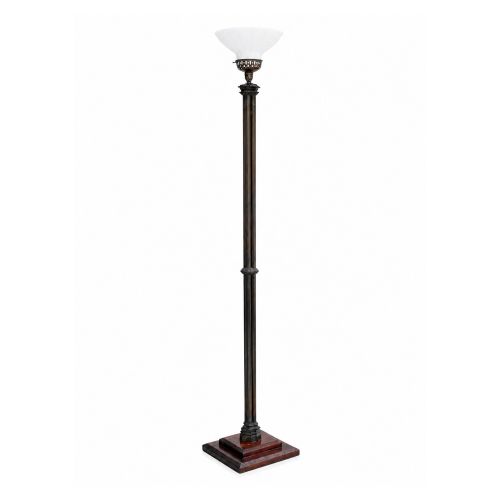
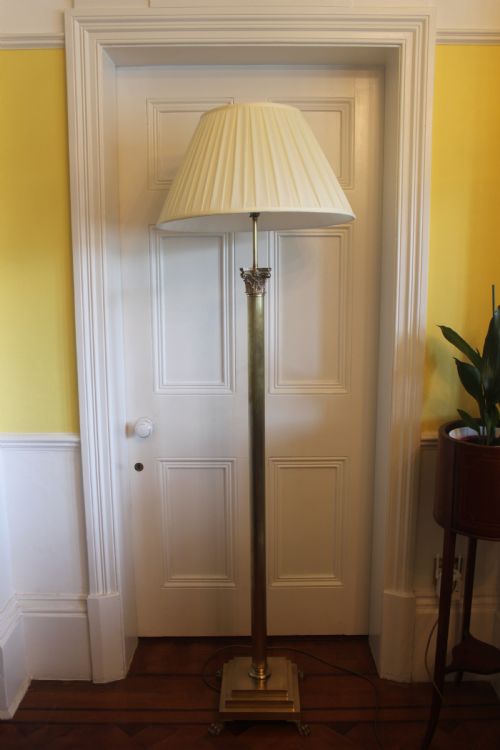
The assortment spans diverse forms including standard lamps, adjustable brass columns, and searchlights. Materials range from turned mahogany and carved Chinese hardwood to cast iron and silver-plated metal.
Stylistic influences vary widely across the inventory, encompassing Art Nouveau sinuous lines, Gothic Revival motifs, Neoclassical Revival symmetry, and early Art Deco geometry. Certain examples combine practical illumination with storage through integrated Canterbury bases.
Materials and construction
Makers of the period utilised heavy metals like brass, cast iron, and silver alongside dense timbers such as mahogany, oak, and carved hardwood. Structural stability required weighted bases or sturdy cast iron frames to support tall vertical columns.
Decorative elements relied on specialist craftsmanship, including cranberry glass shades, alabaster figures, and delicate fabric fringing. Joinery on wooden standards involved traditional turning and carving techniques, while metal versions featured adjustable arms and scrollwork.
One aviation pioneer's searchlight found a second life indoors as an early twentieth-century floor lamp.
Distinctions in quality
Quality in these upright lights rests upon the integrity of the materials and the refinement of the metalwork or woodwork. Superior examples display crisp casting details on brass and ironwork, or precise hand-carving on hardwood and mahogany columns.
The presence of original specialised components, such as adjustable scroll arms, cranberry glass shades, or alabaster figural elements, elevates an object. Robust weighted construction ensures the standard remains stable and balanced at its full height.
Bleriot
The Early 20th Century Floor Lamp Glossary
- Standard lamp
- A traditional British term for a floor lamp, consisting of a tall upright pole on a weighted base designed to hold a shade and bulb at eye level. These pieces serve as movable lighting fixtures in principal rooms.
- Canterbury
- A low wooden stand featuring partitions for holding sheet music or books, occasionally combined directly with a floor lamp standard. This dual-purpose furniture piece dates back to the Regency period but continued into the twentieth century.
- Cranberry glass
- A rich red-pink transparent glass created by adding gold chloride to the molten mixture, frequently utilised for decorative lamp shades. The colour deepens when the bulb is illuminated.
- Alabaster
- A fine-grained, translucent stone carved into figures or decorative columns for sculptural lamp bases. Its natural veining diffuses light softly across the surface.
- Scroll arm
- A curved, ornamental metal bracket projecting from the main column of a floor lamp to suspend the light source. This decorative feature allows for adjustable positioning in period brass designs.
Early 20th Century Floor Lamp: Frequently Asked Questions
How do I wire an antique floor lamp?
Most antique floor lamps require professional rewiring to meet modern safety standards while preserving the original exterior components.
A qualified electrician can thread modern insulated flex through the internal column without altering the visible brass or wooden structure.
Are these lamps stable on carpets?
The heavy cast iron or weighted brass bases designed into early twentieth-century standards provide substantial downward gravity. This engineered weight keeps the tall vertical columns secure even when placed on thick rugs or carpets.
Heavier wooden and mahogany versions rely on wide footprints to maintain balance across floorboards.
What is the difference between Edwardian and Art Deco styles here?
Edwardian floor lamps typically display organic Art Nouveau curves, floral brass motifs, or Gothic Revival details. They lean towards decorative casting and traditional turned timber.
Art Deco examples introduce cleaner geometric lines and streamlined metal forms that reflect the aesthetic shifts of the nineteen-twenties.
Can I use modern bulbs in these sockets?
Standard modern screw or bayonet bulbs fit most updated lamp holders fitted to these vintage standards. Check the maximum wattage recommendations with your electrician to protect delicate fabric shades and antique wiring components.