







Vintage Throw Rug
These textile fragments and domestic covers sold as a vintage throw rug span Central Asian and Anatolian traditions from the nineteenth and twentieth centuries.
Vintage Throw Rug
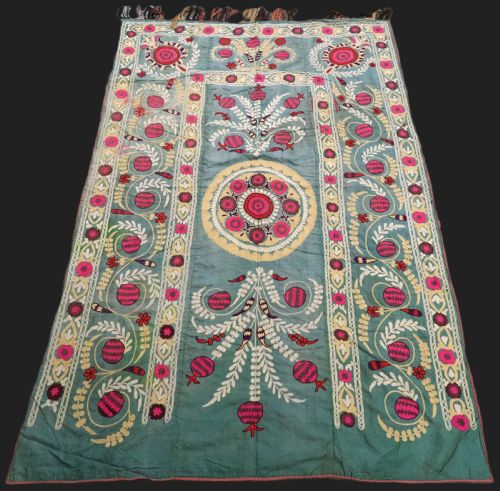
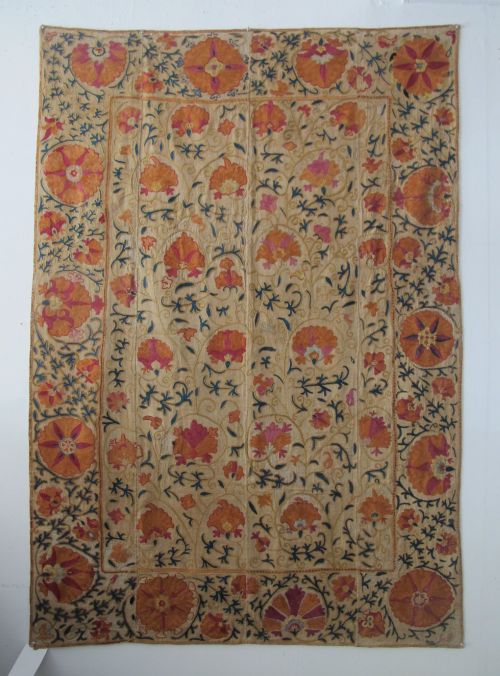
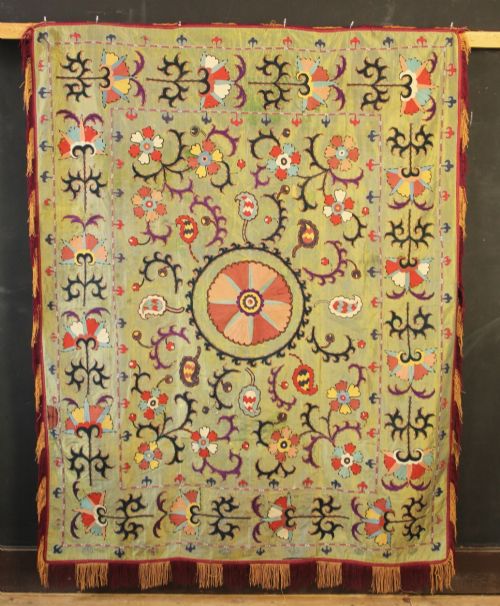
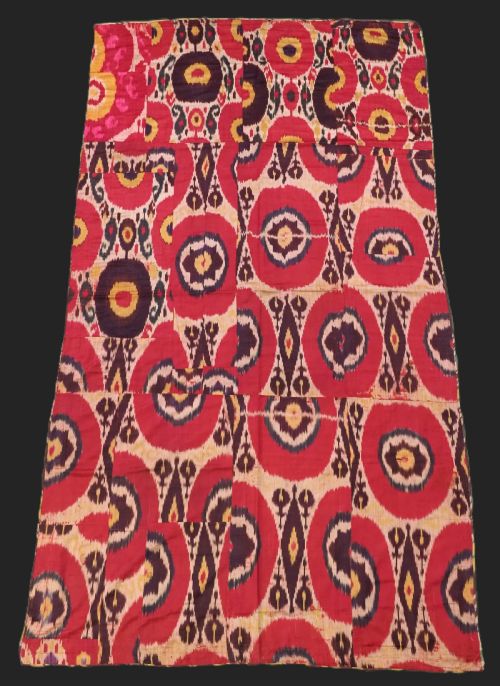
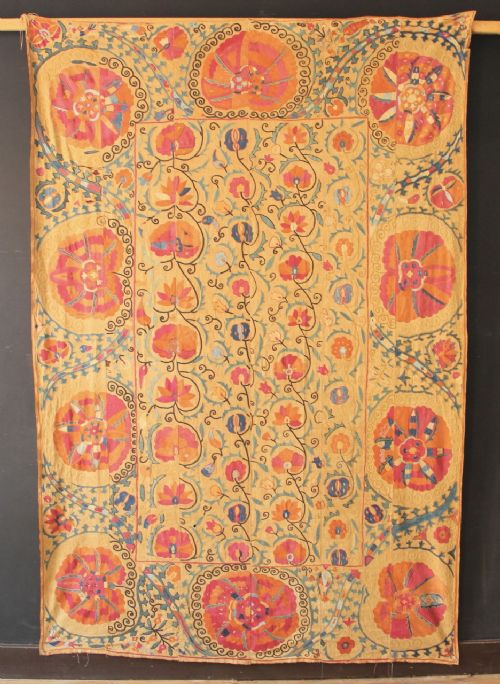
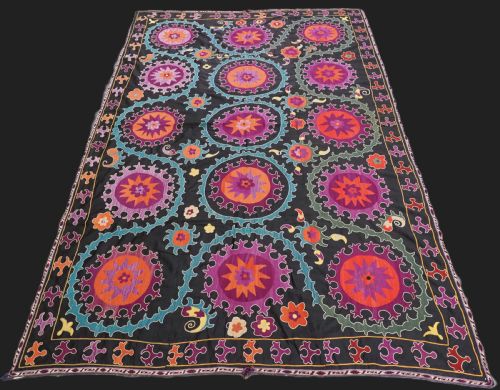
A vintage throw rug search typically reveals embroidered suzanis, village carpets, tribal bag faces, and adapted cushions originating from Central Asia and Turkey. Buyers encounter various formats on this page, ranging from full-sized bed covers and wedding shawls to smaller textile panels and wall hangings.
The material inventory relies heavily on regional domestic production, spanning nineteenth-century nomadic weavings and early twentieth-century urban workshop pieces. Pieces adapt traditional formats like the suzani or the kilim into versatile decorative elements suitable for modern interiors.
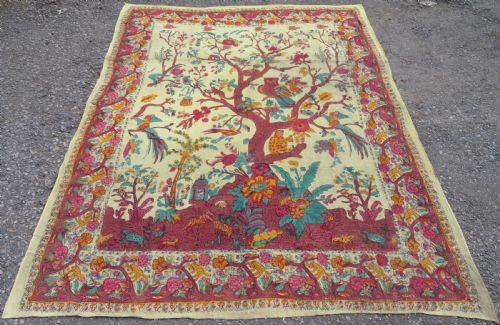
Geographic attribution points toward specific regional centres such as Tashkent, Samarkand, Shahrisabz, and Bukhara. Central Asian embroidery styles predominate, alongside Anatolian tribal rugs and Indian palampores.
Assessing the standard
Quality rests on the density of the embroidery work, the complexity of the regional design, and the survival rate of the original ground fabric. Fully worked panels require extensive hand labour compared to sparser linear compositions.
The brilliance and stability of natural dye colours separate finer examples from standard production, alongside the fineness of the silk thread and the precision of the needlework execution.
Listings span periods from the mid-nineteenth century up to the 1930s, featuring cotton, silk, wool, and natural dye materials.
The Vintage Throw Rug Glossary
- Suzani
- An embroidered tribal textile originating from Central Asia, traditionally worked in silk on a cotton or linen ground by brides as part of their dowry.
- Kilim
- A flatwoven carpet or rug produced in countries of the former Ottoman Empire, Central Asia, and the Balkans, utilising a slit-weave technique.
- Adras
- A traditional Central Asian fabric woven with a silk warp and a cotton weft, commonly used as a foundation for embroidered wall hangings and covers.
- Palampore
- A large hand-painted or embroidered bed cover or hanging of Indian origin, featuring elaborate floral or tree-of-life motifs.
- Lakai
- A sub-group of Uzbek nomads known for distinctively bold, geometric, and dynamic Suzani embroidery styles employing heavy silk stitching.
Vintage Throw Rug: Frequently Asked Questions
How were suzanis originally used?
These large embroidered textiles served multiple functions within traditional Central Asian households, acting as wall hangings, wedding bed covers, and ceremonial partition cloths.
Families displayed them on special occasions to mark significant milestones and domestic alliances before later conversion into decorative furnishings.
Are these textiles suitable for daily floor use?
Delicate silk embroideries and historical suzanis require gentle placement as wall hangings or decorative throws rather than heavy floor placement.
Sturdier village rugs and flatwoven kilim cushions handle everyday wear much better due to their wool construction and dense weave structure.
How do I clean an antique textile?
Professional textile conservation cleaning remains the only safe method for fragile nineteenth-century silk embroideries and natural dye items.
Standard domestic laundering or chemical dry cleaning risks dissolving natural dyes and fracturing brittle historical threads.
How can I tell regional styles apart?
Regional attribution depends on observing specific embroidery motifs, colour palettes, and ground fabric choices unique to towns like Tashkent or Bukhara.
Tashkent pieces often display sprawling palk designs with central star motifs, while Lakai work favours smaller, geometric, and heavily abstracted compositions.