
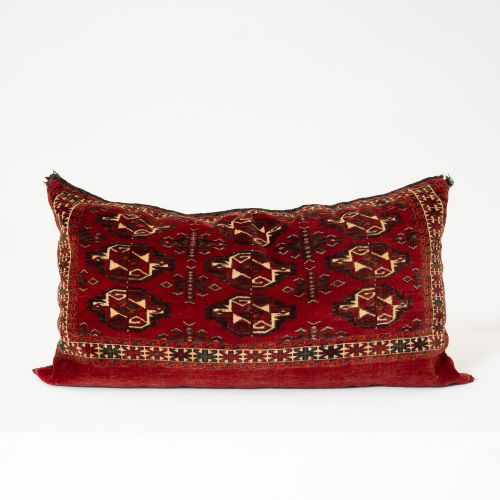
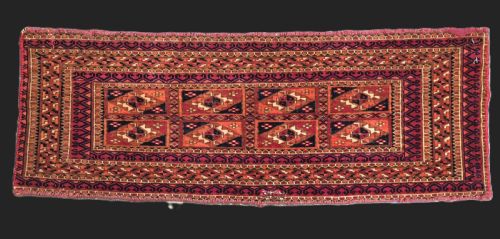


Vintage Tekke Turkmen Carpet
A vintage tekke turkmen carpet brings tactile warmth and precise tribal geometry to a room, offering deep madder tones and historic nomad craftsmanship.
Vintage Tekke Turkmen Carpet
A vintage tekke turkmen carpet represents the weaving traditions of Central Asian tribal groups, encompassing floor rugs, main carpets, and smaller utility forms like tent bands and storage bags. Buyers searching this phrase encounter examples spanning the mid-nineteenth century through the early twentieth century, reflecting distinct periods of nomadic and village production.
The most common formats on this page include dowry rugs, chuval cushion faces, torba bag faces, and larger main carpets. These pieces typically display the signature repeating guls associated with the Tekke tribe, alongside specialised formats such as engsi door rugs and runners.
Originating from the Central Asian steppes, these textiles served both practical functions within nomad dwellings and significant ceremonial roles in tribal life. Their survival through the decades speaks to the durability of their construction and the enduring appeal of their visual language.
Materials and construction
The foundation and pile rely predominantly on sheep wool, occasionally supplemented by cotton for structural warps and select highlights in silk. Weavers spun this wool by hand, yielding soft, resilient yarns that accepted natural dye stuffs readily.
Weaving took place on portable horizontal looms set up in tribal camps, employing dense knotting techniques that produced firm, heavy fabric. This tight construction allowed the textiles to withstand constant domestic use inside felt tents while maintaining crisp detail in the geometric motifs.
Listings span from the mid-nineteenth century through the 1920s, constructed primarily from wool with occasional silk highlights.
What distinguishes quality
Quality rests upon knot density and the precision of the drawing, where finer weaves create sharper definition within the complex gul patterns. Superior examples display meticulous execution across every section, showing consistent symmetry and rhythm in the repeat.
The depth and clarity of the palette further separate tiers of production, particularly the richness of the madder-derived reds and the integration of contrasting ivory, gold, or brown tones. Handling reveals differences in wool suppleness, with softer, high-grade fleeces indicating careful material selection by the weaver.
The Vintage Tekke Turkmen Carpet Glossary
- Gul
- The primary repeating octagonal medallion motif central to Turkmen weaving. Different tribes and sub-groups utilised distinct gul designs to signal identity and lineage.
- Chuval
- A large tent storage bag used by nomadic families for household goods. Surviving pieces frequently present as individual bag faces or complete units with their plain-weave backs intact.
- Engsi
- A specialised tribal rug hung over the entrance doorway inside a yurt. They typically feature a quartered field design separated by a candelabra motif.
- Torba
- A smaller wall-hanging storage bag utilised within the tent. These horizontal formats display compressed gul rows or specialised designs like the aina gul.
- Madder
- A natural red dye derived from the roots of the Rubia plant. It forms the dominant crimson or burgundy background shade seen across these nomadic textiles.
Vintage Tekke Turkmen Carpet: Frequently Asked Questions
Where did these carpets originate?
These textiles originate from the Central Asian regions inhabited by the Tekke Turkmen and related nomadic tribes. Communities wove them across the steppes for domestic use and ceremonial dowries.
The nomadic lifestyle influenced the portable scale and durable construction of the pieces, connecting them directly to pastoral traditions in Central Asia.
How were storage bags used?
Nomadic families utilised chuvals and torbas inside traditional felt tents to store clothing, bedding, and personal possessions. Hung against the lattice walls, these bags kept contents organised and protected from damp ground.
Over time, many bags were separated from their plain-weave wool backs to be preserved and displayed as decorative wall hangings or small floor textiles.
How should I care for a wool rug?
Regular gentle vacuuming without a rotating brush roll helps remove grit from the wool pile. Professional textile cleaning is recommended when dirt accumulates deeply within the foundation.
Keeping the carpet out of direct, harsh sunlight prevents the natural madder dyes from fading unevenly over the years.