

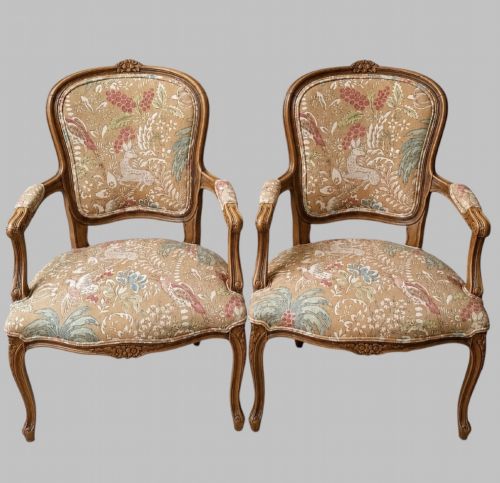


Vintage Tapestry Open Armchair
A vintage tapestry open armchair brings texture and architectural silhouette to a room, offering exposed wooden framing paired with patterned upholstery.
Vintage Tapestry Open Armchair
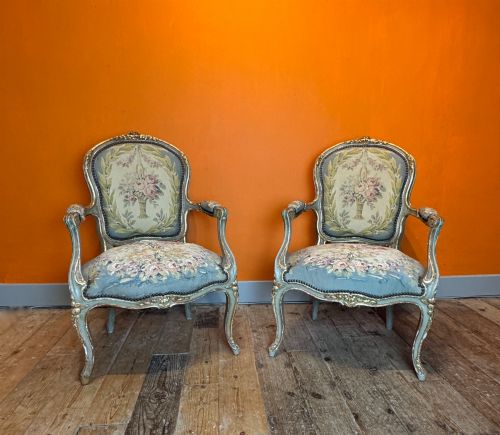
A vintage tapestry open armchair combines a wooden or painted structural frame with textile seat and back panels, presenting an accessible route into traditional seating. These chairs span the nineteenth century through the early decades of the twentieth century, including Edwardian and Victorian examples alongside revival designs.
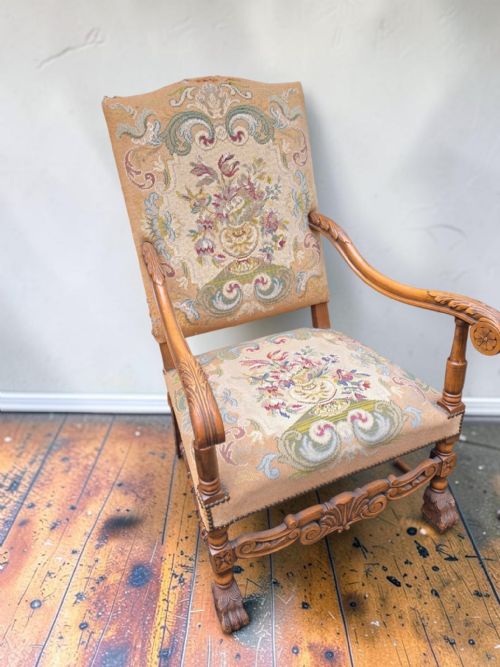
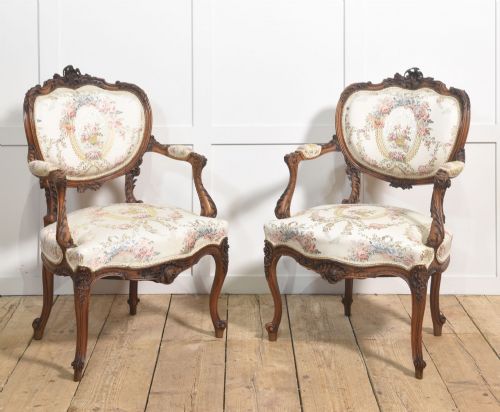
The phrase covers French styles such as Louis XV and Regence alongside English country house pieces, often featuring exposed arms without upholstered padding. Buyers encounter walnut, mahogany, and oak frameworks paired with wool tapestry, needlepoint panels, and tapestry fabric.
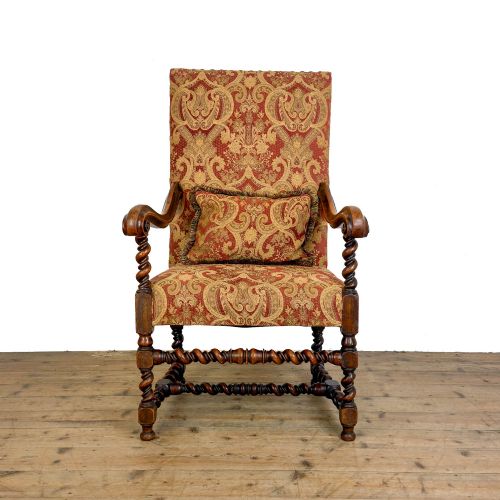
Most entries follow historical revival paths, showing George II styles, Carolean influences, and Neo-Rococo curves. The open arm construction distinguishes these chairs from fully upholstered armchairs, keeping the wooden structure visible from all angles.
Materials and construction methods
Frames rely on hardwoods such as walnut, mahogany, oak, and beech, which are often carved, painted, parcel gilt, or left in their natural grain. Joinery techniques from the nineteenth and early twentieth centuries secure the open arms and cabriole or straight legs.
Upholstery consists of woven wool tapestry and needlepoint panels depicting floral, figurative, or geometric motifs. Brass tacks frequently secure the textile edges directly to the wooden rails of the seat and back.
Vintage Tapestry Open Armchair Retail Price Guide 2026
Typical asking prices for vintage tapestry open armchair among the pieces listed under this phrase on Sellingantiques today, from the lower quarter to the upper quarter. They describe what is for sale here now, not the wider market.
Some chairs retain the tiny wool stitches of nineteenth-century fireside makers who spent winters embroidering floral panels.
Assessing quality in construction and textiles
The definition of the wood carving determines the visual hierarchy, ranging from crisp hand-carved walnut details to simpler turned or painted mahogany structures. French frames often demonstrate deeper relief work on the crest rails and arm terminals.
The density and fineness of the needlepoint or wool tapestry set higher quality pieces apart from standard production. Hand-stitched panels with complex colour shading indicate superior craftsmanship compared to machine-woven alternatives.
The Vintage Tapestry Open Armchair Glossary
- Fauteuil
- An open-armed French armchair with upholstered seat and back, typically featuring an exposed wooden frame. These chairs originate mainly from continental revival traditions.
- Needlepoint
- A type of canvas work embroidery utilising wool yarn to create dense pictorial or floral patterns. Panels of this work form the backrests and seats of many period chairs.
- Parcel Gilt
- A surface treatment where selected portions of a painted or wooden frame receive a thin layer of gold leaf. This technique highlights carved details such as leaves and scrolls.
- Regence Style
- A transitional design period bridging classical seventeenth-century forms and the lighter curves of Rococo. Frames feature symmetrical carving and restrained cartouche motifs.
Vintage Tapestry Open Armchair: Frequently Asked Questions
How do I style an open armchair?
Place an open armchair in a study, bedroom, or corner of a living room where its wooden profile remains visible from the sides. The open arms keep light flowing through the space.
Pair the chair with a small reading table or position it opposite a sofa to introduce historical texture without blocking sightlines.
What is the difference between tapestry and needlepoint?
Tapestry is woven on a loom using warp and weft threads to build a picture or pattern. Needlepoint is stitched by hand through a pre-made canvas mesh using wool or silk.
Both textiles appear frequently on nineteenth-century seating, providing durable surfaces for daily use.
How do I identify a French style chair?
Look for curved cabriole legs, painted or gilt wood finishes, and carved floral motifs along the crest rail. French Fauteuils often display curved armrests and exposed wooden frames.
English interpretations tend to use heavier mahogany or walnut with simpler structural lines.
Are these chairs comfortable for daily seating?
Most vintage chairs offer firm support through traditional webbing and padding methods rather than deep modern cushioning. The upright posture suits reading or conversation.
Adding a small lumbar cushion can adjust the seating depth to suit personal comfort preferences.