
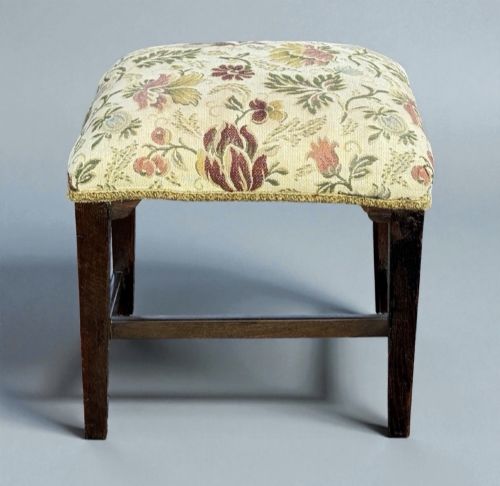


Vintage Tapestry Dressing Stool
These vintage tapestry dressing stools combine solid timber frames with worked textile tops, offering practical low seating for bedrooms and dressing rooms.
Vintage Tapestry Dressing Stool
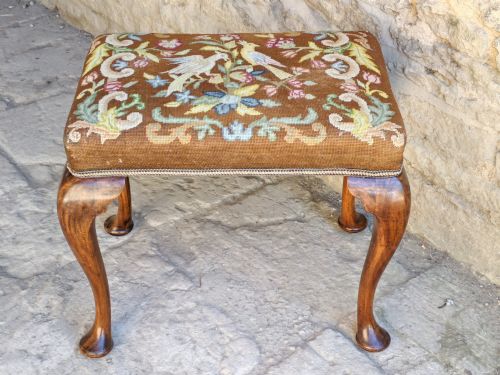
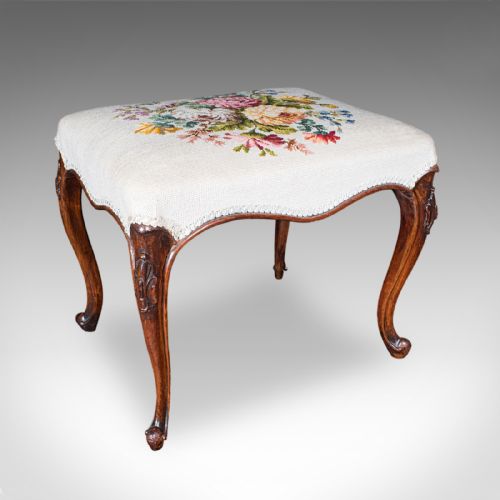
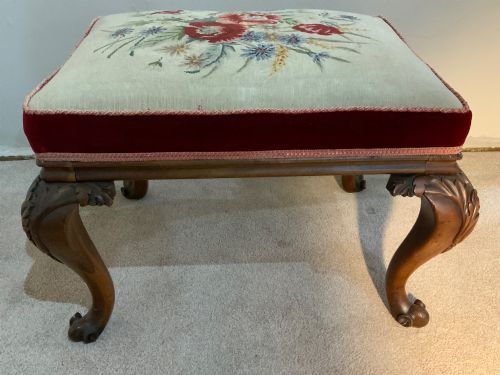
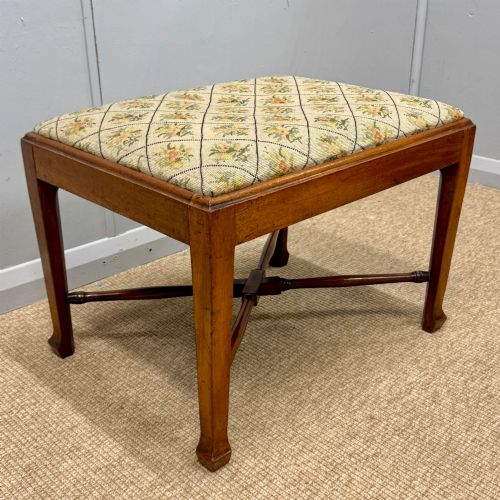
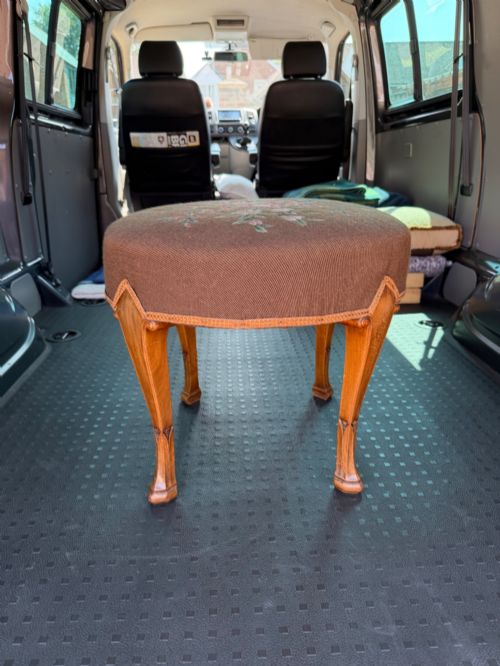
A vintage tapestry dressing stool serves as a low seat for a vanity table, combining a wooden framework with a textile top. When searching for a vintage tapestry dressing stool, buyers encounter pieces spanning from the mid-nineteenth century through the 1930s. The selection includes rectangular and oval forms, occasionally featuring cross stretchers or X-frames.
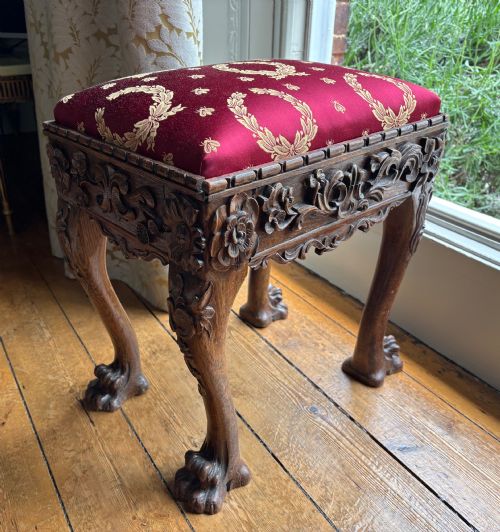
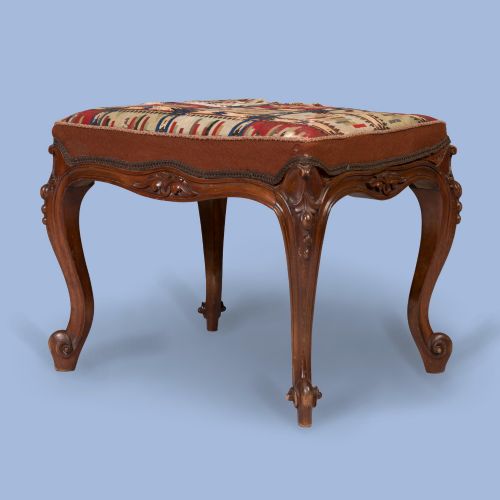
Victorian examples dominate the available selection, often rendered in walnut or mahogany with carved details. Later pieces from the 1920s and 1930s emulate earlier Queen Anne and Chippendale styles while maintaining compact proportions suitable for a dressing room.
Materials and construction
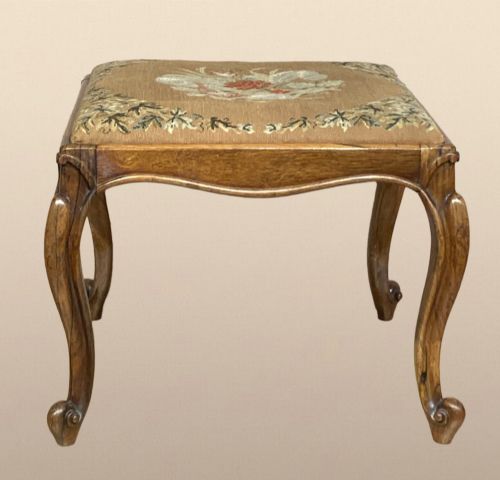
Frames rely on hardwoods such as walnut, mahogany, rosewood, and oak, chosen for structural stability and finished with hand-carved decorative elements. Cabinetmakers shaped cabriole legs, turned supports, and frame stretchers to bear weight while providing visual elegance.
Upholstery involves wool tapestry, needlepoint, or fabric secured over padding. The textile elements are hand-worked with decorative motifs, then fixed across the wooden seat base.
Recorded periods range from Georgian and Victorian times through the 1930s revival eras.
Assessing craftsmanship and finish
Quality rests in the execution of the timber frame, where crisp carving and tightly joined corners separate fine cabinet work from simpler production. The density of the wood and the subtlety of curves in cabriole legs dictate the piece's structural integrity.
The textile component also drives distinction, as finely stitched wool tapestry with intricate patterns represents a higher tier of historic workshop output than standard printed fabrics.
Jas Shoolbred
The Vintage Tapestry Dressing Stool Glossary
- Cabriole leg
- A furniture leg that curves outward at the knee and tapers inward toward the foot, inspired by the motion of leaping animals. This form appears frequently on Victorian and revival-style dressing stools.
- Needlepoint
- A type of canvas work embroidery executed with a yarn in a counted thread stitch. It forms the durable decorative surface seen on many historic footstools and dressing seats.
- Cross stretcher
- Wooden bars connecting the lower legs of a stool in an X-shape for added stability. These structural elements often feature a central finial or carving.
- X-frame
- A furniture base constructed from intersecting diagonal members forming an X shape when viewed from the side. This geometric support provides both strength and distinct visual rhythm to dressing stools.
- Tapestry
- A form of textile art traditionally woven on a vertical loom, though the term also describes heavy needlework used in historic upholstery. It provides a dense, textured surface resistant to wear.
Vintage Tapestry Dressing Stool: Frequently Asked Questions
What is a vintage tapestry dressing stool used for?
These low seats provide practical seating in front of a dressing table or vanity mirror. Their compact dimensions allow them to tuck neatly beneath furniture when not in use.
Beyond the bedroom, they function as fireside footstools or decorative low seats in sitting rooms and hallways, adding a touch of textile warmth to the floor space.
How do I identify a Victorian dressing stool?
Victorian examples typically feature dark hardwoods such as walnut, mahogany, or rosewood, often paired with hand-worked wool needlepoint or tapestry tops. Look for carved cabriole legs, turned supports, or X-frame structures.
Construction methods from this era rely on traditional joinery rather than modern fasteners, and the timber often displays a deep, polished patina acquired over decades of use.
Are tapestry and needlepoint tops original?
Many pieces retain their period needlework, executed in wool on canvas during the nineteenth or early twentieth century. These textiles show age through natural softening of the wool fibres and subtle fading of the dyed palette.
When a textile appears exceptionally crisp and uniform, it may indicate a later reupholstery job that respects the historical style of the wooden frame.
How do I care for wooden stool frames?
Maintain the hardwood frame by dusting with a dry, soft cloth and occasionally applying a quality beeswax to nourish the timber. Avoid placing the stool in direct sunlight or near heat sources to prevent the wood from drying out.
Handle the upholstered tapestry gently, keeping moisture away from the wool fibres and vacuuming the textile surface on a low suction setting.