
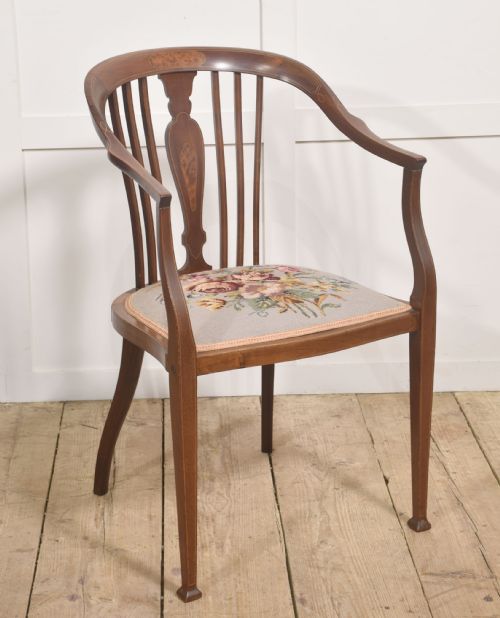


Vintage Tapestry Accent Chair
A vintage tapestry accent chair brings historic textile artistry and carved timber into a room, offering both seating and visual weight.
Vintage Tapestry Accent Chair
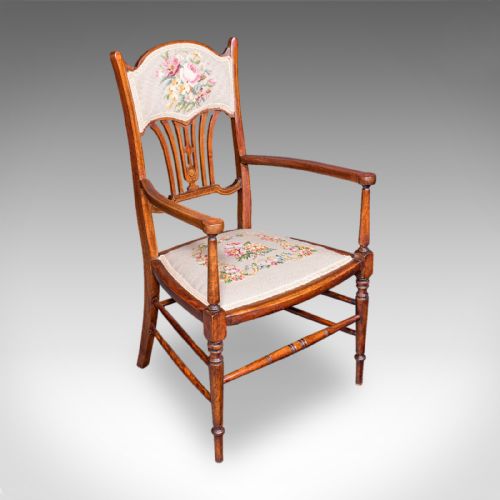
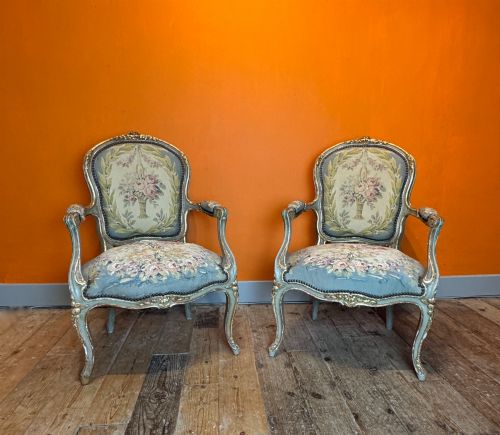
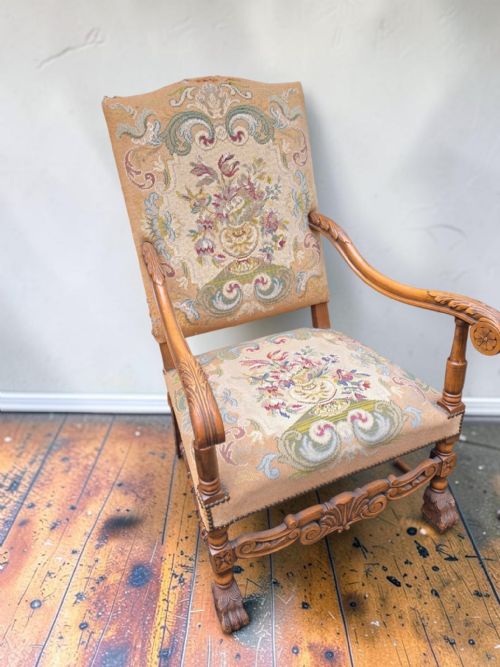
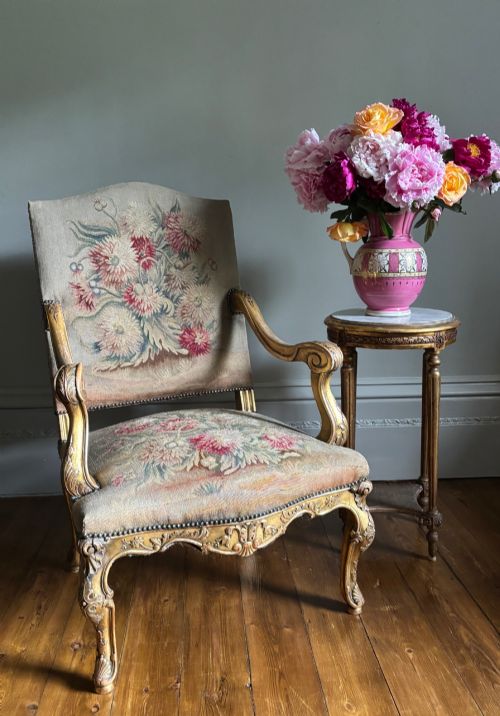
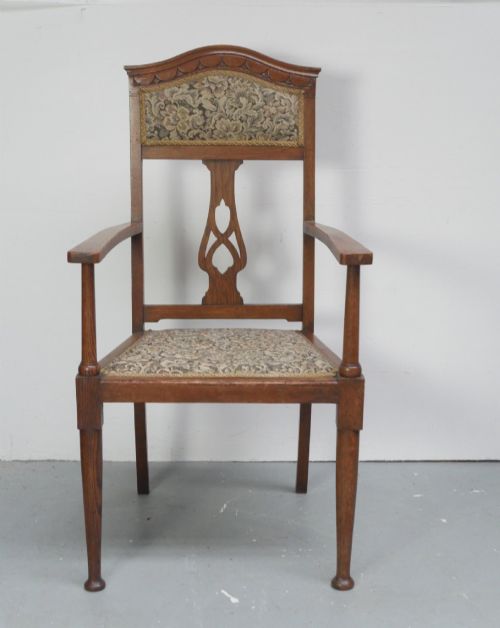
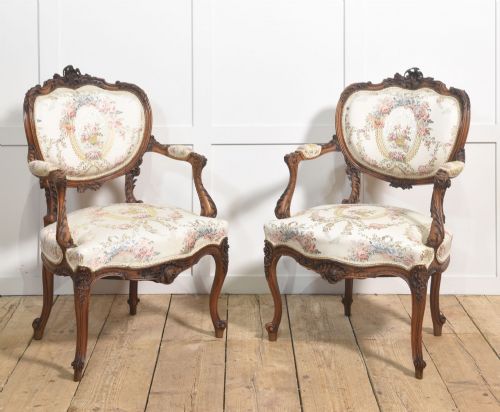
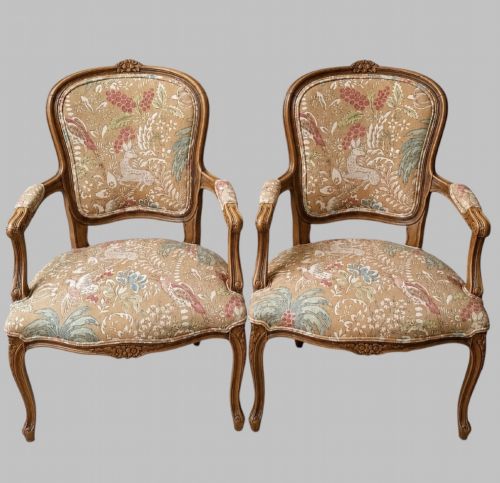
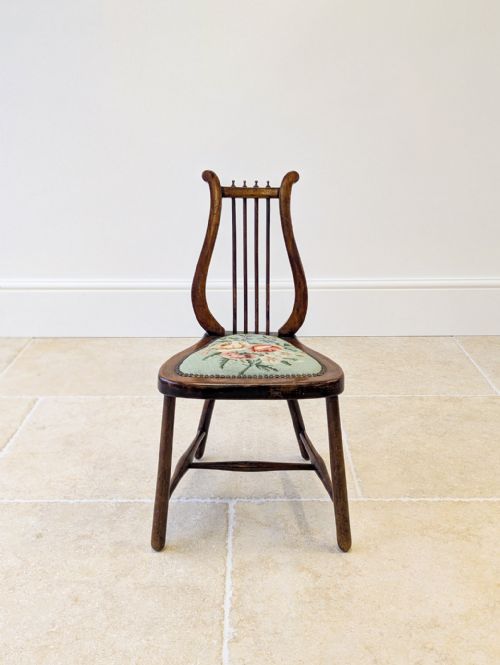
A vintage tapestry accent chair sits within a broad tradition of upholstered seating spanning the nineteenth and early twentieth centuries. These pieces combine wooden frames with woven textile panels, needlepoint, or petit point coverings that define their decorative character.
The selection on this page includes diverse forms such as open armchairs, fauteuils, slipper chairs, and occasional seats. Victorian, Edwardian, and French-inspired styles predominate, often featuring carved walnut, mahogany, or oak frames.
Buyers encounter everything from compact boudoir chairs to large walnut armchairs covered in floral needlework. These seats function as focal points in a drawing room, bedroom, or hallway, anchoring a scheme with period presence.
How they were made
Makers constructed the structural frames of these chairs using hardwoods such as walnut, mahogany, oak, and beech, frequently employing traditional joinery methods. Turnings, cabriole legs, and carved details were shaped by hand before being polished or gilded.
Upholstery relies on woven textiles, including wool and silk tapestries, needlepoint panels, and carpet sections fixed over webbing and stuffing. Frames often showcase applied ornamentation such as parcel gilding, satinwood inlay, or painted finishes.
Period styles span Victorian, Edwardian, Georgian, Regency, and French Chateau aesthetics.
What varies in quality
Quality reveals itself in the crispness of the timber carving and the density of the wood selected for the frame. Dense walnut or finely grained mahogany holds intricate joinery and deep relief work far better than softer secondary timbers.
The execution of the textile panel marks another tier of distinction. Finely worked petit point with tight, even stitches and complex pictorial designs separates standard production from exceptional examples.
White, Allom & Co.
The Vintage Tapestry Accent Chair Glossary
- Fauteuil
- An open-armed French armchair with a wooden frame where the sides remain uncovered. These chairs emerged during the seventeenth century and continued in various revival styles.
- Needlepoint
- A type of canvas work embroidery executed with a yarn in a counted thread stitch. It forms the decorative panels seen on many period chair seats and backs.
- Petit point
- Needlework executed on a fine mesh canvas using very small tent stitches. This technique allows for high detail and shading in pictorial upholstery.
- Slipper chair
- A low-seated bedroom chair originally designed for ladies to sit upon while putting on shoes. They typically lack arms and stand close to the floor.
- Carver chair
- An armchair, often with wooden arms, traditionally placed at the head of a dining table or used as a desk seat. The term denotes a sturdy frame suited to daily use.
Vintage Tapestry Accent Chair: Frequently Asked Questions
How do I date a tapestry armchair?
Dating relies on combining the timber, the construction joints, and the prevailing style of the frame. Victorian and Edwardian examples often display distinct revival motifs or machine-assisted joinery compared to earlier pieces.
The textile panel can sometimes be older than the frame or replaced during a later restoration, so examining the webbing and underside provides essential clues to the object's age.
Where should I place an accent chair?
These chairs work well in quiet corners, bedrooms, or alongside a fireplace where their decorative upholstery adds texture and colour to the room. Their scale makes them easy to move when rearranging a seating layout.
Because antique textiles are sensitive to strong sunlight, positioning the chair away from direct south-facing windows protects the fibres from fading.
Are tapestry chairs comfortable for daily use?
Comfort varies depending on the stuffing materials and the rake of the backrest. Many nineteenth-century chairs were built with firm support rather than deep modern cushioning.
Adding a small lumbar cushion can adjust the seating depth and make an occasional chair more hospitable for reading or relaxing.
How do I care for antique needlework?
Routine maintenance involves gentle vacuuming with a soft brush attachment to remove dust particles from the weave. Avoiding harsh cleaning agents prevents damage to aged wool and silk threads.
Professional textile conservators should handle any repairs to split canvas or worn stitching to preserve the integrity of the original needlework.