


Antique Walnut Dining Seating
These antique walnut dining seating pieces bring rich timber tones and period presence to a room.
Antique Walnut Dining Seating
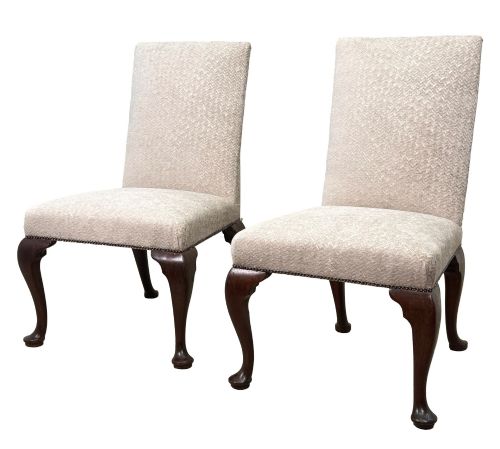
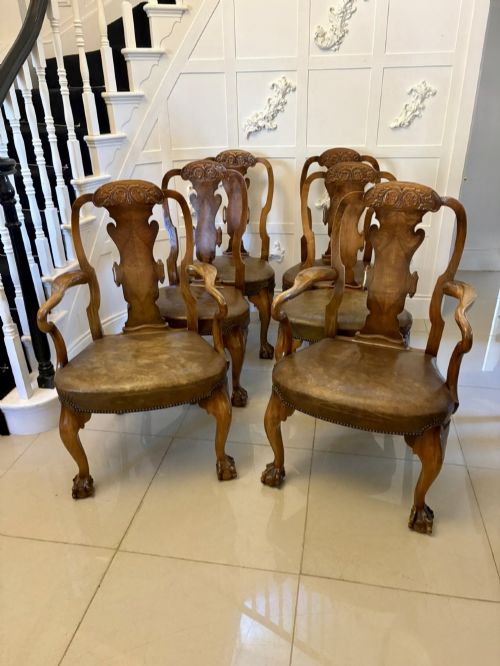
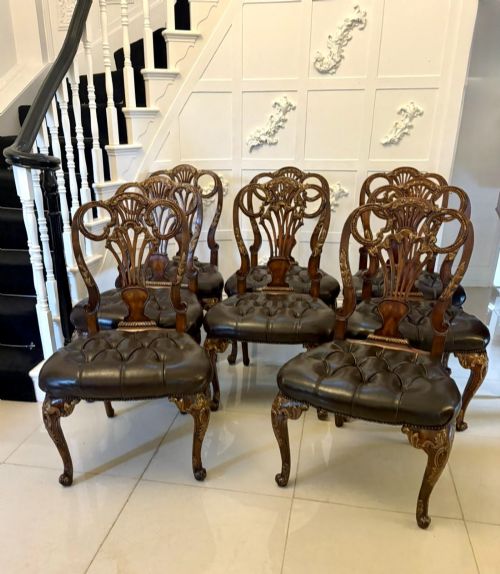
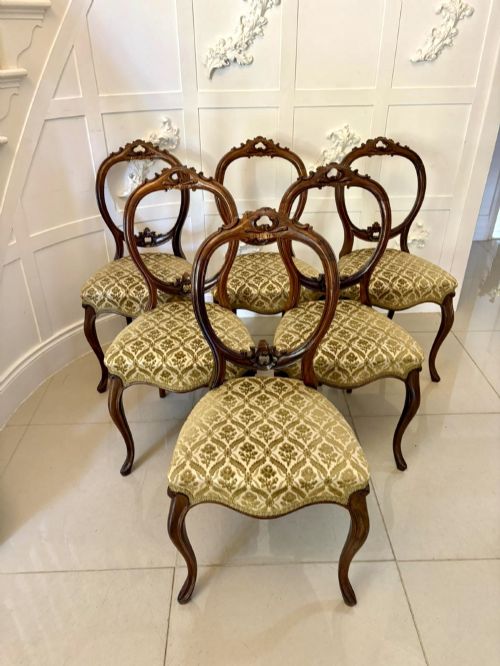
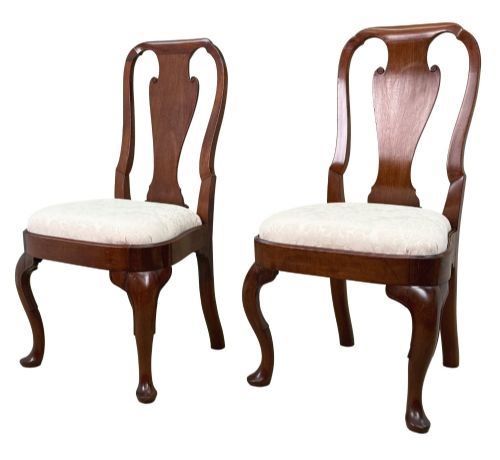
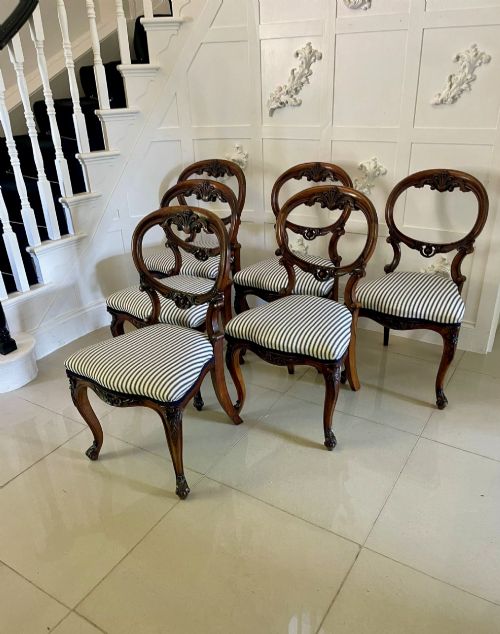
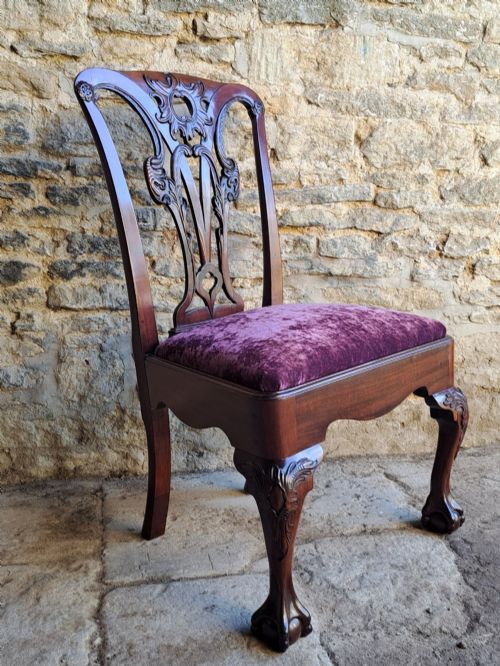
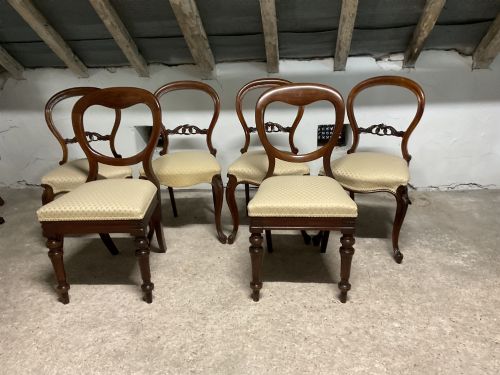
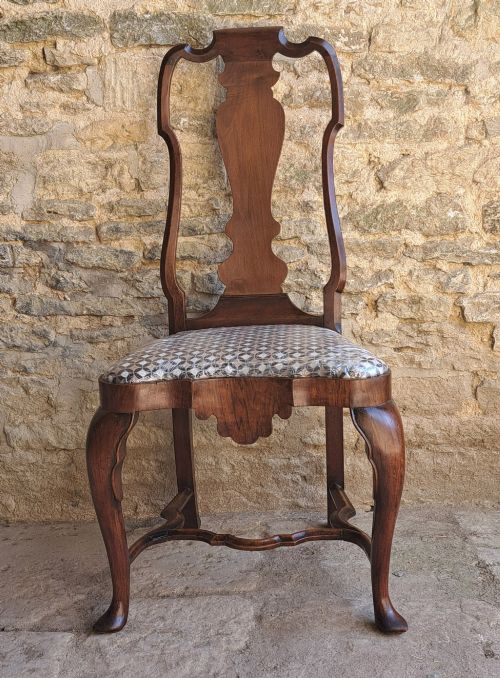
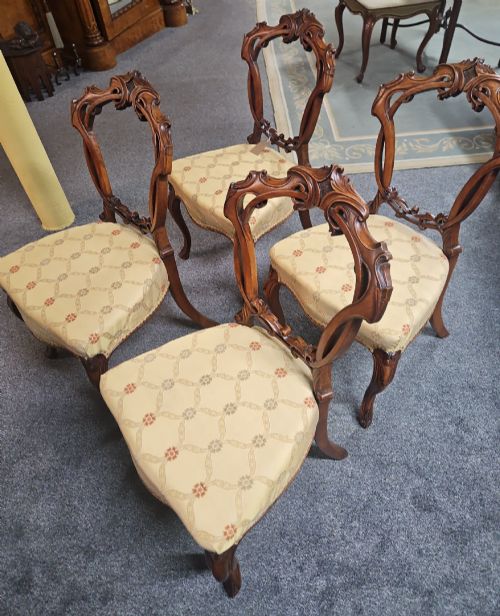
Antique walnut dining seating spans formal dining chairs, side chairs, and larger sets originating from the eighteenth century through the Edwardian era. Buyers encounter early examples with pierced splat backs alongside Victorian carved balloon back chairs and later revivals.
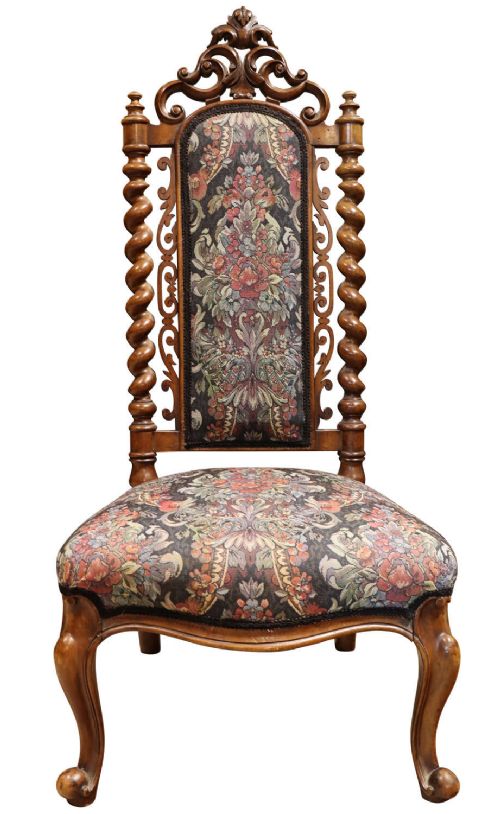
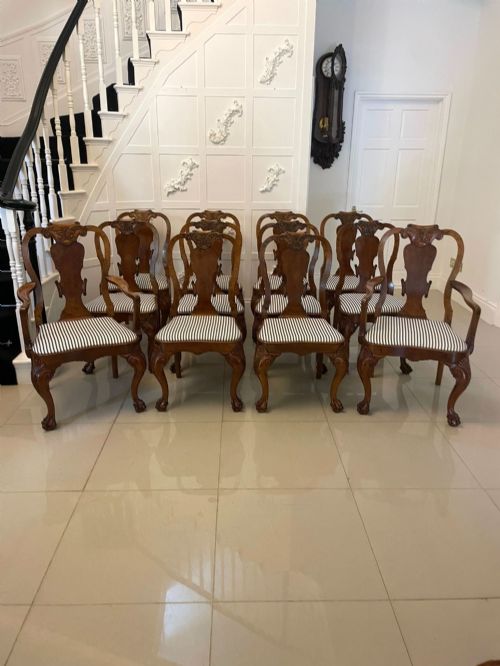
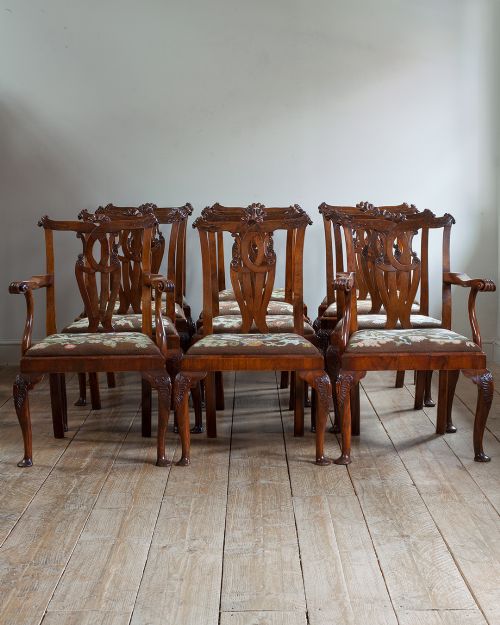
The selection frequently includes sets of six or eight chairs alongside pairs and individual salon or hall chairs. Regional variations emerge through English, Italian, and French interpretations of Queen Anne, Georgian, and Victorian styles.
How they were made
Cabinetmakers utilised solid walnut and decorative burr walnut veneers applied to carcases, shaping timber through carving and turning techniques such as barley twists. Frame construction often incorporated drop-in seats or fixed foundations designed to support structural upholstery.
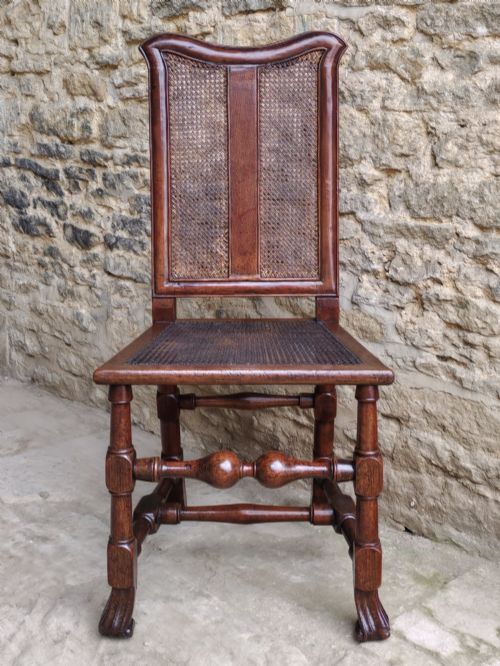
Upholstery methods evolved across periods, employing traditional textiles, fabric, velvet, and tapestry alongside woven cane inserts. Selected pieces incorporate supplementary materials like gilding and marquetry inlay to enrich the primary walnut structure.
One listed Swiss chair incorporates a musical movement inside its marquetry inlaid walnut frame.
What varies in quality
The distinction between standard production and top tier pieces rests on the depth of hand carving and the selection of timber figures, particularly the grain pattern in burr walnut veneers. Master craftsmanship appears in the precise joinery of splats, frames, and legs.
Integrity of the original frame structure and the quality of subsequent upholstery choices dictate the standing of individual chairs. Matching sets that retain their uniform timber colour and complete physical consistency command greater historical coherence.
Charles Tozer·Lamb of Manchester·Waring & Gillow
The Antique Walnut Dining Seating Glossary
- Burr walnut
- A prized timber harvested from tree growths that produces intricate, swirling grain patterns. Cabinetmakers sliced these sections into veneers for high-status furniture surfaces.
- Drop-in seat
- A removable wooden frame upholstered separately and dropped into the seat rail rebate. This technique allowed easier reupholstery without dismantling the chair frame.
- Balloon back
- A rounded, upholstered chair back shaped like a balloon popular during the Victorian period. The curved timber profile provided ergonomic support.
- Pierced splat
- The central vertical wooden strip within a chair back cut through with decorative openings. Eighteenth-century makers refined this component into elaborate geometric and vase silhouettes.
- Marquetry
- The decorative application of fitted wood veneers to form pictorial or abstract patterns. Italian and Swiss makers utilised contrasting timbers to adorn chair panels.
Antique Walnut Dining Seating: Frequently Asked Questions
How do I date a walnut chair?
Dating relies on observing structural characteristics, joinery methods, and stylistic cues present in the timber frame. Early eighteenth-century pieces display simpler splats and cabriole legs, whereas Victorian iterations favour carved balloon backs and eclectic revival motifs.
Material choices also offer chronological clues, as burr walnut veneers and specific upholstery fabrics align with distinct decorative eras from Georgian to Edwardian periods.
Are walnut dining sets rare?
Complete sets dating from the eighteenth century or earlier are uncommon because individual chairs frequently dispersed over generations. Larger matching groups usually survive from the Victorian and Edwardian eras when dining suites were produced in volume.
Buyers assembling a dining room often select sets of six or eight chairs matched by style, timber tone, and period characteristics rather than expecting a single factory origin.
How should I maintain upholstered seats?
Maintenance involves gentle cleaning suited to the specific textile, fabric, velvet, or tapestry selected for the seat. Regular dusting prevents particulate accumulation in the woven fibres and carved wooden crevices.
Placing chairs away from direct sunlight and excessive heat fluctuations protects both the delicate upholstery textiles and the underlying walnut timber from drying out.
Can I mix different chair styles?
Combining different chair styles is a traditional approach to interior styling, provided the timber species and general scale share a visual harmony. Pairing side chairs with armchairs or salon seating creates a collected interior appearance.
Matching walnut tones across disparate periods helps unify an eclectic arrangement around a dining table.