

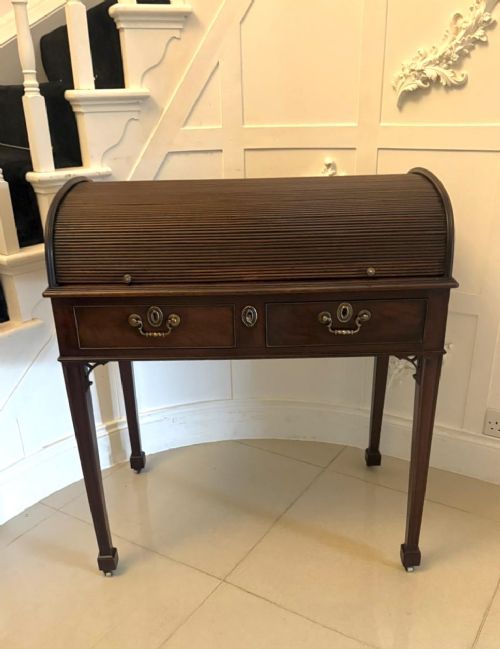


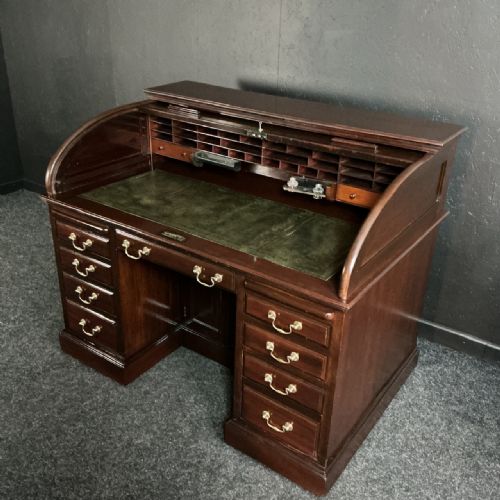


Vintage Tambour Writing Bureau
These vintage tambour writing bureau pieces bring slatted roll-top fronts and fitted compartments to home work spaces.
Vintage Tambour Writing Bureau
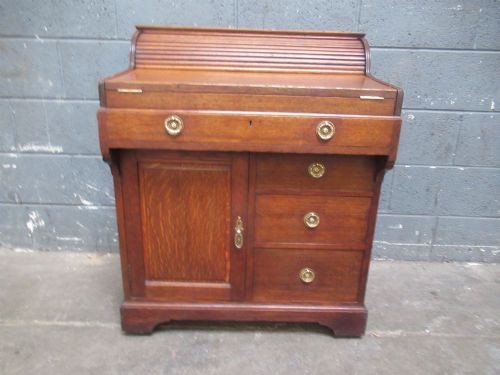
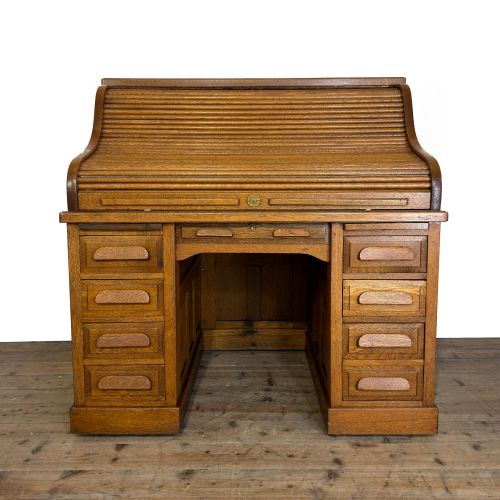
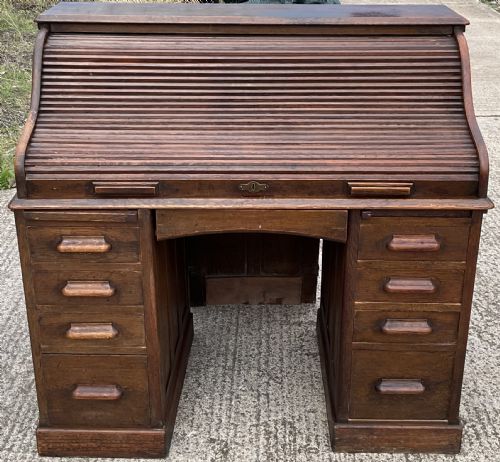
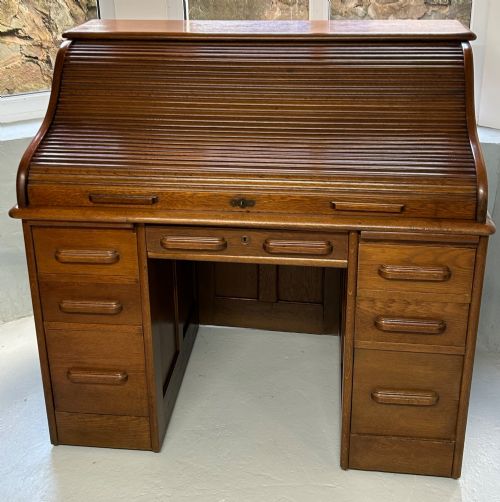
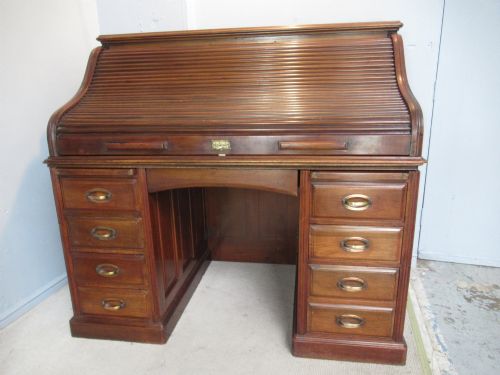
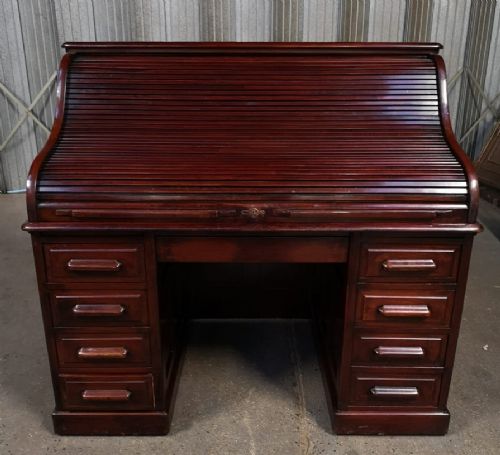
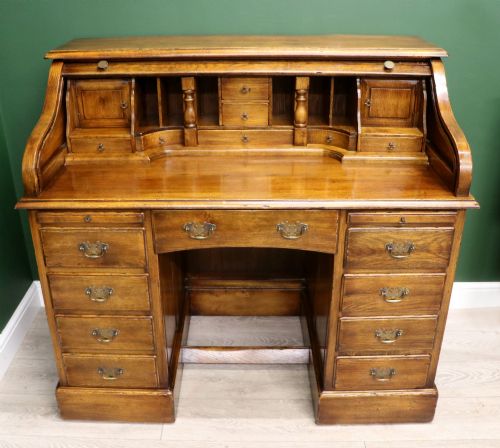
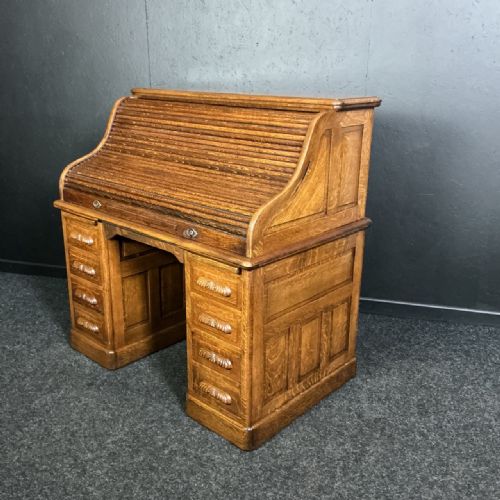
A vintage tambour writing bureau combines a slatted roll-top mechanism with a dedicated writing surface, often incorporating pedestals, drawers, and pigeonholes for correspondence. When exploring a vintage tambour writing bureau, you will encounter pedestal desks, cylinder desks, bureau bookcases, and compact writing cabinets.
The surviving examples range from Georgian and Regency prototypes in rich mahogany to Victorian and Edwardian iterations, with a strong showing of solid oak designs stretching into the 1930s. Most pieces you meet on this page hail from the Edwardian era and the late Victorian period, frequently built on a substantial pedestal or cabinet scale.
Makers and cabinetmakers of the nineteenth and early twentieth centuries utilised these clever slatted closures to conceal messy paperwork while maintaining access to inkwells and stationery drawers. These forms served professionals and domestic writers alike, offering lockable security and structured organisation within domestic studies.
Factors that separate examples
Quality rests heavily on the smooth operation of the slatted tambour track and the precision with which the timber strips align when closed. Superior examples reveal tight dovetail joints in the internal drawers, well-figured timber grains selected for visual impact, and original brasses or working locks.
The choice of primary wood and the integrity of the secondary framing dictate longevity, with solid oak and dense mahogany retaining structural stability better than lesser woods. The complexity of the interior fitted compartments - such as secret drawers, sliding writing slides, and panelled backs - also marks out the finer workshops.
Vintage Tambour Writing Bureau Retail Price Guide 2026
Typical asking prices for vintage tambour writing bureau among the pieces listed under this phrase on Sellingantiques today, from the lower quarter to the upper quarter. They describe what is for sale here now, not the wider market.
Some Edwardian desks hide secret compartments behind tiny pigeonholes, waiting for future owners to misplace their house keys inside them.
Maples of London and Paris·James Shoolbred & Co
The Vintage Tambour Writing Bureau Glossary
- Tambour
- A flexible shutter or screen formed of narrow wooden slats glued to canvas, allowing it to slide along a curved groove in the desk frame. This mechanism conceals the desk interior without requiring clearance for swinging doors.
- Pedestal desk
- A heavy office or library desk supported by two separate stacks of drawers or small cupboards. The central user sits in the kneehole space between the two pedestals.
- Cylinder desk
- A writing desk featuring a smooth, quarter-circle rotating wooden cylinder that covers the writing surface and pigeonholes. Unlike the slatted tambour, a cylinder is typically a single solid curved panel.
- Bureau bookcase
- A taller hybrid furniture form combining a writing desk compartment in the lower section with glazed or panelled bookshelves above. These pieces maximise vertical storage in studies and libraries.
- Pigeonhole
- A small, open vertical compartment within the desk interior designed for sorting letters, envelopes, and documents. These compartments form part of the stationary nest situated above the main writing surface.
Vintage Tambour Writing Bureau: Frequently Asked Questions
How do tambour doors work?
Tambour doors are constructed from individual wooden slats glued side by side onto a strong canvas or fabric backing. This flexible assembly runs within recessed grooves cut into the side panels of the desk.
When pushed, the slats follow the curve of the housing track to roll away into the body of the desk. This design allows the desktop to be locked shut without needing clearance for swinging wooden doors.
Are these desks good for laptops?
Many of these vintage desks provide sufficient depth and surface area to accommodate modern laptops and desktop accessories. The pull-out writing slides offer extra staging room for paperwork alongside a keyboard.
However, buyers should check the specific interior kneehole dimensions and desktop depth before purchasing. Older writing surfaces may sit slightly lower or shallower than contemporary ergonomic office desks.
How do I care for leather inserts?
Leather writing surfaces require gentle cleaning using a slightly damp cloth, avoiding harsh chemical cleaners or excessive water. Applying a specialised leather balm periodically prevents the hide from drying and cracking.
Keep sharp objects and unsealed ink bottles away from the writing surface to avoid permanent staining. Most inserts are replacement panels fitted into original rebates if historical replacement becomes necessary.
What is the difference between oak and mahogany models?
Oak models frequently date from the late Victorian and Edwardian periods, often displaying prominent medullary rays and a heavy, durable construction. These desks suit traditional or Arts and Crafts interiors.
Mahogany models span earlier Georgian and Regency periods through to later Edwardian reproductions, offering a finer, reddish-brown grain. Mahogany surfaces often feature in more formal library settings or lighter ladies writing cabinets.