

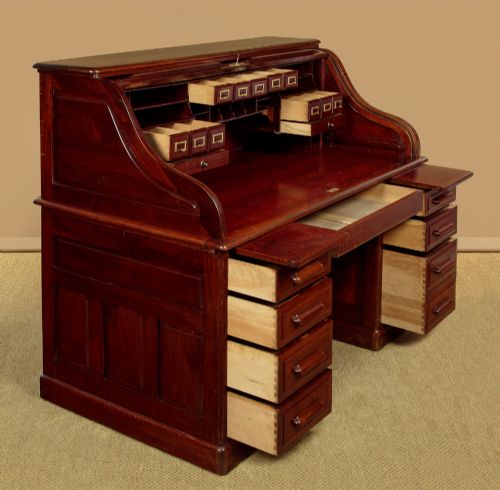


Vintage Tambour Front Desk
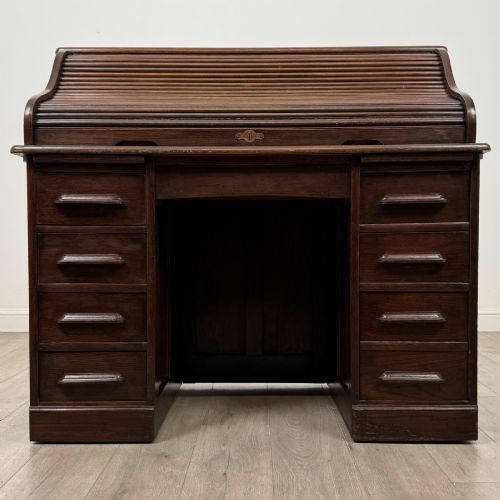
A vintage tambour front desk offers clever slatted roll-top storage and neat internal compartments, combining working space with tidy desktop security.
Vintage Tambour Front Desk
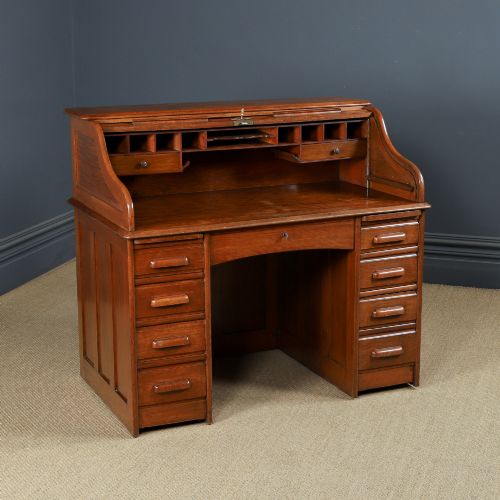
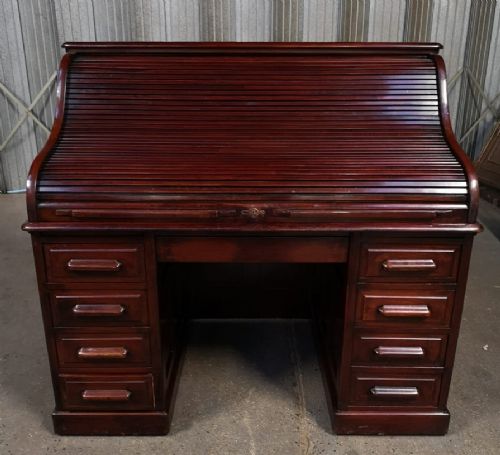
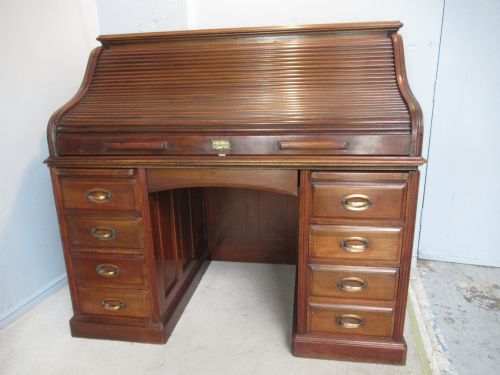
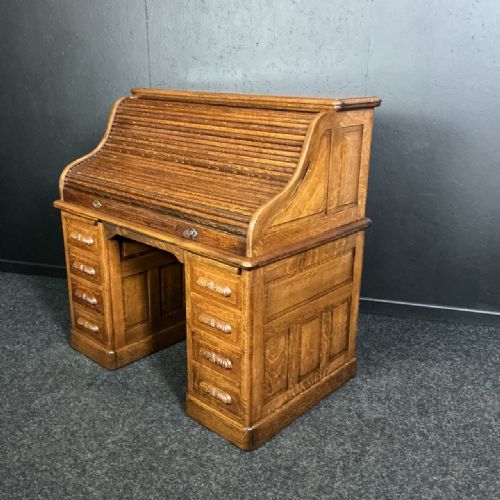
When you search for a vintage tambour front desk, you look at robust office and study furniture designed to conceal paperwork behind flexible wooden slats. The pieces most likely to meet you on this page belong to the Edwardian and Victorian periods, often constructed from oak or mahogany in pedestal and bureau formats.
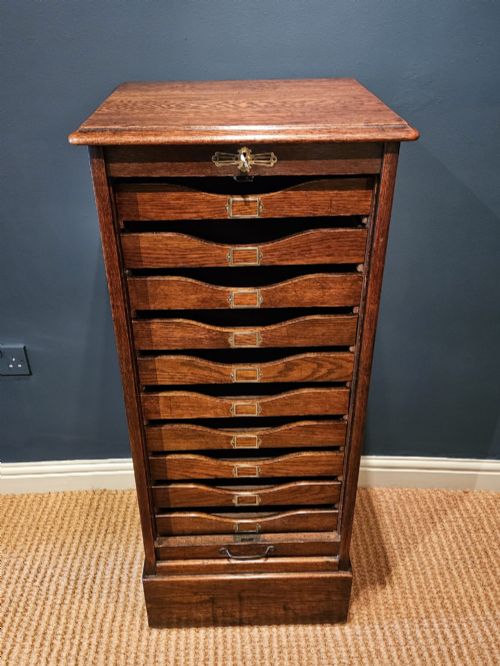
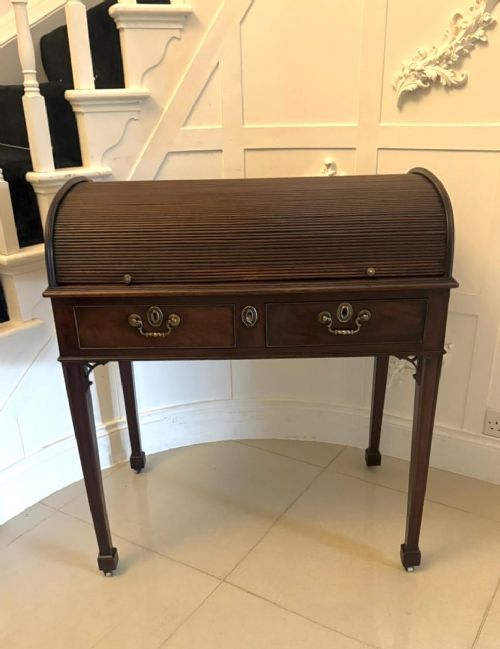
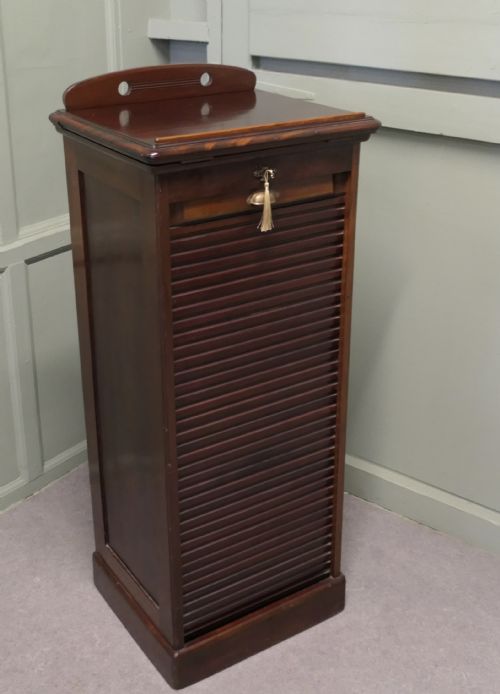
These items range from large executive roll-top desks with internal pigeonholes to smaller compact filing cabinets and cylinder desks. The defining characteristic is the slatted tambour door that slides smoothly in side grooves to reveal or hide the working surface.
Originating largely from 19th-century and early 20th-century workshops, these desks served clerks, merchants and writers who needed to secure documents quickly at the end of the working day.
How they were made
Cabinet makers constructed the flexible tambour shutters by gluing individual narrow strips of wood onto canvas or leather backings, allowing the curtain to curve around internal tracks. Solid timbers like oak, walnut and mahogany formed the main carcass, pedestal drawers and desktop surfaces.
Internal pigeonholes and small drawers utilised fine dovetail joinery, whilst brass hardware such as pulls, handles and locks secured compartments. Secondary timbers lined drawer interiors and backing panels, supporting the heavy structural weight of the pedestals.
Listings feature oak, mahogany and walnut pieces spanning the Victorian and Edwardian eras alongside Arts and Crafts designs.
What varies in quality
Quality rests upon the smooth operation of the tambour shutter and the precision of the wooden track it runs within. Superior examples feature perfectly aligned slats that glide silently without binding or sagging.
The choice of primary timber and the execution of structural joinery differentiate standard commercial office pieces from finer domestic reception furniture. Richly figured walnut or mahogany veneers and robust panelled oak construction elevate certain desks above plain utility versions.
Maples of London and Paris·James Shoolbred and Co
The Vintage Tambour Front Desk Glossary
- Tambour
- A flexible shutter made from narrow strips of wood glued to a fabric backing, designed to slide along a curved track.
- Pedestal desk
- A heavy writing table supported by two banks of small drawers rather than simple legs.
- Cylinder desk
- A writing desk featuring a solid quarter-cylinder roll top that encloses the writing surface, distinct from slatted tambour doors.
- Pigeonhole
- A small, open compartment fitted within a desk interior for sorting letters and stationery.
- Dovetail
- A traditional interlocking joint used in drawer construction to ensure durable, long-lasting corners.
Vintage Tambour Front Desk: Frequently Asked Questions
How does a tambour mechanism work?
The tambour door consists of thin wooden laths fastened side by side onto a flexible canvas backing. This allows the entire shutter to bend smoothly around a curved track into the body of the desk.
When pulled, the slats glide along concealed grooves to open or close the workspace. Proper alignment of these tracks ensures the shutter moves without sticking.
Where were these desks used?
These pieces served primarily in busy 19th and early 20th-century offices, merchant counting houses and home studies. Clerks and professionals relied on them to keep working documents secure.
Today, they function effectively as home office desks, offering enclosed storage that hides modern technology when not in use.
How do I date an oak roll top desk?
Dating relies on stylistic clues, hardware choices and construction methods visible in the drawers and panelling. Edwardian examples often display lighter oak tones and simpler Arts and Crafts influences, whereas Victorian versions tend to be heavier and darker.
Interior drawer construction, such as hand-cut versus machine-cut dovetails, also helps narrow the period of manufacture.
Can the tambour shutter be repaired?
Repairing a stuck or broken shutter requires careful realignment of the internal guide tracks and checking the canvas backing for slackness. Missing or broken wooden laths can be replaced by a skilled cabinet maker using matching timber.
Regular maintenance involves cleaning out dust from the grooves and applying appropriate lubricants to keep the slats moving freely.