

Vintage Swivelling Mirror
A vintage swivelling mirror brings functional movement and period charm to a room, pivoting smoothly on side supports.
Vintage Swivelling Mirror
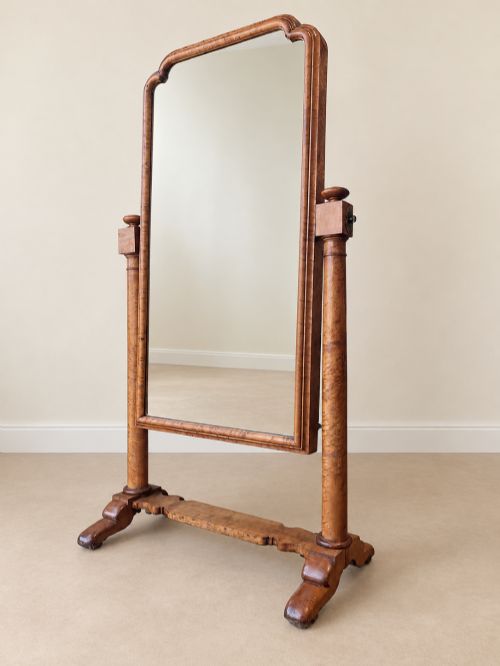
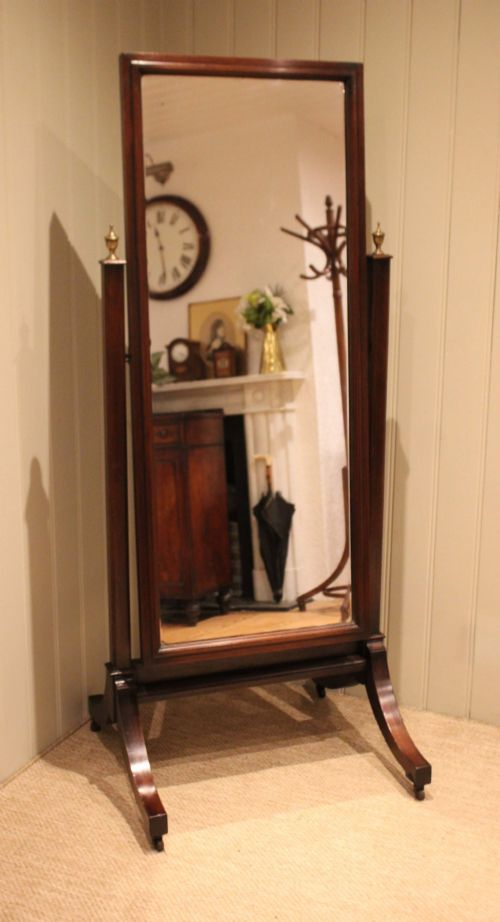
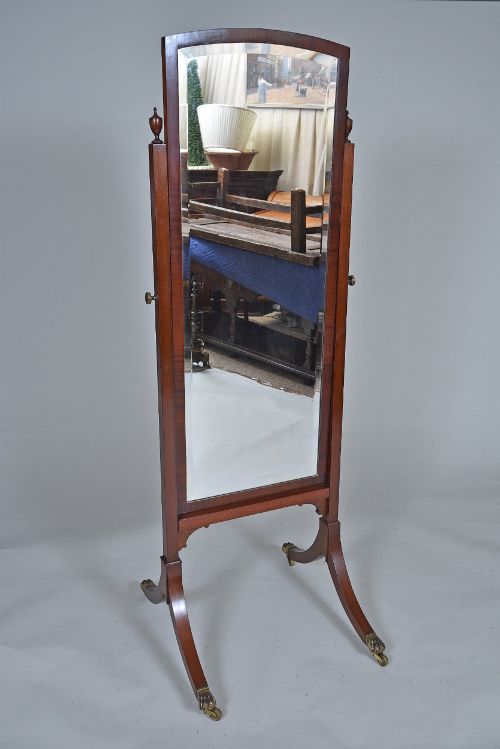
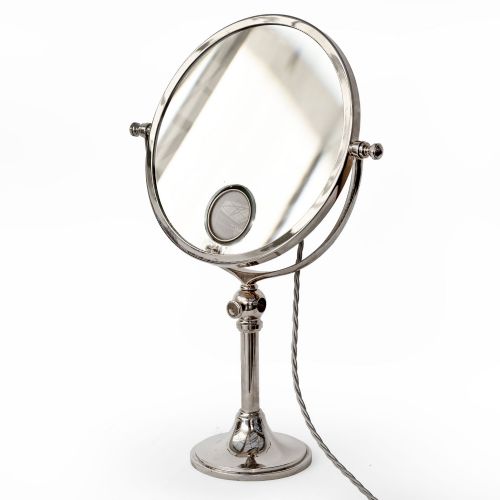
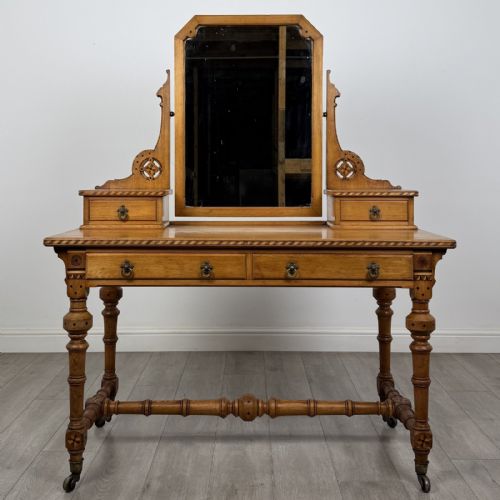
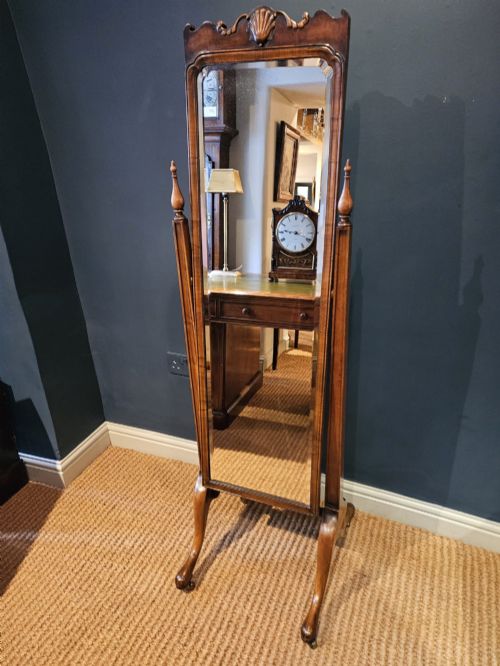
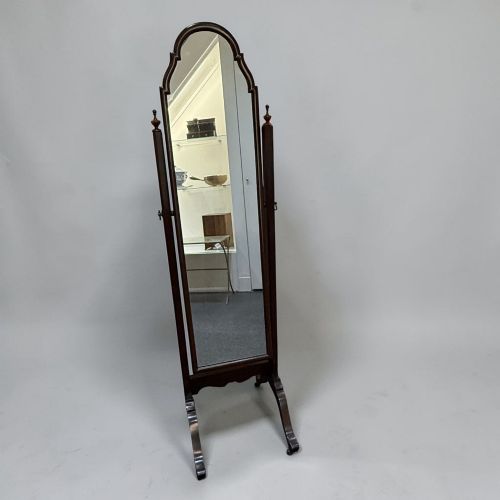
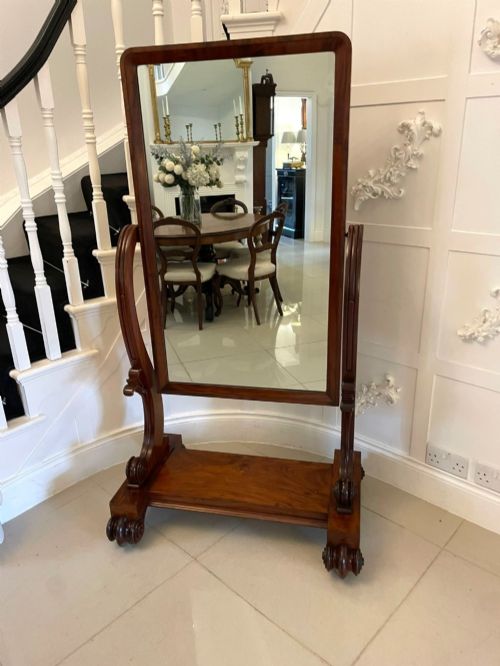
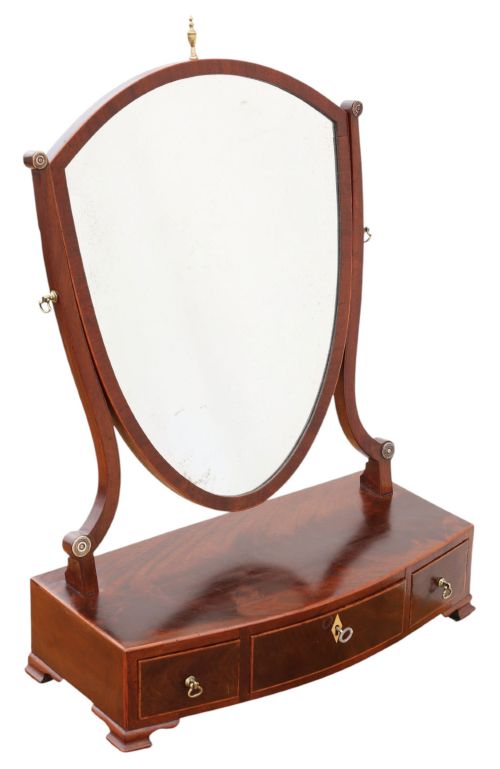
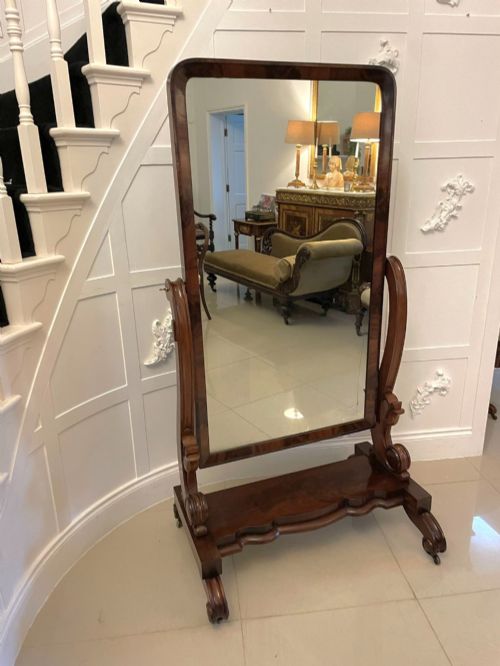
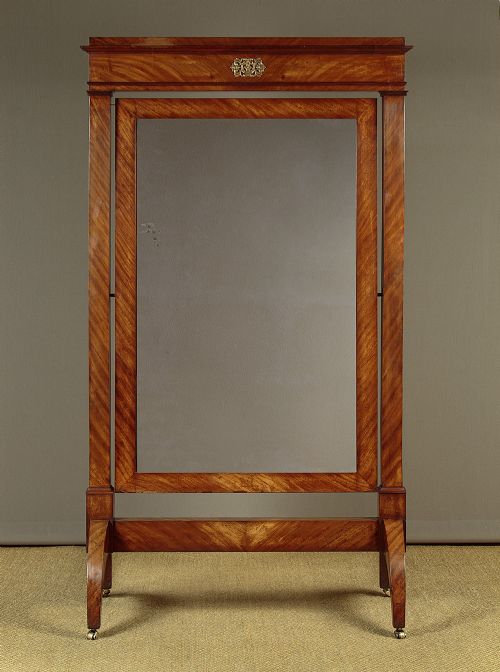
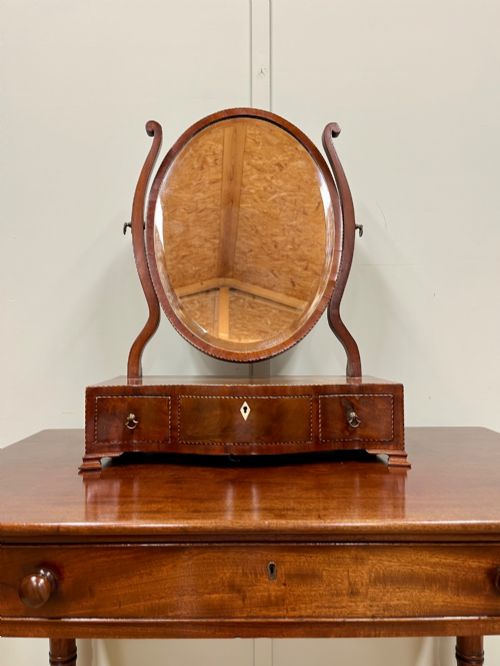
A vintage swivelling mirror serves to reflect light and assist with grooming, taking the form of table-top toilet glasses or large freestanding cheval mirrors. When searching for a vintage swivelling mirror, buyers encounter numerous examples designed to sit upon dressing tables or chests of drawers.
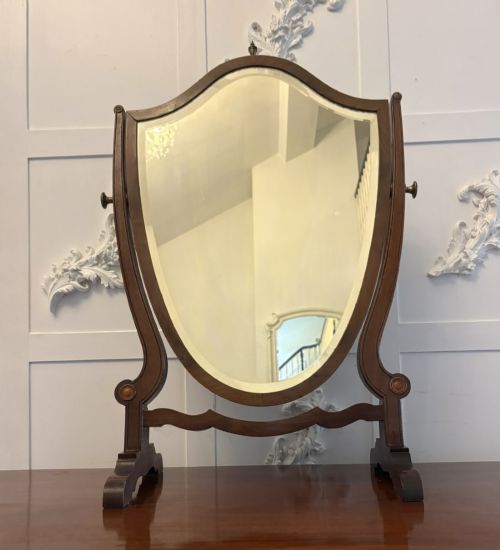
The selections span distinct historical periods from the Georgian era through to the Edwardian period and the early 20th century. Forms range from simple shield-shaped swing plates to grand cheval frames mounted on stable floor supports.
Materials and Construction
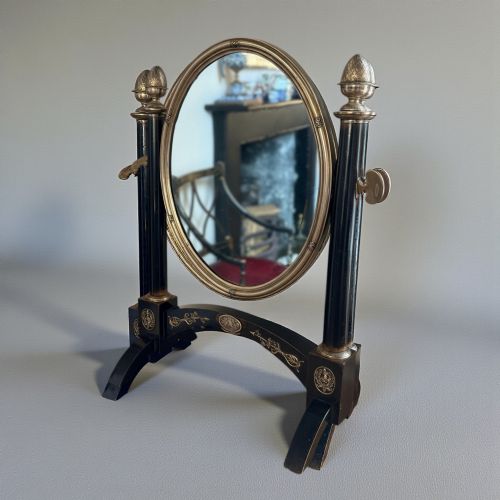
Cabinetmakers utilised dense timbers such as mahogany, walnut, oak, and satinwood to construct stable frames and supportive bases. Selected pieces incorporate brass hardware, glass plates, and occasionally ebonised wood or gilt details.
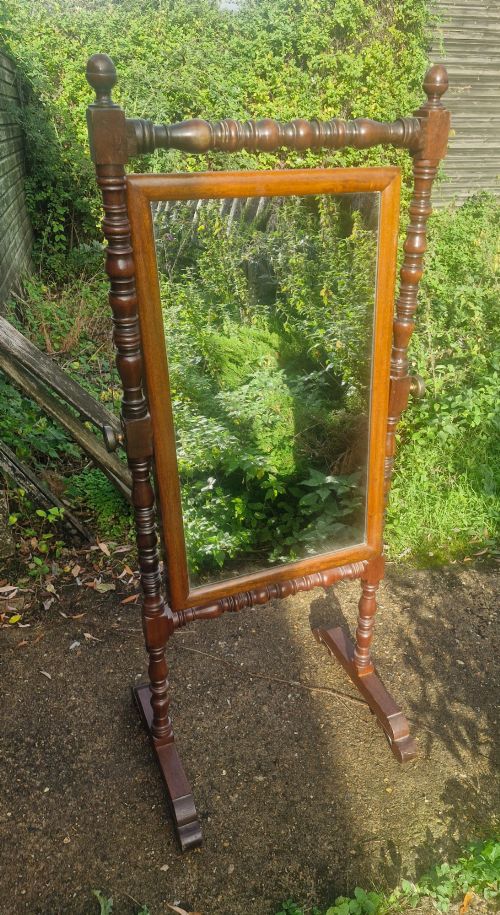
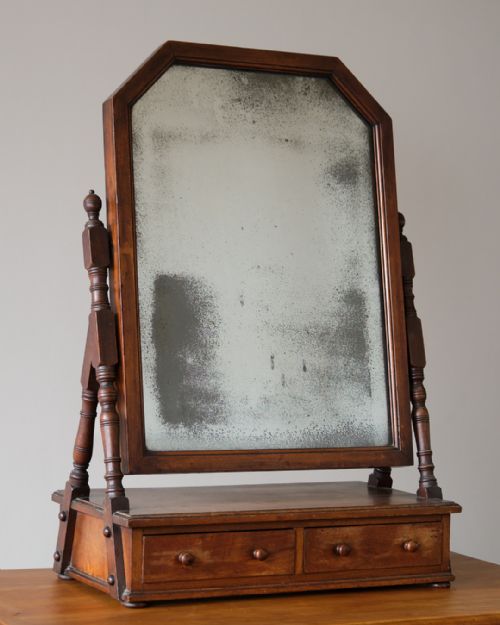
Swivelling mechanisms rely on side pivots or threaded screw caps fitted to upright posts, allowing the glass frame to tilt at different angles. Larger cheval mirrors frequently stand on shaped legs with brass sabots and castors for mobility.
Vintage Swivelling Mirror Retail Price Guide 2026
Typical asking prices for vintage swivelling mirror among the pieces listed under this phrase on Sellingantiques today, from the lower quarter to the upper quarter. They describe what is for sale here now, not the wider market.
Materials appearing across the inventory include mahogany, walnut, oak, satinwood, brass, and glass.
Distinguishing Quality
Superior examples demonstrate refined timber selection, such as figured mahogany or burr walnut veneer, paired with precise joinery in the surrounding frames and miniature drawers. Finely carved supports, such as barley twist columns or decorative scrollwork, elevate the craftsmanship beyond utilitarian production.
The clarity and age of the mirror plate itself contribute heavily to the character, alongside the original integrity of the brass pivoting pins and structural framing. Mass-produced later pieces lack the hand-finished depth and weight found in earlier workshop constructions.
Heal & Sons·Thomas Rubergall of London
The Vintage Swivelling Mirror Glossary
- Cheval mirror
- A large freestanding mirror designed to pivot vertically within a floor-standing frame, allowing the user to view their entire reflection.
- Toilet mirror
- A smaller swing mirror traditionally placed upon a dressing table, washstand, or chest of drawers for close-up grooming.
- Swing mirror
- A glass plate mounted on side pivots between two upright arms, enabling the angle of reflection to be adjusted freely.
- Parcel-gilt
- Woodwork partially decorated with gold leaf applied to carved details or mouldings to create visual contrast.
- Sabot
- A protective metal sleeve or socket fitted over the foot of a furniture leg, commonly cast in brass.
Vintage Swivelling Mirror: Frequently Asked Questions
How do I choose between a table mirror and a cheval mirror?
Table mirrors sit comfortably upon existing furniture like chests of drawers and dressing tables, offering a convenient chest-up reflection for daily use.
Cheval mirrors stand independently on the floor and require adequate clearance in a bedroom or dressing room to accommodate their full height and pivoting sweep.
What is the difference between a toilet mirror and a dressing mirror?
Toilet mirrors specifically describe small table-top swing mirrors historically used for washing and grooming in bedchambers.
Dressing mirrors encompass both these smaller table versions and larger full-length cheval designs intended for outfit coordination.
How do the pivoting mechanisms work on older mirrors?
Older mirrors utilise threaded metal pins or side screws passing through the upright supports into the frame's outer edges. Tightening these pivots holds the glass plate firmly at the desired viewing angle.
Many period pieces rely on friction caps or brass nuts that can be adjusted by hand to maintain tension as the wood ages.
Where should I place a swivelling mirror in my home?
These mirrors suit dressing tables, console tables, and bedroom chest tops where natural light from a window can bounce across the room. Freestanding cheval versions fit neatly into corners or dressing alcoves to maximise both utility and floor space.
Ensure the supporting surface or floor is level so the frame remains stable when tilted.