



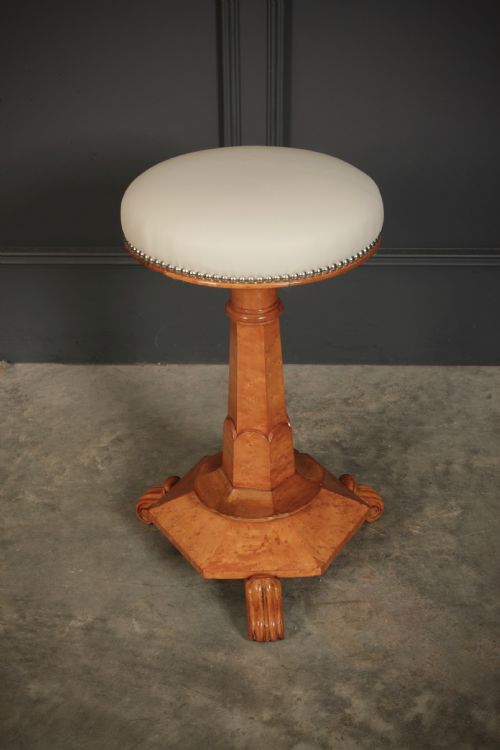


Vintage Swivel Piano Stool
A vintage swivel piano stool is a seat for the keyboard player that turns and adjusts, combining practical utility with period style.
Vintage Swivel Piano Stool
When you search for a vintage swivel piano stool, you encounter an array of rotating seats designed for musicians at the keyboard. These pieces span several eras, appearing most frequently in Victorian and nineteenth-century forms alongside occasional Georgian, Regency, and twentieth-century examples.
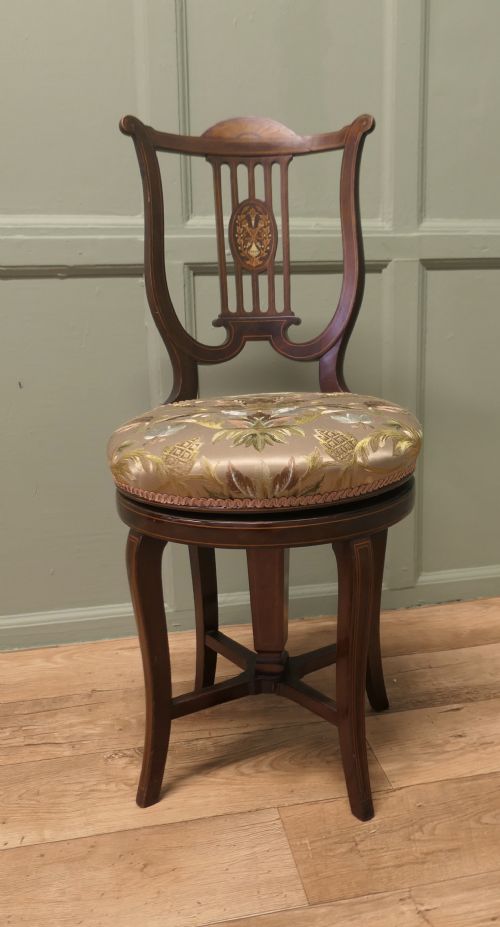
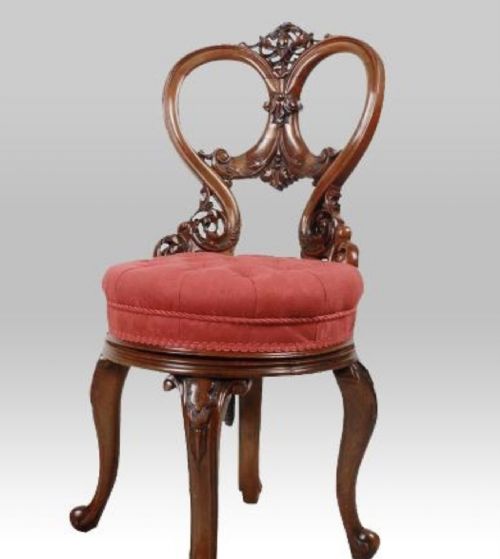
The objects take various shapes, from simple circular revolving tops to elaborate lyre-back music chairs and dressing table seats. Mahogany and rosewood dominate the selection, accompanied by walnut, birds-eye maple, and occasional industrial cast iron and wood combinations.
Makers such as Gillows and James Shoolbred appear among the listings, demonstrating the involvement of notable cabinetmakers in producing these adjustable seats. Buyers meet pieces dressed in leather, velvet, and various fabric upholstery suited to both period interiors and contemporary spaces.
How they were made
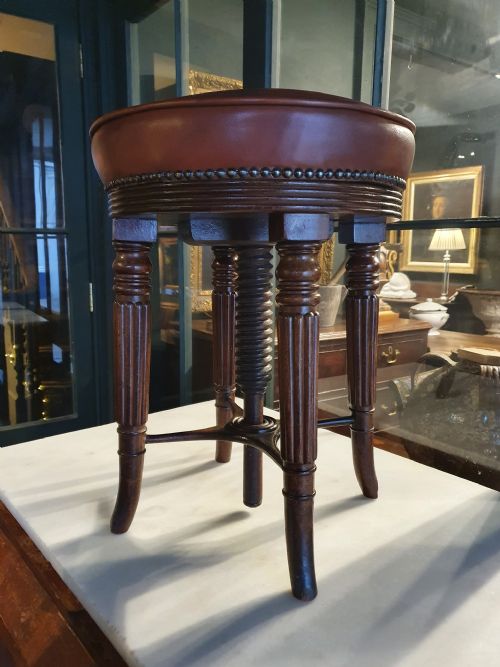
Cabinetmakers constructed these stools primarily from dense timbers such as mahogany, rosewood, and walnut, turning and carving the wood for structural support and decorative effect. Brass components frequently served internal or external mechanical roles, facilitating the screw-top adjustment mechanism that allowed the seat height to alter.
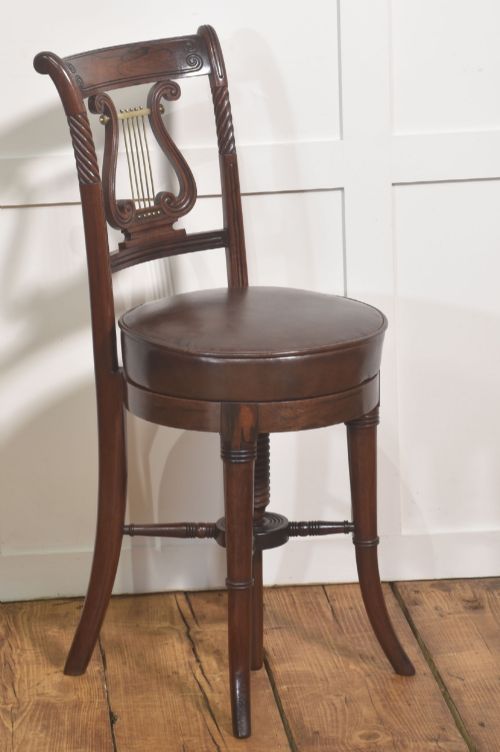
Upholstery completed the upper portion of the seat, utilising materials like leather, velvet, and woven fabric over padding. Specialised music chairs incorporated complex wooden framing, such as carved lyre backs, joined securely to the revolving mechanism beneath.
Vintage Swivel Piano Stool Retail Price Guide 2026
Typical asking prices for vintage swivel piano stool among the pieces listed under this phrase on Sellingantiques today, from the lower quarter to the upper quarter. They describe what is for sale here now, not the wider market.
Listings span periods from the Georgian era through the nineteenth century to the 1930s, utilising mahogany, rosewood, walnut, and cast iron.
What varies in quality
Quality rests in the precision of the turning, the depth of the carved detail on the wood, and the robustness of the revolving mechanism. Pieces bearing attribution to known makers or exhibiting refined timber selection represent the upper tier of construction.
Simpler country versions and industrial examples prioritize functional utility over ornamental carving, utilising cast iron and plain timber. The choice of upholstery materials and the integrity of the original wood finish further distinguish finer examples from standard production.
Gillows·James Shoolbred
The Vintage Swivel Piano Stool Glossary
- Revolving
- Turning round on an axis or pivot. This mechanism allows the seated musician to pivot easily while playing.
- Adjustable
- Capable of being altered in height or position. A screw-top mechanism typically provides this function on piano stools.
- Lyre back
- A chair back shaped in the outline of a classical lyre instrument. This decorative motif appears on musical chairs.
- Patent
- Protected by a formal grant of exclusive rights for an invention. Such mechanisms indicate specialised nineteenth-century design.
Vintage Swivel Piano Stool: Frequently Asked Questions
How do I adjust the height?
Most examples utilise a central screw mechanism operated by turning the upholstered seat top clockwise or counter-clockwise.
This action raises or lowers the seating platform to suit the player at the keyboard.
Are these suitable for daily use?
These pieces function well for daily seating when the mechanical screw and wooden joints remain sturdy and secure.
Careful placement helps preserve the historical timber and original upholstery fabrics.
How do I identify a music chair?
Music chairs often feature specialised backrests, such as carved lyres, designed to support performers of the harp, cello, or piano.
Their revolving seats provided the necessary mobility for instrumentalists.
What woods were commonly used?
Cabinetmakers selected dense hardwoods including mahogany, rosewood, and walnut for their strength and rich grain patterns.
Industrial variants occasionally combined timber with cast iron for added mechanical stability.