


Antique Music Room Furniture
Antique music room furniture brings together Edwardian, Victorian, and Georgian pieces designed specifically for holding scores and seating musicians.
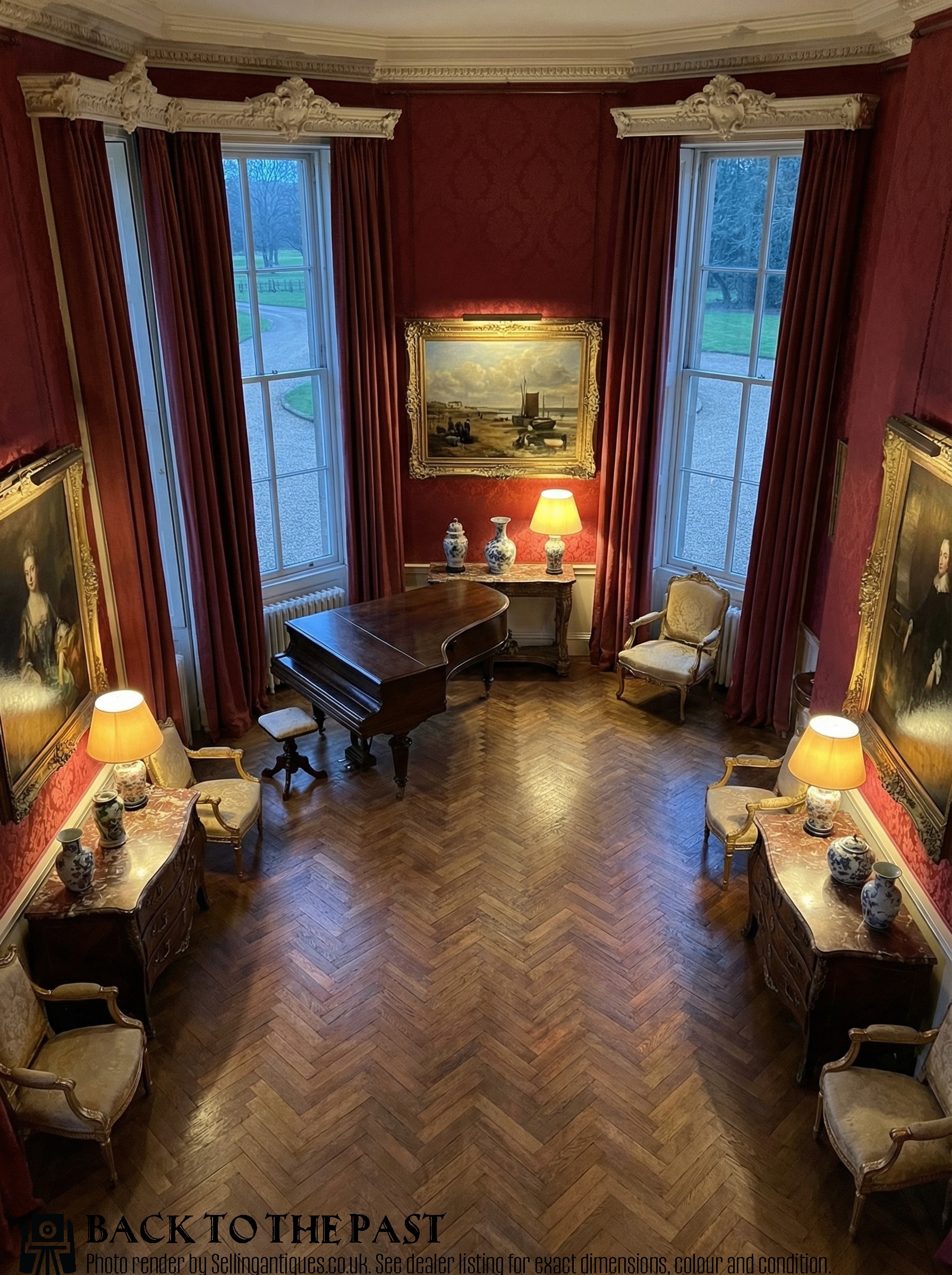
Antique Music Room Furniture
When you search for antique music room furniture, you encounter specialised seating and storage designed for the home parlour. The listings on this page consist primarily of piano stools, music cabinets, and magazine racks from the Georgian, Regency, Victorian, and Edwardian periods.
The most common forms you meet here are revolving piano stools and multi-drawer music cabinets in mahogany or rosewood. These functional items reflect the central place of domestic music-making in nineteenth and early twentieth century homes.
How they were made
Cabinet makers utilised solid hardwoods like mahogany and rosewood, frequently incorporating boxwood stringing and delicate inlay work. Frames and rotating mechanisms often integrated brass components and iron elements for stability and movement.
Seating portions were upholstered using traditional fabrics and green leather, mounted over lift-up storage compartments. Stools and cabinets relied on sturdy joinery to withstand the daily adjustment of height and the weight of stacked sheet music.
Antique Music Room Furniture Retail Price Guide 2026
Typical asking prices for music room furniture among the pieces listed under this phrase on Sellingantiques today, from the lower quarter to the upper quarter. They describe what is for sale here now, not the wider market.
Listings for antique music room furniture span the Georgian, Regency, Victorian, and Edwardian periods, utilising mahogany, rosewood, brass, and leather.
What varies in quality
The distinction between standard production pieces and finer examples lies in the crispness of the cabinet work and the selection of timber. Figured mahogany and richly grained rosewood elevate the visual presence of a cabinet or stool.
Mechanical complexity also separates pieces within this range, particularly in the smooth operation of revolving piano stool screws and the precise fit of multi-drawer sheet music storage.
The Antique Music Room Furniture Glossary
- Revolving piano stool
- A seat mounted on a central threaded metal spindle that allows the height to be adjusted by spinning the top. They are commonly found in mahogany from the Victorian and Edwardian eras.
- Music cabinet
- A specialised piece of case furniture containing multiple shallow drawers specifically proportioned for storing sheet music. Edwardian examples often include inlaid decoration.
- Boxwood stringing
- A narrow strip of pale wood inlaid into the surface of darker timber to create decorative borders. It is frequently seen on Edwardian mahogany pieces.
Antique Music Room Furniture: Frequently Asked Questions
What is a music cabinet used for?
Music cabinets provide dedicated storage for sheet music and folios within the home. Their shallow drawers keep paper scores flat and organised.
These pieces allowed musicians to sort their collections by composer or instrument easily. They commonly stood beside the piano or in the corner of the drawing room.
How do revolving piano stools work?
Revolving piano stools utilise a threaded iron or brass screw mechanism housed within the central column. Turning the seat clockwise or counter-clockwise raises or lowers the height.
This adjustment allowed different players to find a comfortable seating position relative to the keyboard. The mechanism requires occasional lubrication to turn smoothly.
How do I date an Edwardian music stool?
Edwardian music stools are typically identified by their use of mahogany, often accented with boxwood stringing or subtle inlay work. They date from the period between nineteen hundred and the First World War.
Unlike heavier Victorian designs, Edwardian examples often favor lighter proportions and simpler lines. Lift-up upholstered seats revealing storage compartments are especially common from this era.