
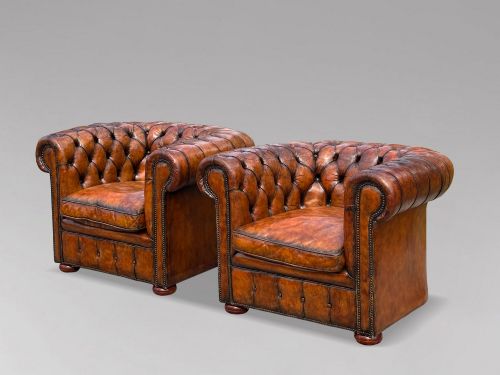
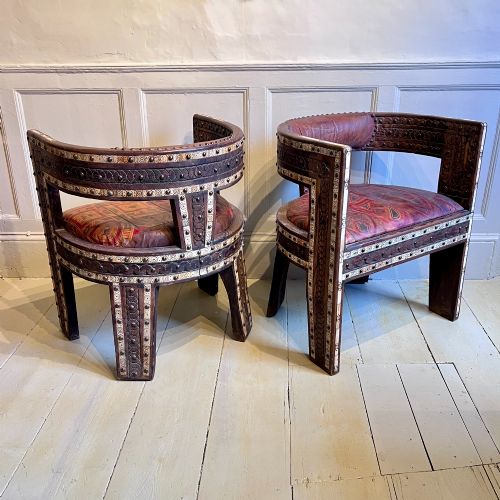
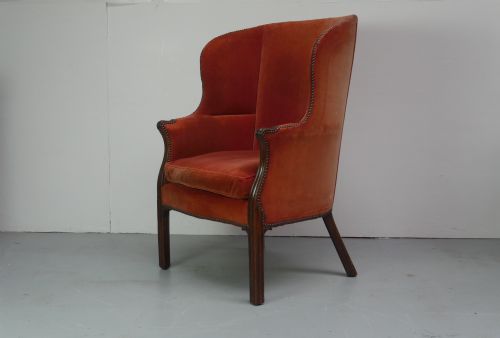
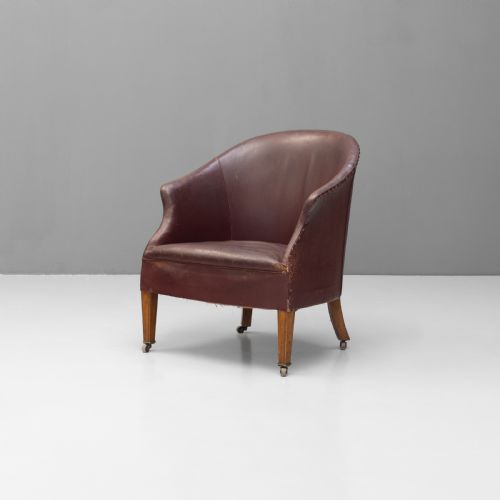
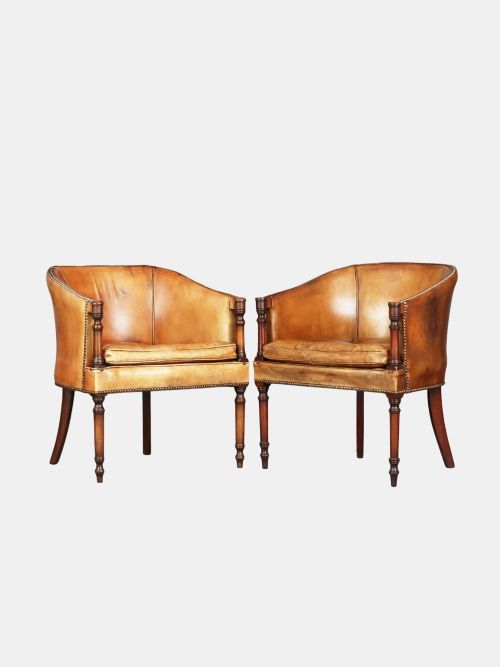


Vintage Studded Barrel Chair
These vintage studded barrel chair pieces offer deep-seated comfort wrapped in rich leather and wood, built to anchor any traditional study or library.
Vintage Studded Barrel Chair
A vintage studded barrel chair brings together curved enclosing backs and substantial upholstery, creating a distinct silhouette designed for sustained comfort. When exploring these listings, buyers encounter forms ranging from Georgian barrel backs and Edwardian examples to 1930s Art Deco styles and nineteenth-century library models.
The materials recorded in these pieces highlight a traditional combination of leather, wood, and brass. Frames utilise mahogany, hardwood, and timber, while upholstery relies heavily on tan, brown, and burgundy leather alongside occasional velvet.
Originating across periods spanning the eighteenth century through to the 1930s, these armchairs and desk chairs incorporate distinct stylistic influences. Examples include North African hardwood designs, Moorish details, and French Art Deco alongside classic English library seating.
Materials and construction methods
Construction relies upon solid timber frames built from mahogany and general hardwood to ensure structural stability beneath heavy upholstery. Joinery supports the characteristic curved backrests that define barrel and tub chair forms.
Upholstery techniques bring together durable leather and textile elements, secured using brass studs along the seams and frames. Selected pieces incorporate secondary details in bone or specialised hand-dyed finishes to complete the surface.
Some chairs incorporate hidden bone details alongside their heavy brass studs, proving craftsmen loved a secret flourish.
Distinguishing quality across examples
The grade of timber utilised in the frame and the density of the internal padding establish the foundational integrity of each piece. Superior examples display substantial mahogany or dense hardwood that supports the curved barrel shape without shifting.
Surface finish and leather treatment separate standard utility seating from finer library and club chairs. Richly patinated leathers, well-applied brass studwork, and balanced proportions mark the upper tier of these historical seating options.
The Vintage Studded Barrel Chair Glossary
- Barrel back
- A seating form featuring a solid, semi-circular upholstered backrest that curves continuously around the user. This design provides enclosed support akin to the staves of a wooden barrel.
- Tub chair
- A deep-seated upholstered armchair with low, sweeping arms integrated directly into the curved backrest. The resulting shape resembles an open wooden tub.
- Chesterfield
- A traditional style of upholstered seating characterised by deep buttoning and rolled arms of equal height to the back. Versions appear frequently in nineteenth-century club and library contexts.
- Hardwood
- Timber derived from broad-leaved deciduous trees, providing the dense and durable structural framing needed for heavy seating. This material underpins many eighteenth and nineteenth-century examples.
Vintage Studded Barrel Chair: Frequently Asked Questions
What is a barrel chair?
A barrel chair is a seating option featuring a rounded, enclosing backrest that curves continuously around the user. This shape offers distinct lateral support and an enclosed feel.
Historical examples frequently pair this curved wooden frame with supple leather upholstery and brass studwork designed for studies and libraries.
How were library chairs used?
Library chairs were built to provide sturdy, comfortable seating for long hours of reading and writing at a desk or table. Their robust timber frames and upholstered backs suited domestic studies.
Many examples feature low profiles or horseshoe desks designs tailored specifically for working environments.
How do I date an antique chair?
Dating an antique chair involves examining the underlying timber species, framing techniques, and stylistic markers specific to periods like the Georgian or Victorian eras. Details such as mahogany frames or specific leather treatments offer strong chronological clues.
Comparing construction methods against known regional and period workshops helps narrow down the decade of manufacture.
Are these chairs comfortable for daily use?
These chairs are constructed with deep seats and supportive upholstered backs intended for prolonged sitting. Their traditional padding and robust frames make them practical for daily relaxation.
Leather surfaces and sturdy wood construction ensure they handle regular domestic use while maintaining their structural form.