


Oak Barrel Armchair
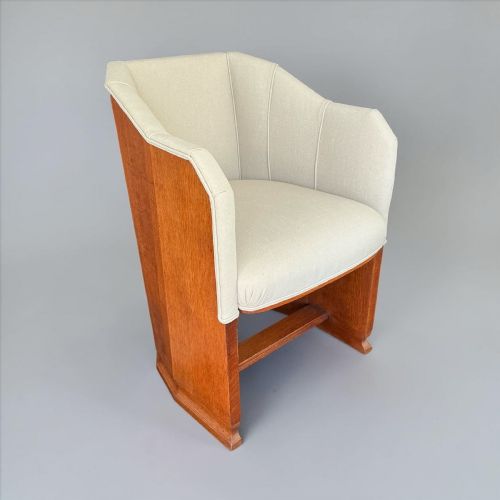
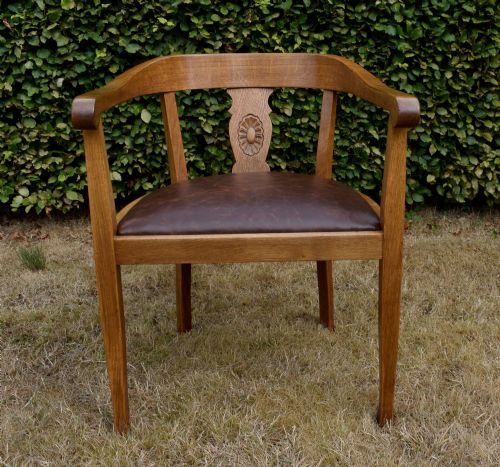
These oak barrel armchair examples range from robust Victorian desk seats to sleek Art Deco tub forms, offering deep-seated comfort rooted in sturdy timber construction.
Oak Barrel Armchair
An oak barrel armchair is a sturdy seating form shaped by its curved, enveloping backrest, echoing the traditional stave construction of a cask. Buyers seeking this style encounter solid timber frames designed to cradle the sitter, often functioning as desk chairs or low lounge seating.
The versions most commonly met on this page span from the late nineteenth century through the nineteen-thirties, embracing Edwardian interpretations, Arts and Crafts workshop ideals, and revivalist movements. These chairs utilise heavy oak to build substantial, circular or tub profiles that prioritise ergonomic support.
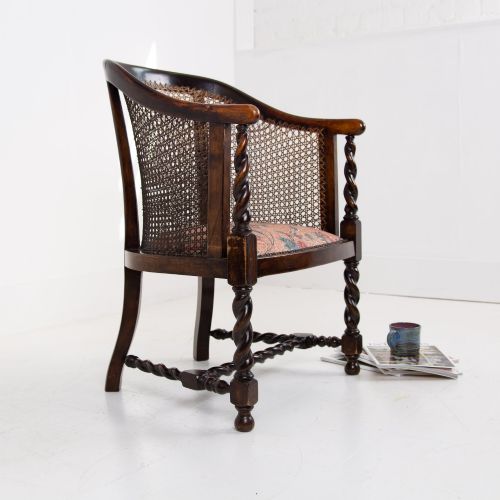
Variations in these listings include open-frame cane designs, solid wood dug-out forms, and upholstered tub chairs featuring velvet, leather, or textile coverings. Each piece balances the organic grain of oak with functional seating requirements, whether intended for a library desk or a quiet corner.
How they were made
Makers built these frames predominantly from solid oak, utilising its natural strength to form the continuous curved backrests and robust legs characteristic of the barrel and tub shape. Carpenters shaped thick timber sections to achieve the tight radius of the enclosing arms without compromising structural integrity.
Joinery techniques combined traditional wood framing with supportive elements for seats, incorporating cane webbing, solid wood bases, or upholstered pads secured with brass detailing. Textiles such as leather, velvet, and woven fabrics were then applied to pad the interior curves of the tub forms.
Current listings feature oak as the primary timber, utilised across nineteenth-century and early twentieth-century periods including the Edwardian era and the nineteen-thirties.
What varies in quality
The distinction between standard examples and superior pieces rests upon the density of the oak timber and the fluidity of the curved back construction. Better specimens display seamless integration between the armrests and the back rail, maintaining clean lines without excessive joins.
Execution of secondary materials also dictates the standard of the piece, from the tightness of hand-woven cane panels to the precision of the upholstery work. Heavier solid wood construction and thoughtful proportioning separate everyday utilitarian seating from finer decorative interpretations.
The Oak Barrel Armchair Glossary
- Barrel armchair
- A seating form featuring a rounded, semi-circular backrest that wraps around the user like the staves of a barrel. This design provides enclosed support for the sitter.
- Tub chair
- An upholstered armchair with a deep seat and a low, continuous back and arm rail. It takes its name from its resemblance to half a wooden tub.
- Cane
- Woven rattan material used to create open, breathable panels for seats and backrests. It requires skilled hand-weaving to follow the curves of a wooden frame.
- Gothic Revival
- A nineteenth-century design movement that revived medieval architectural motifs, pointed arches, and heavy proportions. Pieces from this style often feature dramatic, solid timber construction.
Oak Barrel Armchair: Frequently Asked Questions
What is an oak barrel armchair?
An oak barrel armchair is a supportive seating option characterised by a curved, semi-circular backrest fashioned from solid oak. The design wraps around the sitter to offer a secure, enclosed feel.
These pieces function primarily as desk chairs or low lounge seating, uniting heavy timber construction with comfortable upholstered or cane-panelled inserts.
How do I date an oak chair?
Dating involves examining the construction methods, style influences, and materials present in the frame. Characteristics such as nineteenth-century Gothic Revival motifs or nineteen-thirties Art Deco lines point to specific eras of production.
Changes in upholstery techniques and the presence of period-specific hardware also help establish the approximate decade in which the chair was manufactured.
Where were these chairs used?
These chairs served primarily in studies, libraries, and parlours where supportive, upright seating was required. Desk chairs were built to accommodate long hours of work, while low tub chairs suited conversational groupings.
Their sturdy oak frames allowed them to withstand heavy daily use in domestic and professional interiors alike.
How do I care for oak furniture?
Maintaining oak furniture requires protecting the timber from excessive moisture and direct sunlight, which can dry out or discolour the wood over time. Regular dusting with a soft cloth preserves the natural finish.
Upholstered sections and cane panels benefit from gentle cleaning appropriate to their specific textile or natural material to maintain their condition.