


Vintage Low Club Chair
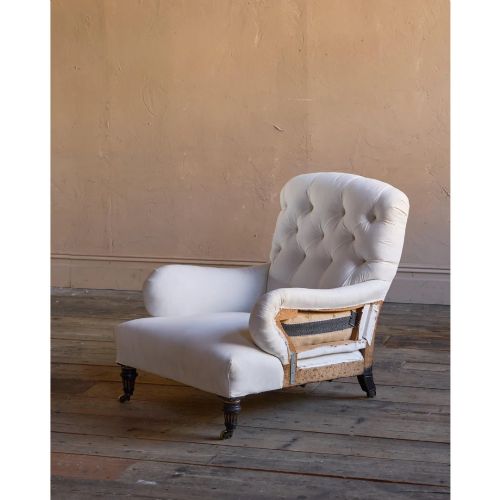
A vintage low club chair offers deep, low-slung seating designed for comfort, rooted in nineteenth and twentieth-century traditions.
Quality Variations
Construction integrity defines the upper tier of these armchairs, visible in the solidity of the hardwood frame and the resilience of the internal springing. Chairs retaining original maker stamps or labels command particular attention.
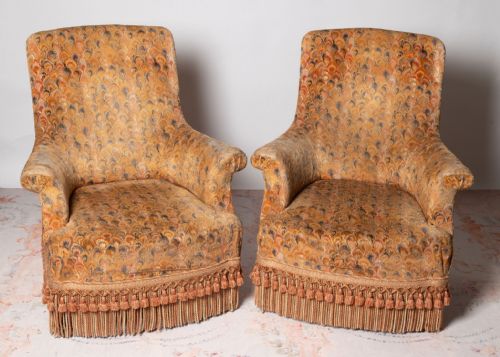
The standard of upholstery and the choice of covering fabric also alter the character of each piece. Later reupholstery varies in skill, while surviving original textiles or high-grade period velvets elevate the overall integrity.
Howard and Sons·J. Mills
The Vintage Low Club Chair Glossary
- Tub chair
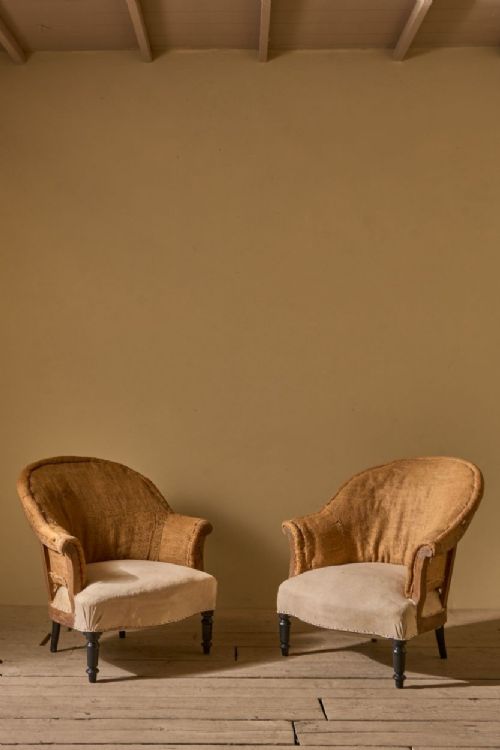
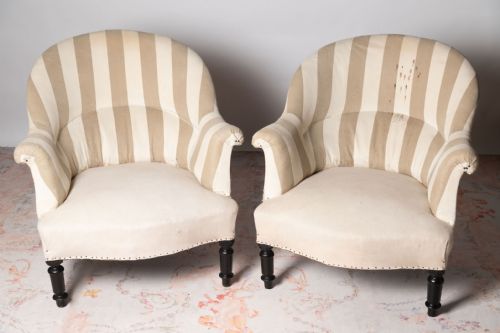
- An armchair with a rounded back that curves continuously into the arms. This compact form appears frequently in nineteenth-century French seating.
- Captain's chair
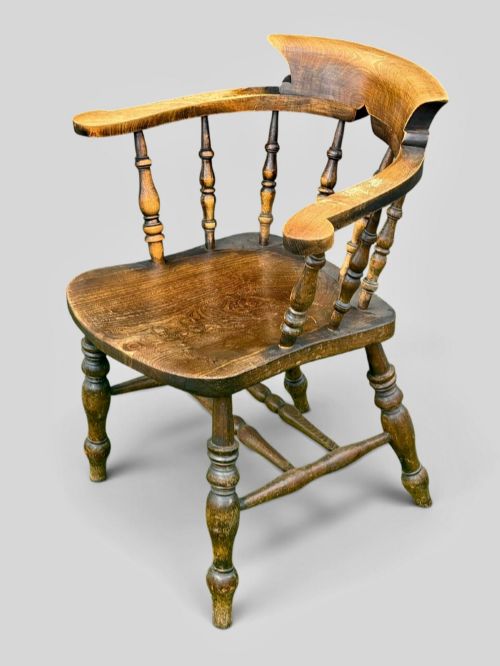
- A sturdy wooden armchair with a low, curved back rail supported by spindles. These often feature solid elm seats and turned wooden legs.
- Button back
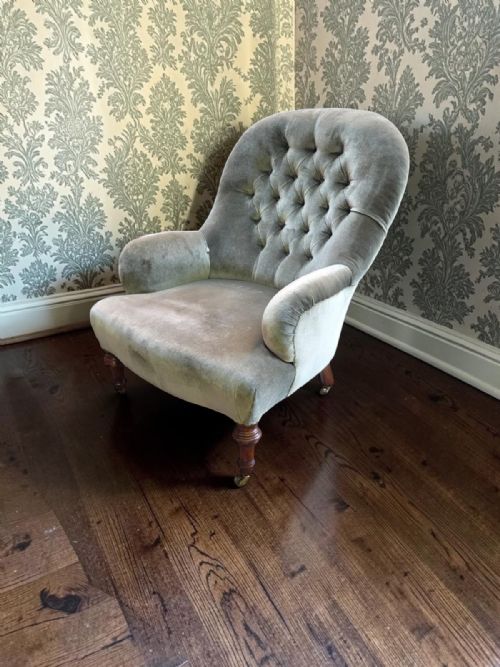
- An upholstery technique where depressions are formed in the padding by pulling buttons deep into the stuffing. This method provides firm support and a decorative geometric pattern.
- Ebonised
- Wood treated with a dark stain or finish to imitate ebony. This treatment was common on nineteenth-century chair legs and frames.
- Claw and ball
- A furniture foot carved to resemble a bird's talon clutching a ball. This detail appears on Edwardian mahogany chairs.
Listings feature Victorian, Edwardian, and Art Deco periods, utilising materials such as mahogany, velvet, brass, and calico.
Vintage Low Club Chair: Frequently Asked Questions
How do I identify a Howard and Sons armchair?
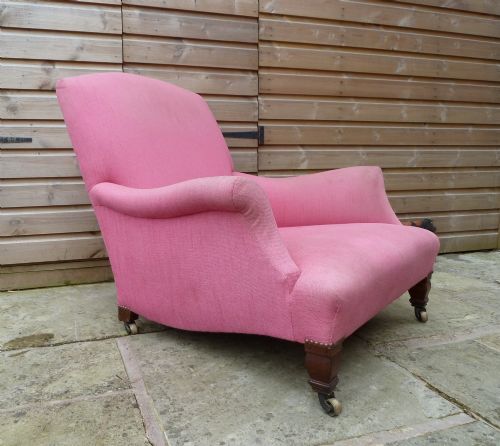
Look for specific proportions, signature castors, and stamped numerical markings on the legs or frame. Many bear characteristic low profiles and deep, sprung comfort.
Upholstery style often includes traditional ticking undercovers or high-end period textiles like kilims and printed velvets.
What is the difference between a club chair and a library chair?
Club chairs are generally built for relaxed lounging with deep seats and low backs. Library chairs often feature upright wooden frames designed for reading at a desk or table.
Materials also differ, with club chairs focusing heavily on sprung upholstery and library chairs highlighting exposed mahogany or beech woodwork.
Are these chairs suitable for daily seating?
Most antique and vintage armchairs were constructed with durable hardwood frames and robust interior springing intended for regular use. Assessing the internal condition ensures the piece remains supportive.
Many examples listed are offered ready for upholstery or already restored, making them practical for modern living rooms.
How do I date a Victorian low armchair?
Dating relies on stylistic clues such as leg turnings, wood types like mahogany or elm, and upholstery methods. Victorian pieces often blend heavy timbers with early coil springing.
Comparing construction details with documented Edwardian and Art Deco pieces helps narrow down the period of manufacture.