

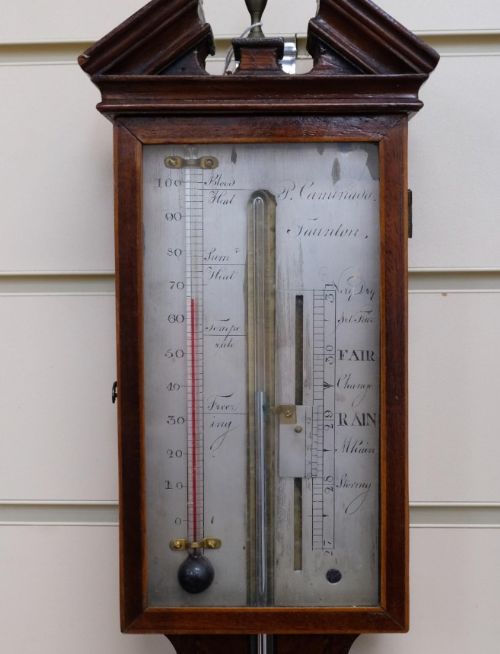
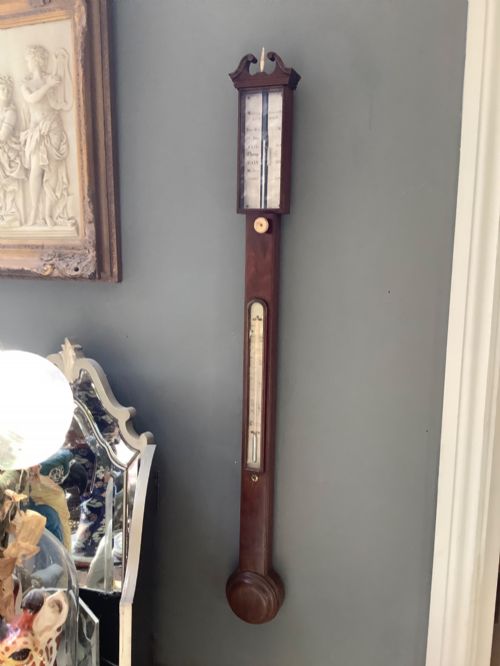


Vintage Stick Barometer
A vintage stick barometer offers a dependable method of tracking atmospheric pressure while adding period character to a wall.
Vintage Stick Barometer
A vintage stick barometer measures atmospheric pressure through the movement of a liquid or mechanical column housed inside a slender vertical case. When you search for a vintage stick barometer, you encounter instruments ranging from simple domestic wall pieces to complex marine examples designed to withstand motion.
The selections span several centuries, with Georgian, Regency, and Victorian periods heavily represented among surviving examples. Mahogany and oak dominate the timber cases, frequently paired with silvered brass scales and glass protective covers.
Most pieces date from the nineteenth century, though earlier eighteenth-century instruments and later Edwardian variations also appear. Domestic hall models and ships barometers form the core of the available selection.
Materials and construction
Cabinet makers utilised dense hardwoods such as mahogany, rosewood, oak, and walnut to construct the tall, narrow cases. These timbers were selected for their stability, ensuring the internal movement remained protected from warping due to humidity changes.
Scales were commonly fabricated from silvered brass or engraved paper, providing a clear high-contrast surface for readings. Glass tubes filled with mercury formed the measuring core in traditional stick barometers, often mounted alongside bone or ivory vernier adjusters.
Specialised models incorporated brass gimbals for marine use or combined the barometer with thermometers and sympiesometers. Ebubliised finishes, boxwood stringing, and carved details decorated the finer housings.
Vintage Stick Barometer Retail Price Guide 2026
Typical asking prices for vintage stick barometer among the pieces listed under this phrase on Sellingantiques today, from the lower quarter to the upper quarter. They describe what is for sale here now, not the wider market.
Certain nineteenth-century sailors relied on these sensitive tubes to smell the approaching gale long before landlubbers felt the wind.
Judging quality in scientific instruments
Quality rests primarily on the crispness of the maker's signature engraved on the brass scale and the integrity of the original timber case. Untouched mercury tubes and original glass retain higher historical value than altered or later replacement parts.
The sophistication of the mechanism dictates the tier of the piece, with standard domestic dials sitting below precision Fortin systems or marine gimbled assemblies. Finer examples feature intricate boxwood inlay, bird's-eye maple veneers, or substantial carved wooden mouldings.
Proportion and execution of the case dictate desirability, where clean lines and balanced proportions separate utilitarian workshop output from master instrument maker production.
Hyde & Sons Sleaford·P. Caminada Taunton·Blunt·Negretti & Zambra London·Dollond of London·Alexander Wright·Bate of London·J Hughes London·Charles Baker·Sandrino of Liverpool·Gilbert London·S&B Solomons of London·Ciresa of Milan·Gowland London·Pozzoby London·Corti of Exeter·Malacrida of Dublin
The Vintage Stick Barometer Glossary
- Aneroid barometer
- An instrument measuring pressure without liquid, using a flexible metal box that expands or contracts.
- Sympiesometer
- A portable barometer using oil and hydrogen gas to indicate atmospheric changes with high sensitivity.
- Vernier
- A small auxiliary sliding scale permitting fractional reading of the main barometer scale.
- Gimbal
- A pivoted support ring allowing marine barometers to remain vertical aboard a rolling ship.
- Fortin barometer
- A precision mercury barometer featuring an adjustable leather cistern bottom to set the zero level.
Vintage Stick Barometer: Frequently Asked Questions
How do I read a stick barometer?
Read the ambient pressure by aligning the movable vernier scale with the top of the mercury column. Note the specific markings for storm, rain, change, fair, and very dry.
Tap the instrument lightly before taking a reading to ensure the mercury moves freely without friction holding the meniscus.
Where should I hang a stick barometer?
Mount the instrument on an interior wall away from direct sunlight, radiators, and heavy draughts. Temperature fluctuations directly affect mercury levels and distort readings.
Secure the tall case firmly to wall studs using appropriate fixings to support the weighted base securely.
Can I transport a mercury barometer safely?
Tilt the barometer slowly until the mercury fills the entire glass tube to prevent air bubbles from entering during transit. Secure the instrument in a horizontal or inverted position depending on the cistern design.
Professional packing is recommended for mercury-filled instruments to protect the delicate glass components from shock.
How do I date an antique barometer?
Examine the style of the wooden case, the typography of the maker's signature, and the construction methods used on the backboard. Georgian models feature simpler architectural lines, while Victorian examples often incorporate heavier carving or rosewood veneers.
Maker records and trade directories provide specific operational dates for signed instruments.