
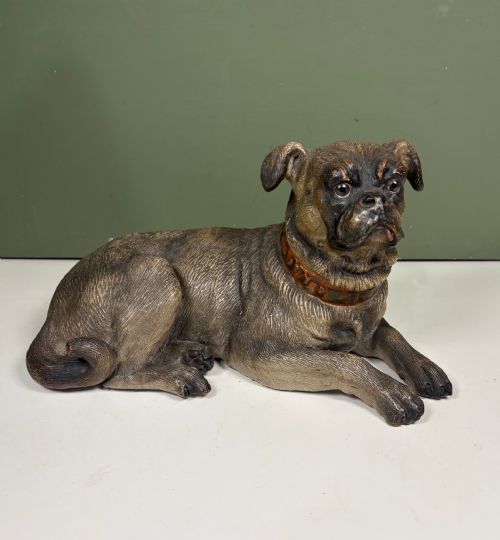


Vintage Staffordshire Figure
A vintage staffordshire figure brings the distinct character of nineteenth-century domestic pottery into a modern room with colourful earthenware and familiar charm.
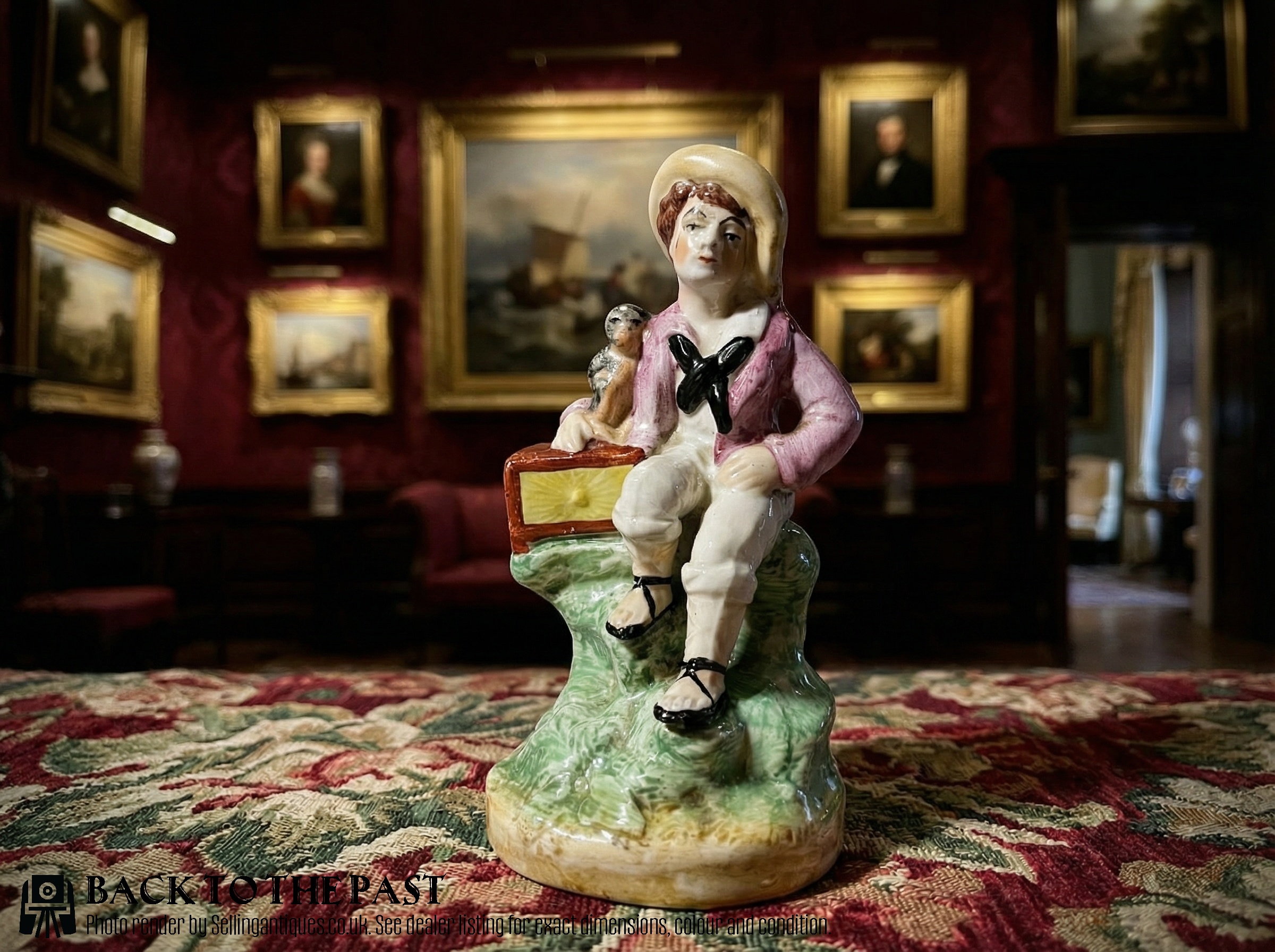
Vintage Staffordshire Figure
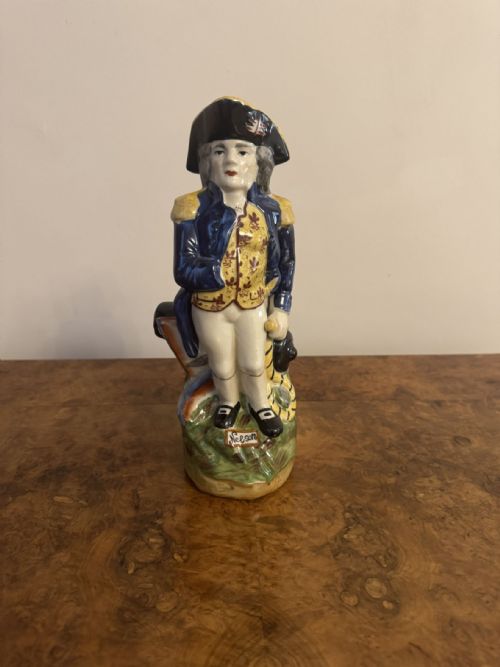
A vintage staffordshire figure encompasses moulded ceramic ornaments produced across the Victorian era and into the early twentieth century, capturing animals, human subjects, and architectural subjects. These pieces range from decorative mantel dogs and spaniels to flatbacks, equestrian subjects, and character jugs.
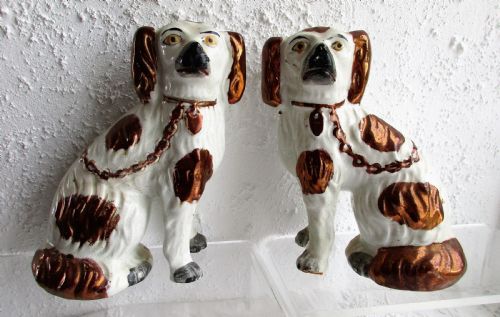
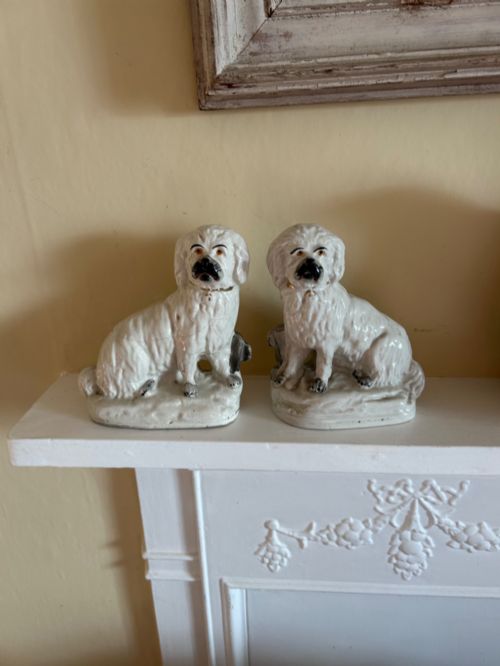
The most common examples encountered in these listings are pairs of seated spaniels, greyhounds, and poodles, alongside human figures such as sailors, historical personages, and theatrical actors. Many double as functional objects including money boxes, inkwells, tobacco jars, bookends, and quill holders.
Makers represented span traditional English pottery centres, featuring pieces from Staffordshire potteries as well as firms like Wedgwood and Lancaster and Sons of Hanley. The overarching style reflects Victorian folk art and English traditional decorative tastes of the period.
How they were made
Potters shaped these objects using earthenware clay bodies formed in moulds, often finished with lead glaze or glaze surfaces that give the ceramic body its characteristic sheen. Many examples incorporate flatback construction to economise on clay and allow the piece to sit flush against a wall.
Decoration relied on hand-applied enamel paint and enamel colours, sometimes accented with gilt highlights or copper lustre details. This combination of moulded earthenware and surface painting produced the bright visual character typical of nineteenth-century figures.
Listings feature earthenware and ceramic materials decorated with enamel paint, glaze, and gilt across the Victorian period.
What varies in quality
Pairs matched in size and decoration command greater interest than assembled companions, particularly when original lustre or glaze surfaces survive intact without extensive restoration.
Wedgwood and Co Ltd·Lancaster and Sons of Hanley·Royal Doulton
The Vintage Staffordshire Figure Glossary
- Flatback
- A figure moulded with a finished front and sides while the reverse remains flat and unglazed. This technique saved materials and suited mantel placement.
- Earthenware
- A porous ceramic body fired at lower temperatures than stoneware or porcelain. It formed the standard structural base for these nineteenth-century figures.
- Copper Lustre
- A metallic glaze finish creating a reflective copper sheen. It appeared frequently on nineteenth-century animal figures and utilitarian wares.
- Toby Jug
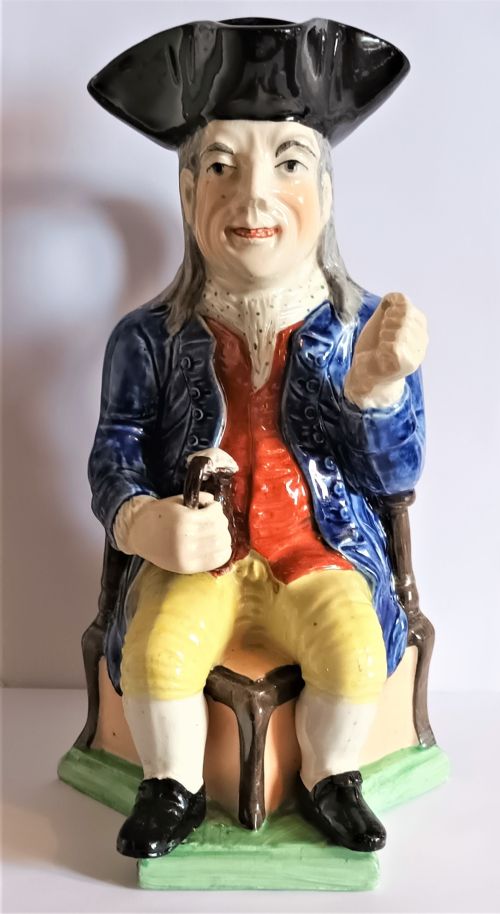
- A pottery jug moulded in the shape of a seated person, typically a robust figure holding a mug and jug. These served both decorative and functional roles.
Vintage Staffordshire Figure: Frequently Asked Questions
Are these figures solid ceramic?
Most pieces are hollow-molded earthenware rather than solid clay, which kept the weight manageable for transport and firing.
Flatback examples often feature an opening underneath or at the back from the manufacturing process.
How were spaniel pairs displayed?
Victorian households traditionally placed pairs of spaniels on either side of the fireplace mantelpiece. Facing inwards toward each other, they served as standard ornaments in nineteenth-century parlours.
This symmetrical arrangement extended to greyhounds, poodles, and lions.
Did these figures have practical uses?
While many served purely as decorative ornaments, several forms doubled as functional household items. Potters adapted the seated dog and animal models into money boxes, inkwells, bookends, and tobacco jars with removable covers.
Other utilitarian variants included holy water stoups and quill holders.
How do I identify a flatback?
A flatback figure has a fully modeled front and sides intended for display, while the back is flattened and left unglazed or simply painted. This design allowed the ornament to sit flush against a wall or mantel shelf.
Most large Victorian figures and historical groups utilised this construction method.