
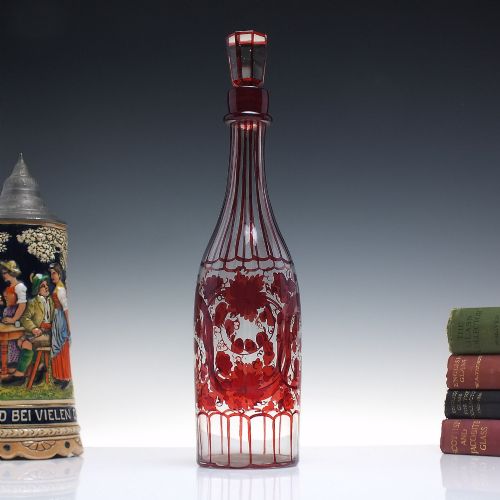
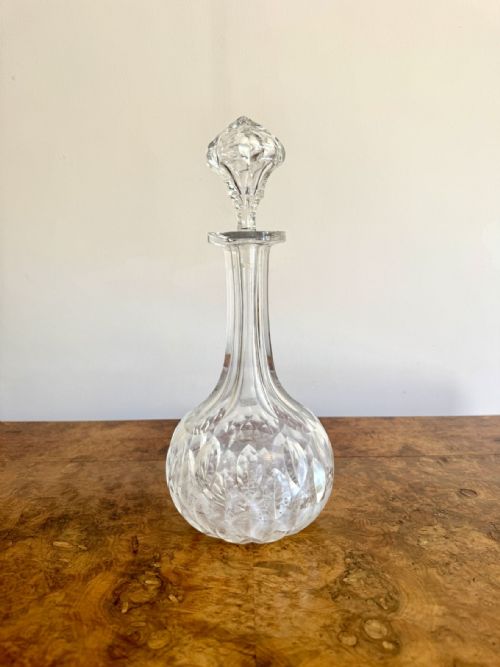
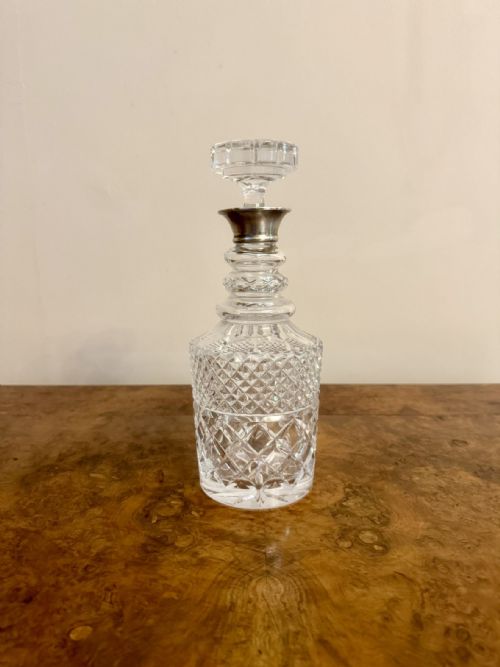
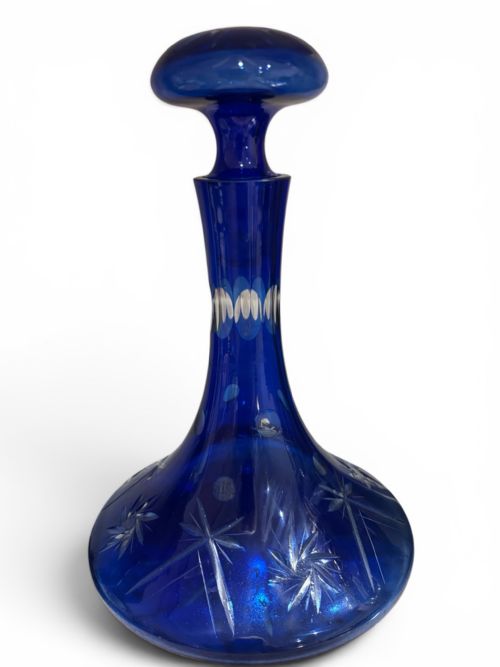
Vintage Spirit Carafe
These vintage spirit carafe pieces bring period craftsmanship to the table, offering practical serving vessels for spirits.
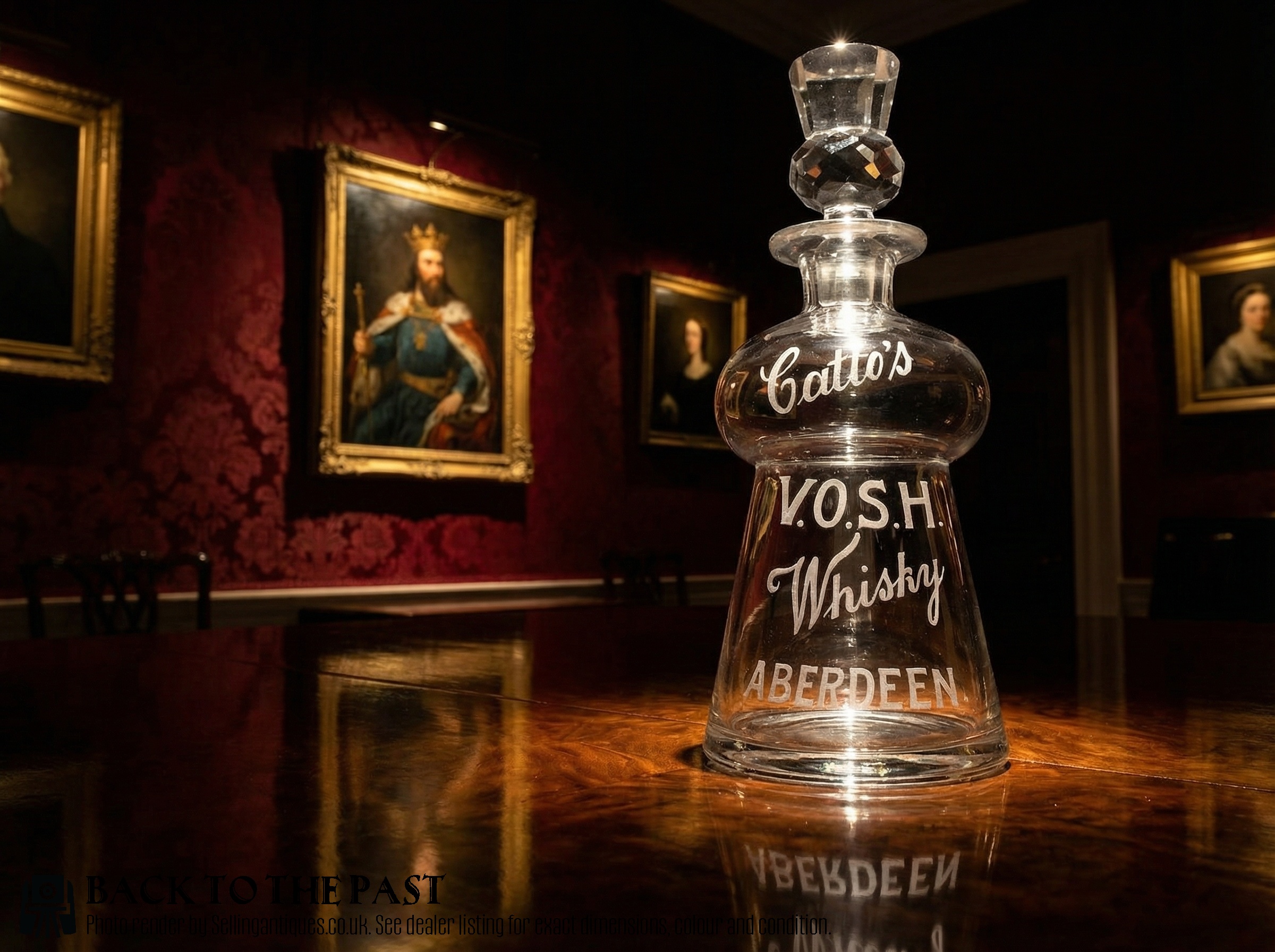
Vintage Spirit Carafe
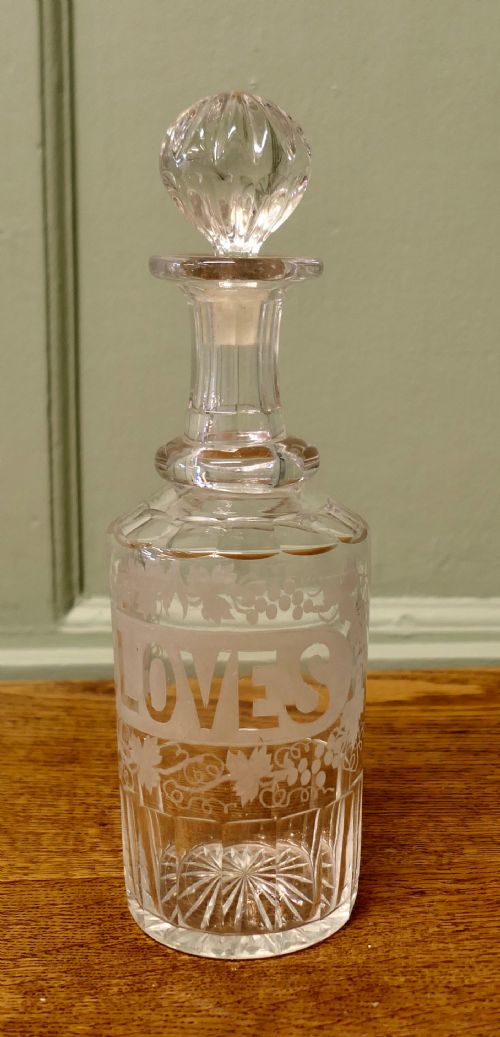
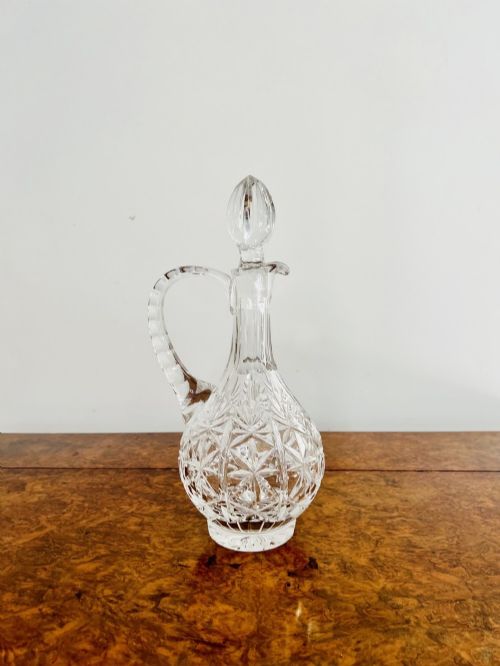
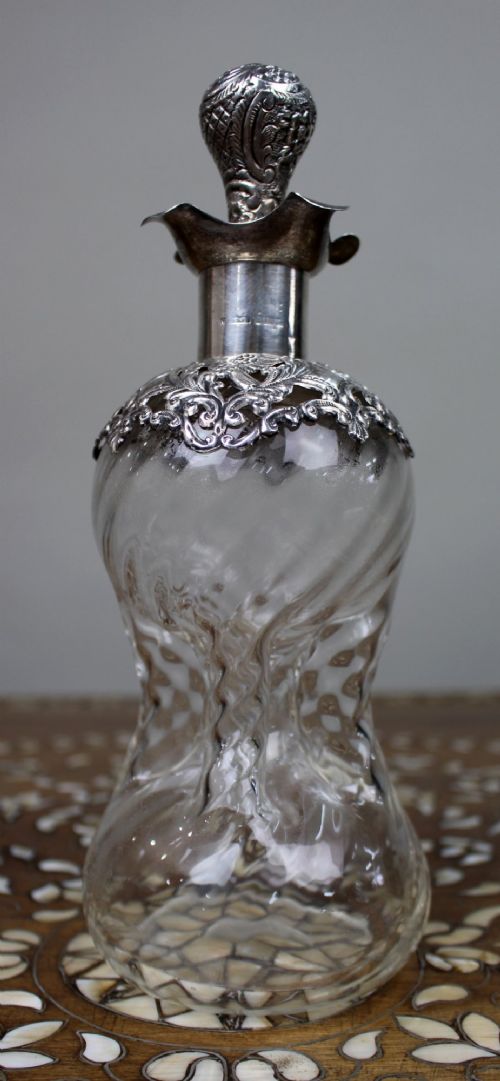
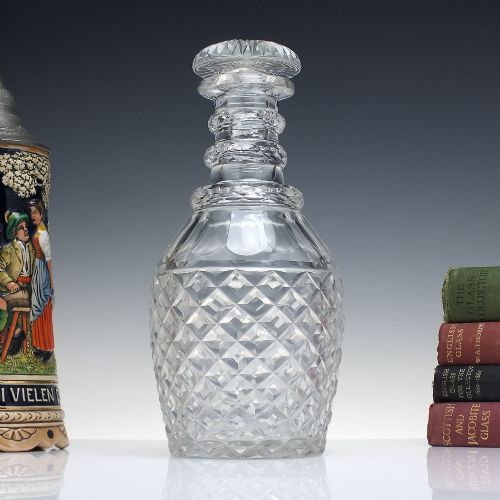
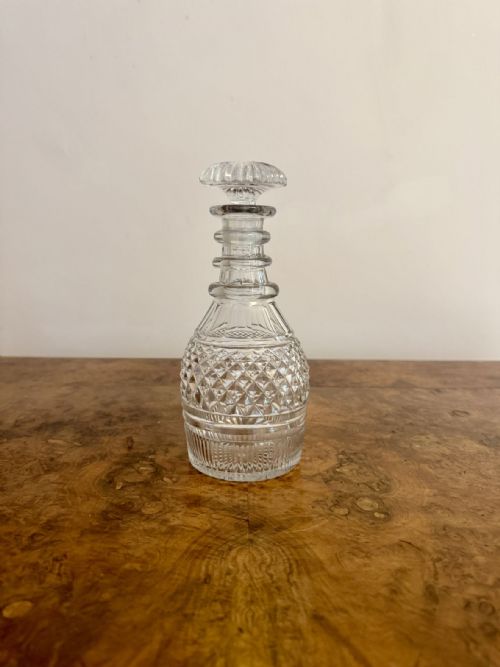
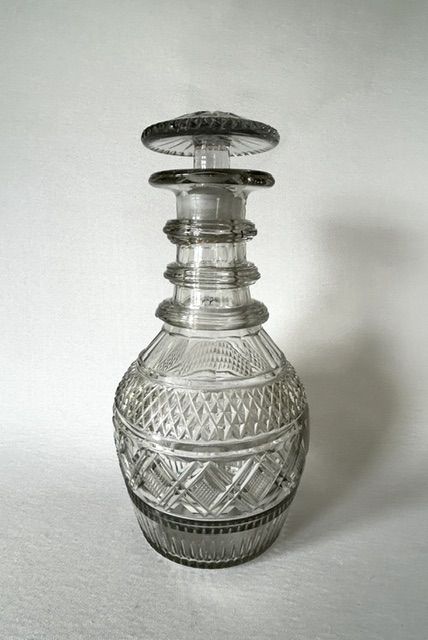
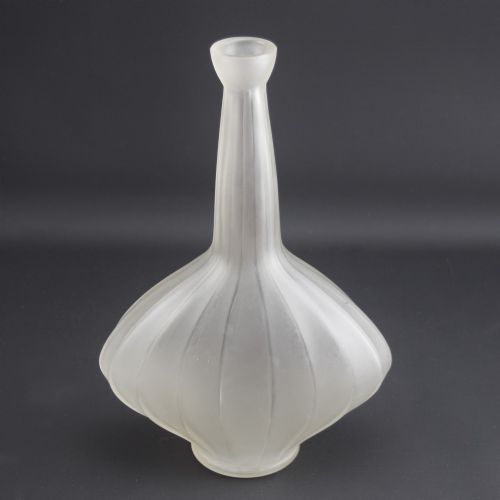
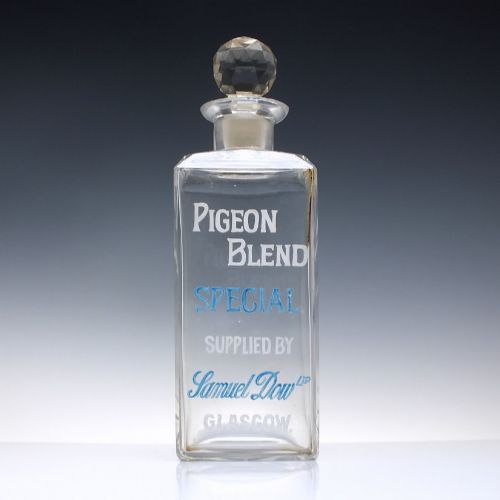
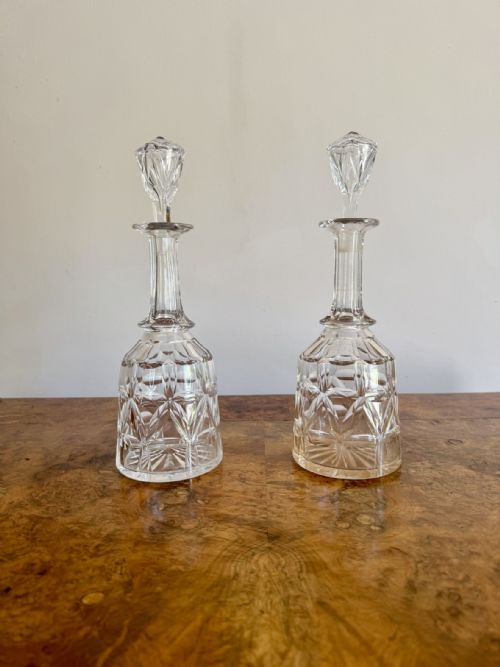
A vintage spirit carafe serves liquors and cordials at the table, spanning forms from slender wine vessels to compact whisky noggins. Buyers seeking a vintage spirit carafe encounter pieces ranging from simple glass bottles to elaborate barware.
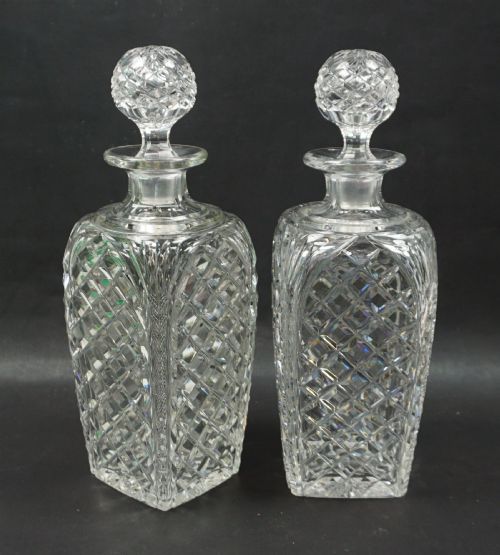
The selections on this page draw from periods including the Victorian and Edwardian eras, alongside Art Deco designs. Common configurations include square section tapered bottles, bell shapes, and shaft and globe forms.
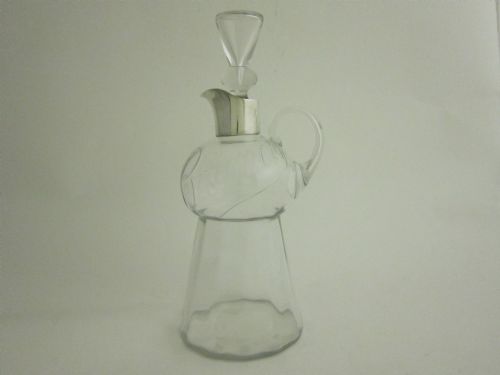
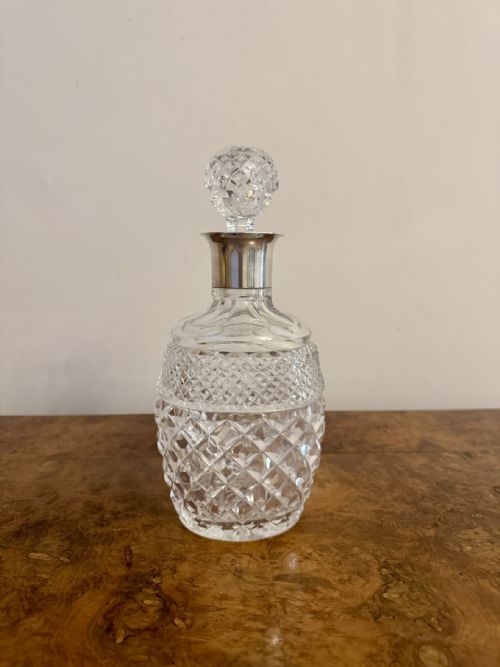
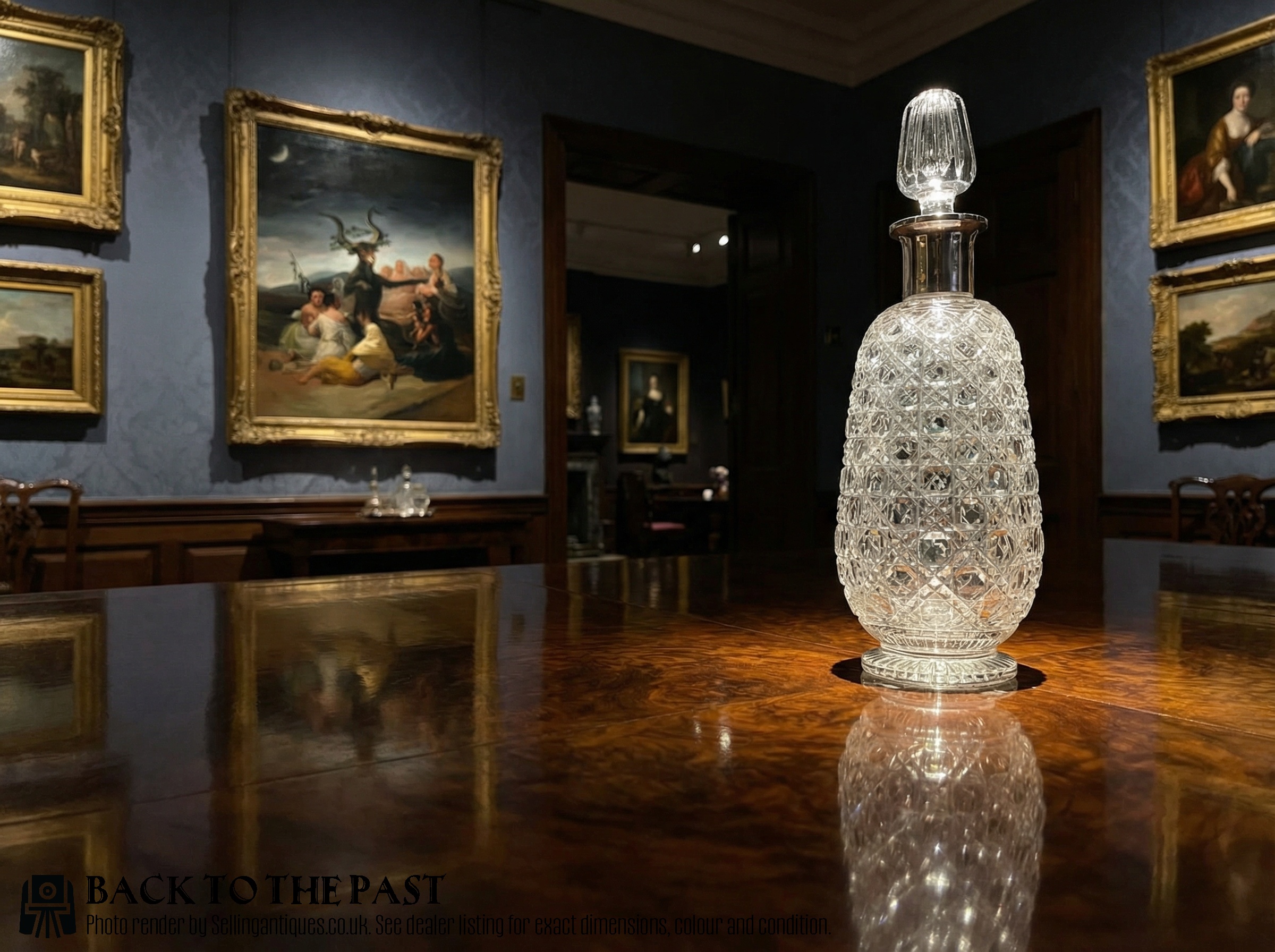
Origins stretch across English, Irish, Scottish, and Bohemian workshops. Many items arrive mounted with sterling silver or silver plate collars, while others rely entirely on cut glass and crystal.
How they were made
Makers shaped glass through blowing and pressing, frequently employing lead crystal or clear glass to catch the light. Skilled artisans then applied wheel-cutting, etching, engraving, or hand painting directly onto the surface.
Metal components involved sterling silver or silver plate fitted as collars, mounts, or handles. Makers often combined these silver elements with coloured glass bodies such as ruby, green, cranberry, cobalt, and blue.
Listings feature materials ranging from basic clear glass and lead crystal to sterling silver mounts, alongside coloured glass in ruby, green, and cobalt.
What varies in quality
Depth and crispness of the glass cutting distinguish finer examples from standard production. Sharp, well-defined facets reflect light cleanly, whereas softer facets indicate routine finishing.
Weight and balance dictate handling quality, particularly in heavy lead crystal and mounted pieces. The integration between glass bodies and sterling silver hardware reveals the precision of the silversmith's work.
Rene Lalique·Stevens & Williams
The Vintage Spirit Carafe Glossary
- Cut crystal
- High-clarity glass containing lead oxide, shaped with deep geometric facets using a cutting wheel. This technique maximises brilliance and refraction.
- Whisky noggin
- A small spirit decanter or jug, typically fitted with a single handle and a silver mount. They originated for individual measure service.
- Silver collar
- A metal band fitted around the neck of a bottle to strengthen the rim and anchor a stopper. These mounts often carry hallmarks indicating the year and maker.
- Shaft and globe
- A traditional bottle silhouette featuring a long, slender neck above a rounded globular body. This form balances stability with ease of pouring.
- Art Deco
- A design style emerging in the early twentieth century characterised by stylised geometric forms and streamlined shapes. It succeeded the floral motifs of the Edwardian period.
Vintage Spirit Carafe: Frequently Asked Questions
How do I clean an old spirit decanter safely?
Fill the vessel with warm water and mild detergent, avoiding harsh abrasives that scratch historical glass surfaces. Swirl soft cleaning beads inside if residue persists.
Dry the interior thoroughly by inverting the piece on a clean cloth. Leave the stopper out until the entire bottle is completely dry to prevent moisture retention.
Are vintage decanters safe for daily use?
Most glass and crystal containers serve beverages safely for short periods. Check each piece for internal haze or cloudiness caused by liquid erosion over decades.
Avoid storing spirits inside lead crystal containers for extended stretches. Pour only what you plan to consume during an evening.
What is the difference between a decanter and a noggin?
Decanters hold larger quantities of wine or spirits for sharing across a table. They often feature stoppers and substantial glass or crystal bodies.
Noggins function as miniature personal jugs holding a single measure of whisky or spirit. They frequently include a handle and pour spout rather than a standard bottle neck.
How can I date a piece of glassware?
Examine the base for pontil marks, wear patterns, and manufacturing seams that indicate period production methods. Heavy lead crystal and distinct cutting styles often point to Victorian or Edwardian origins.
Sterling silver mounts carry hallmarks with specific date letters and assay office symbols. These stamps provide an exact year of manufacture for the metal collar.