

Vintage Spindle Back Chairs
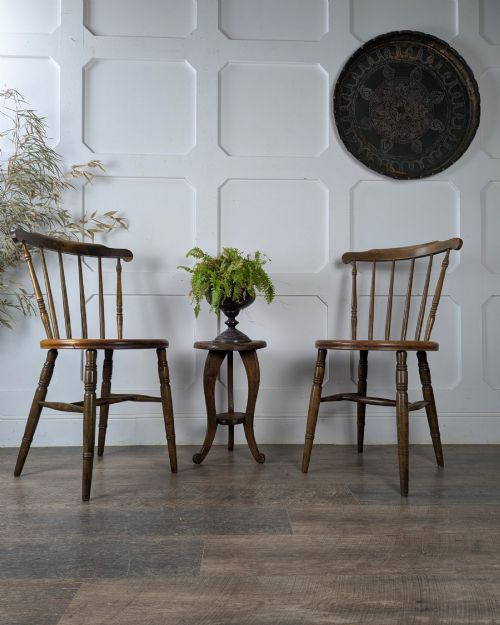
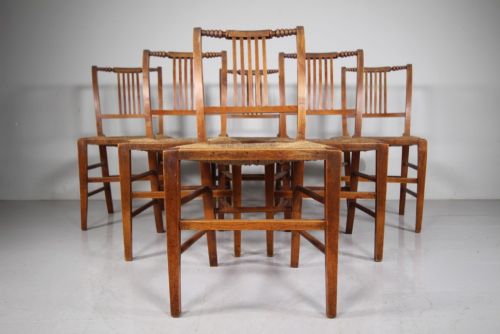
These vintage spindle back chairs bring centuries of country craftsmanship into daily use.
Vintage Spindle Back Chairs
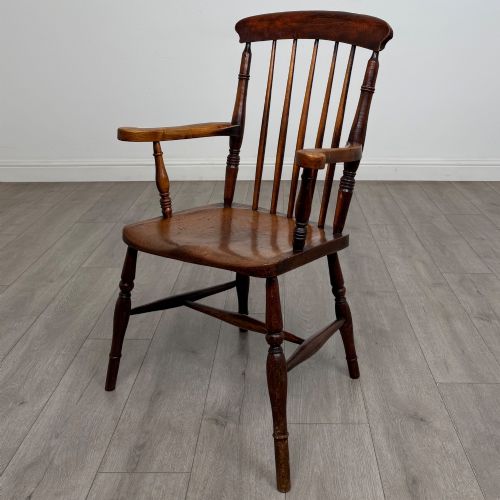
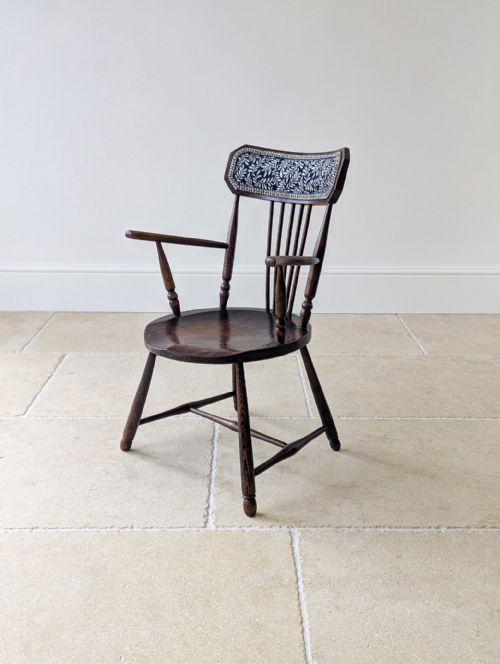
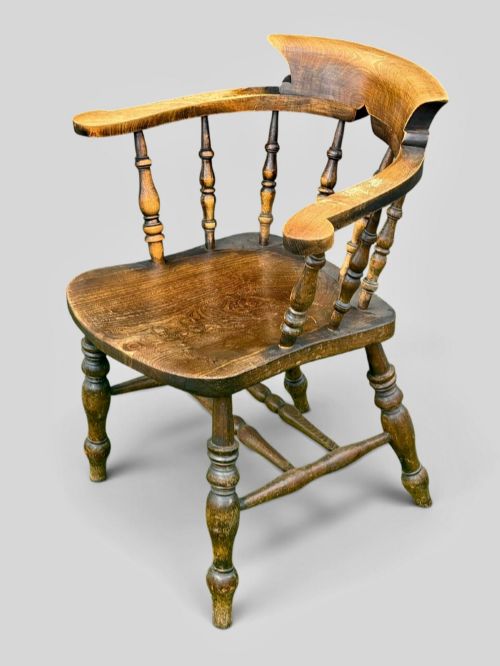
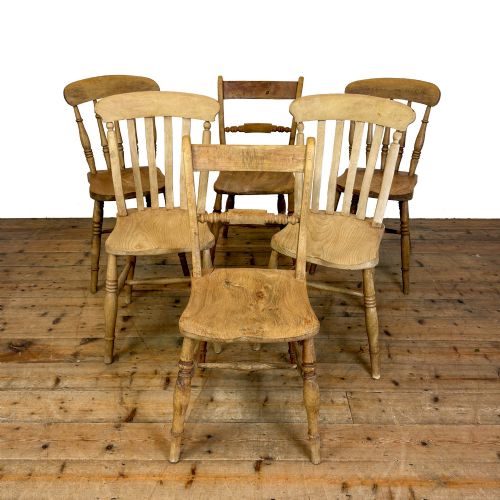
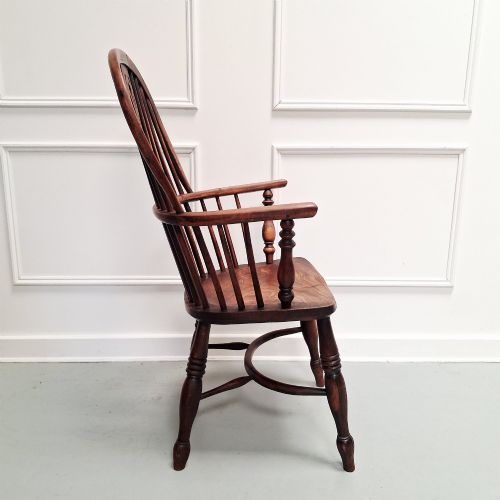
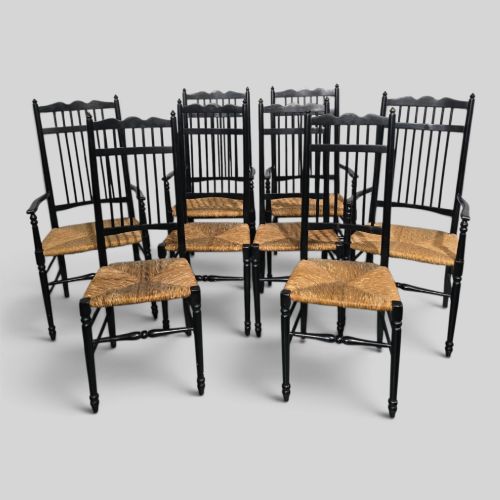
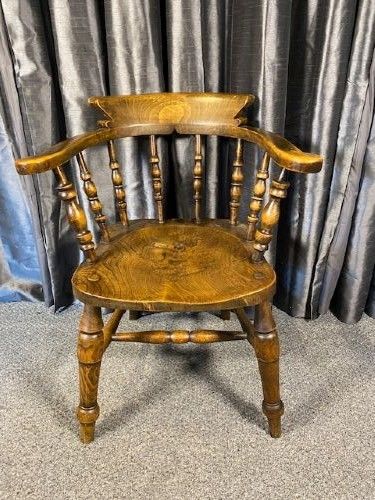
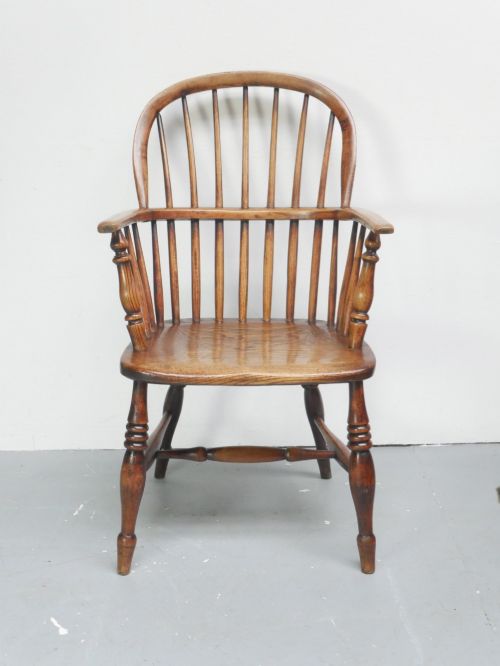
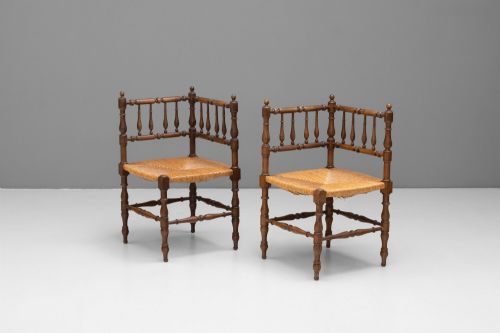
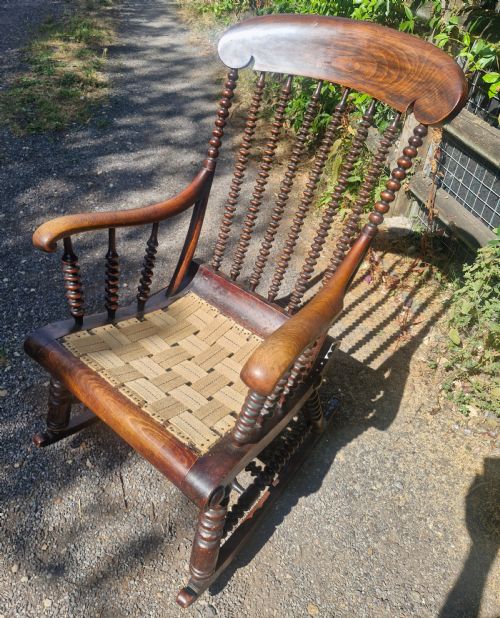
The varieties on this page range from Windsor armchairs and smoker's bows to kitchen stick backs and rush seat dining chairs. Elm and beech combinations dominate the surviving pieces, often shaped in regional workshops such as the Thames Valley.
How they were made
Traditional makers built these chairs using a combination of solid timbers, pairing elm seats with turned beech or ash spindles and legs. Frameworks relied on steam bending and pegged mortise and tenon joints to secure the components.
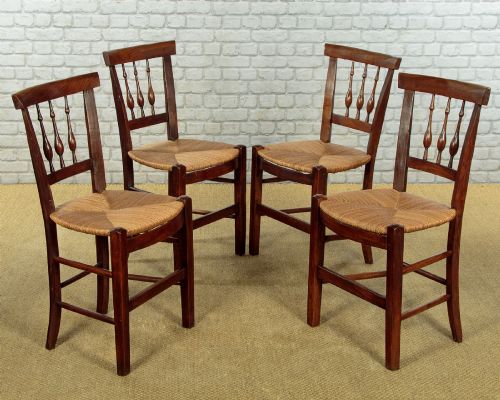
Many examples incorporate rush for woven seating, whilst others feature carved wooden saddles shaped for comfort. Surface finishes range from natural waxed grain to original paint and dark polish.
Listings feature timbers like elm, beech, and ash shaped into Windsor, stick back, and captain's chair forms.
What varies in quality
Quality rests upon the crispness of the spindle turnings and the thickness of the solid elm seat slab. Chairs retaining their original pegged joints and balanced proportions command greater appreciation.
Makers' marks stamped into the wood elevate a piece, as do matched sets rather than assembled harlequin groups. The integrity of the timber grain and the survival of early painted surfaces also distinguish finer examples.
J SPENCER·Codina
The Vintage Spindle Back Chairs Glossary
- Windsor chair
- A wooden chair built with a heavy solid seat into which the legs and back spindles are directly fitted. This construction method creates a robust piece typical of country furniture.
- Smoker's bow
- A low-backed Windsor armchair featuring a continuous curved armrail supported by turned spindles. These were popular in domestic kitchens and public houses.
- Stick back
- A chair back formed of simple vertical wooden rods rather than elaborate splats. They provide sturdy support in farmhouse and kitchen seating.
- Rush seat
- A seating surface woven from dried marsh rushes wound around a wooden frame. This technique yields a textured, resilient pad found on traditional dining chairs.
- Harlequin set
- A collection of chairs sharing a similar style or period rather than originating as an identical manufactured set. Such groups were gathered over time for farmhouse dining tables.
Vintage Spindle Back Chairs: Frequently Asked Questions
Are vintage spindle back chairs comfortable for daily dining?
Most examples feature ergonomically carved wooden saddle seats shaped to distribute weight comfortably during long meals.
Adding loose cushions provides extra padding whilst preserving the timber structure underneath.
How do I identify a Windsor chair?
A Windsor chair is defined by its distinct construction where legs and back spindles slot directly into a thick wooden seat plank rather than a separate frame.
They often include bowed backrests and steady arm assemblies.
What woods were commonly used?
Elm provided a tough, non-splitting surface for the carved seats, whilst beech and ash supplied strong timber for the steam-bent backs and turned legs.
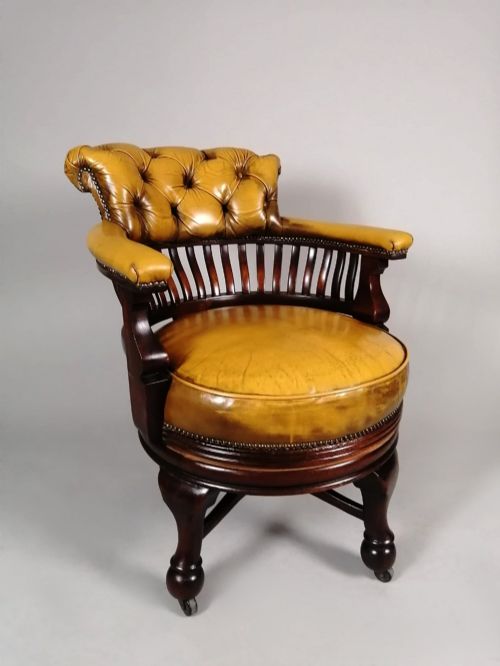
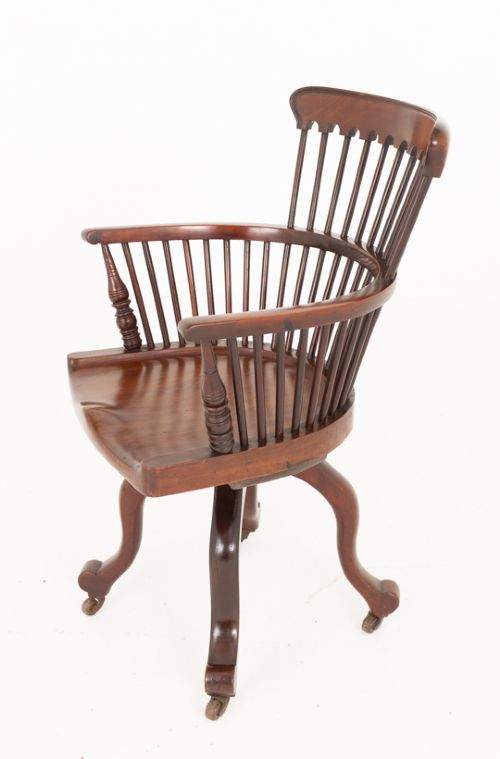
Oak and mahogany appear on specific desk and office variants.
Can I mix different spindle back chairs around a table?
Harlequin sets of mismatched chairs offer an authentic approach to country dining rooms and kitchen spaces.
Matching heights and general period characteristics keeps the arrangement visually cohesive.