





Vintage Specimen Case
A vintage specimen case holds the quiet wonders of the natural world behind glass, offering a glimpse into Victorian and Edwardian study rooms.
Vintage Specimen Case
A vintage specimen case brings together natural history and scientific curation, serving as a repository for preserved animals, insects, plants, and medical or nautical instruments. When searching for a vintage specimen case, collectors encounter forms ranging from wall-hanging dioramas and tabletop cabinets to glass domes and multi-drawer chests.
The pieces on this page span from the Victorian and Edwardian eras through the early twentieth century, including industrial utility and maritime styles. Most examples rely on timber frames fitted with glass panels or blown glass domes to protect delicate contents from dust and handling.
Originating largely from British workshops and regional taxidermists, these objects reflect a period when domestic natural philosophy was a popular pursuit. Buyers select them to display collections of feathers, fish, birds, and botanical items within domestic interiors.
Materials and Construction
Makers constructed these enclosures using domestic and imported timbers such as oak, mahogany, cedar, satinwood, and ebonised wood. Glazing formed an essential component, utilising large sheets of clear glass or blown glass domes secured over timber bases.
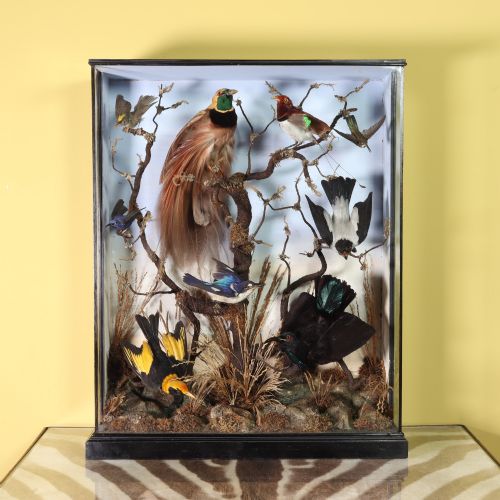
Metalwork played a structural and decorative role, with brass hinges, locks, and handles appearing frequently on tabletop cabinets and instrument boxes. Painted backdrops inside taxidermy cases created depth, often depicting natural habitats suited to the preserved specimens within.
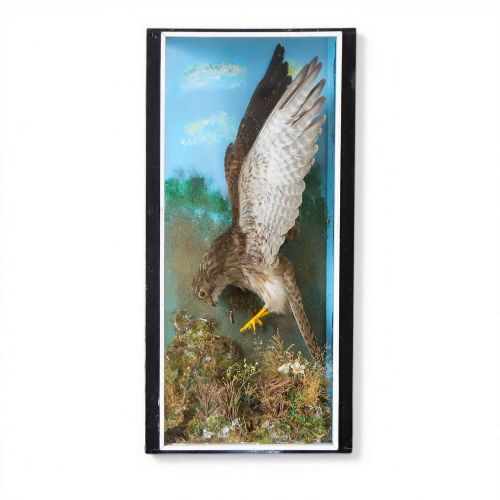
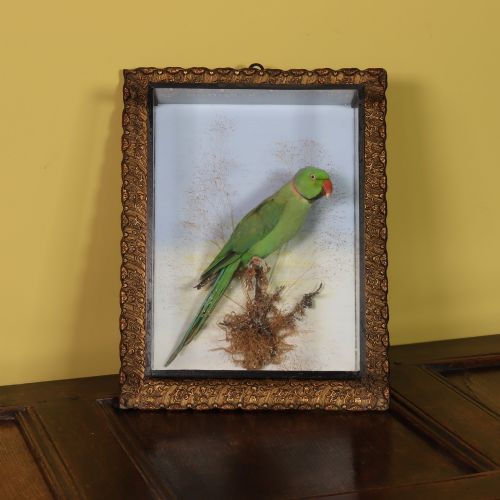
Several cases preserve creatures as varied as a tench, a badger, a parakeet, and a kestrel.
Evaluating Quality and Origin
Quality rests significantly upon the provenance and the skill of the maker, with documented pieces from notable taxidermy firms and cabinet makers commanding greater attention. The intricacy of the internal arrangement and the preservation state of the taxidermy or specimen dictate the standing of an individual piece.
Materials contribute to distinction, such as finely figured woods, original blown glass domes, and robust brass fittings rather than replacement components. The proportion of the glazing to the timber frame also defines the visual balance of the display.
J Griffiths of Burford·William Bazeley And Sons·J Cooper And Sons·James Gardner·Rowland Ward·W F Homer·J Dobson
The Vintage Specimen Case Glossary
- Taxidermy
- The art of preparing, stuffing, and mounting the skins of animals for display. Victorian practitioners elevated this craft into elaborate dioramas.
- Ebonised wood
- Timber treated with a dark stain or finish to imitate ebony. This dark surface provided a stark contrast to brightly coloured feathers and specimens.
- Collector case
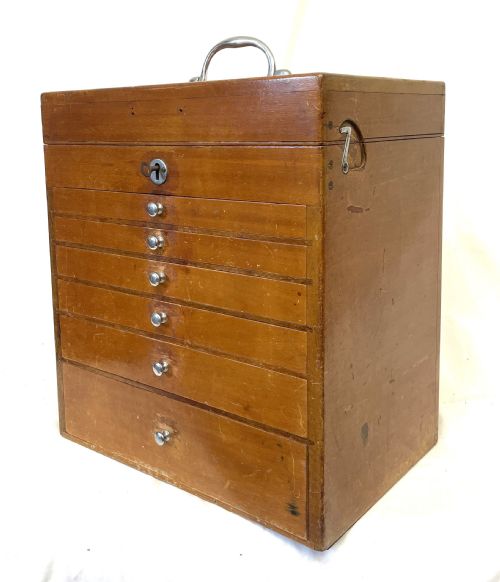
- A specialised cabinet or box fitted with drawers or shelves designed to house classification items. These units often feature secure locks and glass panels.
- Display dome
- A blown glass cover mounted on a timber or wooden base to protect fragile items. They were frequently utilised for botanical specimens and stuffed birds.
- Diorama
- A three-dimensional scene depicting animals in a simulated natural environment. Painted backgrounds inside glazed cases enhanced the illusion of habitat.
Vintage Specimen Case: Frequently Asked Questions
What fits inside a vintage specimen case?
These enclosures traditionally house taxidermy birds, fish, mammals, and botanical specimens, alongside scientific instruments and mineral collections.
Interior layouts range from simple wooden shelves and shallow drawers to complex painted dioramas designed to mimic natural habitats.
How do I care for a glass dome?
Glass domes require gentle cleaning with a soft cloth and mild glass cleaner to avoid disturbing the seal or the base. Because the glass is often mouth-blown and antique, it demands careful handling during movement.
Keeping the piece out of direct sunlight helps protect both the wooden frame and any sensitive organic specimens inside.
Were these cases made for scientific use?
Many examples originated for domestic display, allowing Victorian and Edwardian households to showcase their interest in natural history. Others served professional functions in apothecaries, dentists' offices, and maritime settings.
Utility and decorative appeal often merged, resulting in robust brass and timber constructions built for daily handling.
How can I tell a Victorian case from a later one?
Victorian examples typically feature heavier timber framing, hand-blown glass, and traditional brass joinery specific to nineteenth-century cabinet making. Later pieces from the early twentieth century often display simpler industrial utility lines or lighter wood veneers.
Maker labels pasted inside or signature painting styles on the diorama backdrops frequently point to the precise period of origin.