




Vintage Snow Scene Art
Vintage snow scene art captures crisp winter landscapes through oil and watercolour from the nineteenth and twentieth centuries.
Vintage Snow Scene Art
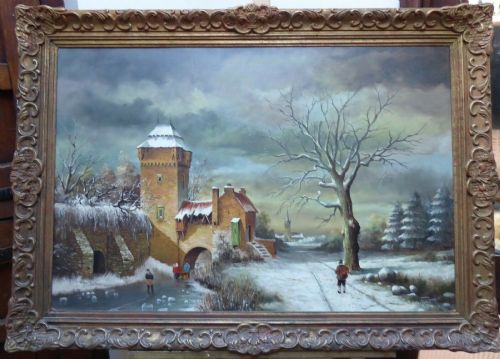
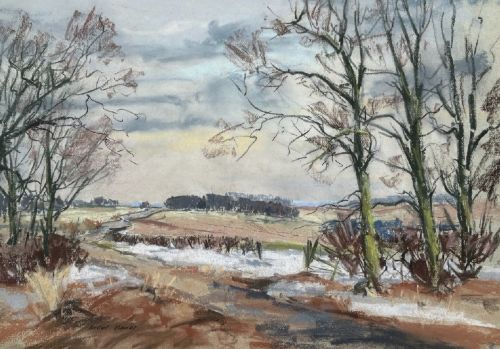
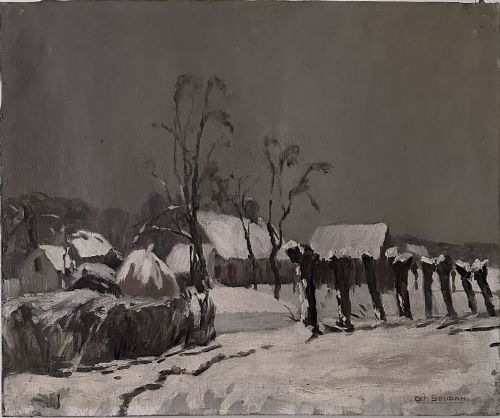
Vintage snow scene art encompasses paintings depicting winter landscapes, frozen villages, and mountain passes across British and European schools. These works capture cold weather through varied interpretations ranging from realism to impressionism.
The selections available here span from the nineteenth century into the mid-twentieth century. Buyers encounter depictions of Yorkshire dales, Alpine lakes, Dutch canals, and snowy urban streets.
Mediums primarily include oil paint on canvas or board alongside watercolour pigment on paper. Each piece records a distinct historical approach to capturing winter light and frost.
Materials and techniques
Artists of these periods worked with oil paint on stretched canvas, wooden panels, or gesso-primed boards to build rich textures. These oil mediums allowed painters to layer thick brushstrokes that mimic the physical weight of snow.
Watercolour paintings utilise pigment on paper, often applied with fluid washes to capture the pale, diffused light of winter days. Many works also incorporate wooden frames that complement the period of the painting.
Vintage Snow Scene Art Retail Price Guide 2026
Typical asking prices for vintage snow scene art among the pieces listed under this phrase on Sellingantiques today, from the lower quarter to the upper quarter. They describe what is for sale here now, not the wider market.
Artistic styles represented include British Impressionism, Realism, Romanticism, and the Dutch Golden Age style.
Distinctions in quality
The effectiveness of a snow scene relies on how the artist handles light, shadow, and cold tones rather than pure detail. Superior examples use subtle variations of blue, grey, and white to suggest freezing temperatures and bright winter sun.
Compositional balance and brushwork distinguish accomplished professional output from simpler decorative works. Stronger pieces display confident handling of atmosphere, whereas lesser examples rely on flat applications of white pigment.
A. McDonald·Ernest Uden·John Smith Atherton·Herbert Royle·George Graham·Ernest Higgins Rigg·John Richard Worsdale·Eveline Lance·William Cave Day·Fred Lawson
The Vintage Snow Scene Art Glossary
- Canvas
- A heavy woven fabric stretched across a wooden frame to serve as a support for oil paint. It provides a flexible yet durable surface favoured by artists since the Renaissance.
- Watercolour
- A painting method in which the paints are made of pigments suspended in a water-soluble vehicle. It produces transparent layers of colour well suited to capturing pale winter skies.
- Gesso
- A paint mixture consisting of a binder mixed with chalk, gypsum, or pigment used to prepare a substrate such as wood or canvas. It creates a smooth, absorbent surface for oil application.
- Impressionism
- A nineteenth-century art movement characterised by relatively small, thin, yet visible brush strokes and an emphasis on accurate depiction of light. Painters applied these principles to capture transient weather effects.
- Board
- A rigid wooden or manufactured panel utilised as a sturdy alternative to stretched canvas. Painters often applied oil directly to these surfaces for smaller landscape studies.
Vintage Snow Scene Art: Frequently Asked Questions
What periods do these paintings date from?
The available artworks span from the nineteenth century through the mid-twentieth century, with a strong representation of pieces from the 1910s and 1920s.
These dates reflect changing artistic movements across Britain and Europe, including traditional styles and early twentieth-century impressionism.
How should I display a winter watercolour?
Watercolours require placement away from direct sunlight to prevent the pigments from fading over time. Conservation framing with acid-free mounts protects the paper from environmental damage.
Keeping these delicate works in stable indoor humidity preserves both the paper support and the surrounding period frame.
What subjects appear in these scenes?
Common subjects include Yorkshire dales, Alpine mountains, Dutch canals, and rural village cottages set against frozen landscapes. Figures engaged in seasonal tasks such as collecting firewood or working horses also feature.
These locations range from specific British valleys to broader European settings captured by regional painters.
Are these paintings signed by the artists?
Many of the listed works bear signatures or attributions to named painters from British and European schools. Documentation on the reverse or within titles often records the specific creator.
Unsigned pieces remain attributed based on style, period characteristics, and known working methods of specific regional schools.