


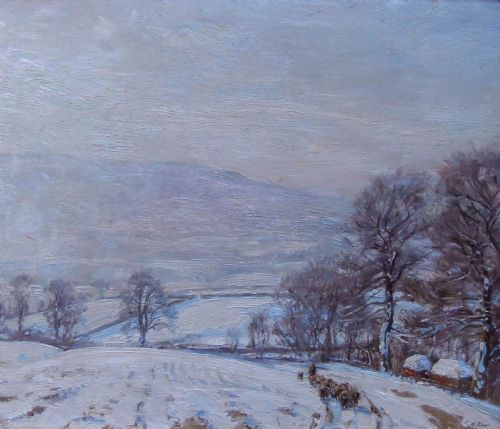

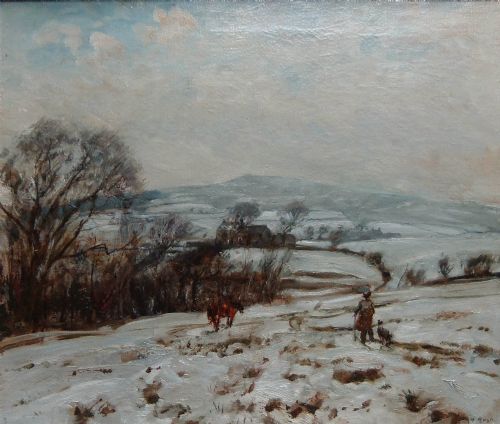


Vintage Snow Painting
A vintage snow painting brings home the quiet stillness of winter through the brush of an artist who stood in the frost.
Vintage Snow Painting
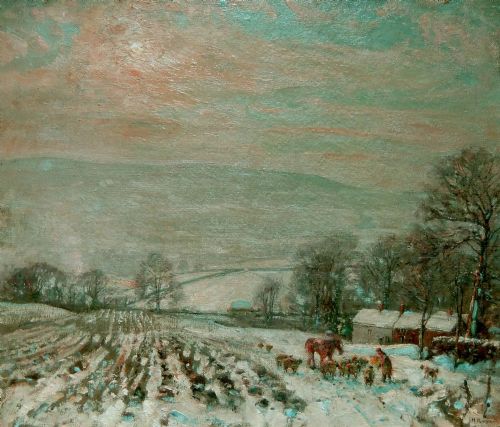
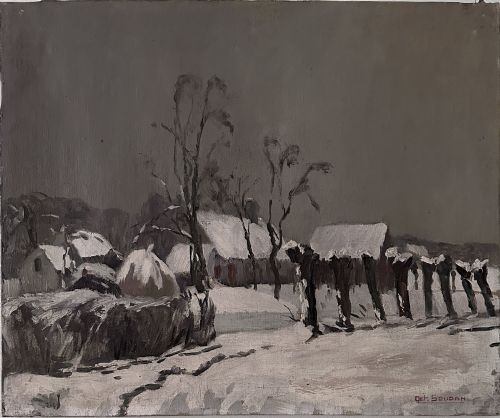
When you search for vintage snow painting, you enter a field of artworks depicting frosty landscapes, winter scenes, and snow-covered terrain. The selections span from the nineteenth century through the mid twentieth century, capturing rural villages, mountains, and country roads.
You will most frequently encounter oil paintings on canvas or board alongside watercolours on paper. Subjects range from Yorkshire dales and Scottish peaks to alpine lakes and Montmartre streets in winter.
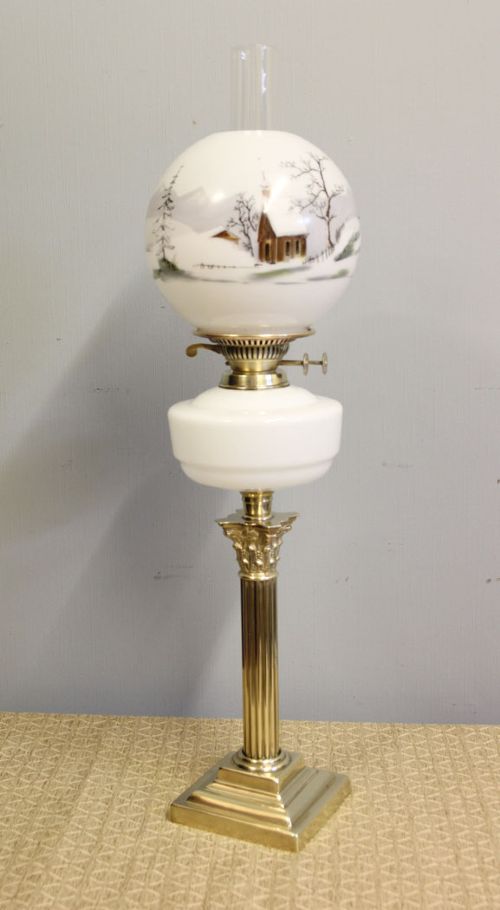
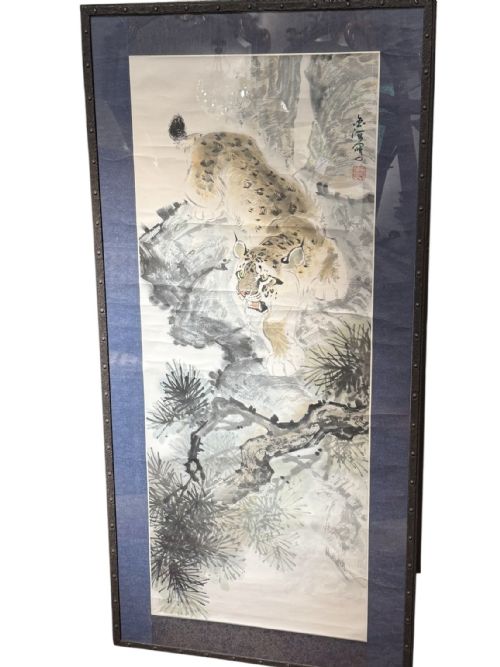
The offerings include framed works and scrolls that preserve the palette of a colder season. These pieces reflect movements such as British Impressionism, realism, and traditional landscape painting.
How they were made
Artists built these scenes using oil paint or watercolour pigment applied to canvas, wooden board, or heavy paper. Canvases were stretched over wooden frames, whilst watercolours utilised washes of pigment on paper to capture light on snow.
Many works incorporate gesso beneath the paint surface to prepare grounds, framed within traditional wooden mouldings that often include gold leaf or simple painted borders.
Materials recorded across these artworks include canvas, oil paint, paper, wood, gesso, and watercolour pigment.
What varies in quality
Quality rests in the handling of light and shadow across white surfaces, where skilled artists mix subtle blues, purples, and greys rather than relying on pure white. The confidence of the brushstroke defines whether a winter scene feels flat or holds depth.
Condition of the support matters significantly, separating canvases with stable paint layers and minimal craquelure from those showing flaking or heavy restoration. The quality of the original framing also distinguishes domestic watercolours from major gallery works.
Herbert Royle·Ernest Uden·John Smith Atherton·GEORGE GRAHAM·Ernest Higgins Rigg·John Richard Worsdale·Emily M. Paterson·EVELINE LANCE·William Cave Day·Fred Lawson·William B Dealtry·David Woodford·Jack Cross·Kenneth Holmes·Angus Rands·Maurice Long
The Vintage Snow Painting Glossary
- Oil paint
- A slow-drying medium made by mixing pigments with oils such as linseed, allowing artists to build thick textures known as impasto.
- Watercolour pigment
- Finely ground colour mixed with a water-soluble binder, applied in translucent washes to paper.
- Gesso
- A white paint mixture consisting of a binder mixed with chalk, gypsum, or pigment, used to prepare a surface for painting.
- British Impressionism
- A painting style focusing on transient effects of light and ordinary subject matter, prominent across many British winter scenes.
- Canvas
- Closely woven heavy cloth stretched across a wooden frame to form a stable support for oil paintings.
Vintage Snow Painting: Frequently Asked Questions
What periods do these snow paintings cover?
The available works span from the Victorian era and the late nineteenth century through the 1950s and 1960s.
Most items originate from the early decades of the twentieth century, particularly the 1910s and 1920s.
Are these paintings executed on canvas or paper?
Artists used several supports, including stretched canvas, wooden board, and heavy paper.
Watercolours appear predominantly on paper under glass, whilst oils are found on canvas and board.
Where do the landscape scenes typically take place?
The geographical focus centres heavily on British landscapes, including Yorkshire dales, Scottish highlands, and Welsh mountains.
Other locations feature alpine views in Austria, Canadian wilderness, and Parisian street scenes.
How should I care for a watercolour snow painting?
Watercolours require protection from direct sunlight to prevent the pigments from fading over time.
Keep them away from damp environments and ensure they remain behind conservation glass.