




Vintage Silverware Canteen
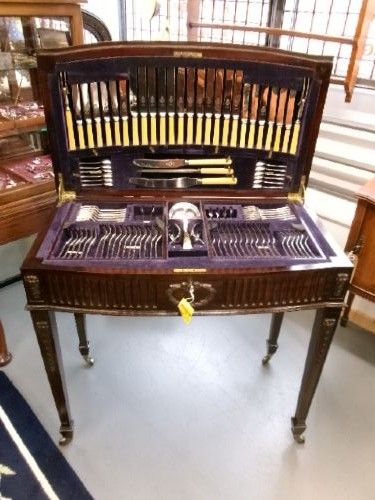
A vintage silverware canteen provides fitted storage for dining flatware, bringing period craftsmanship and organised service straight to the dining room.
Vintage Silverware Canteen
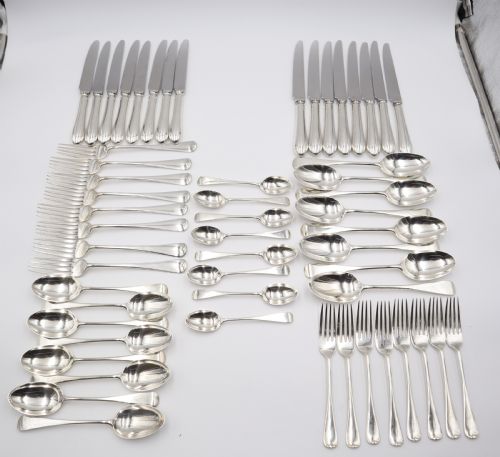
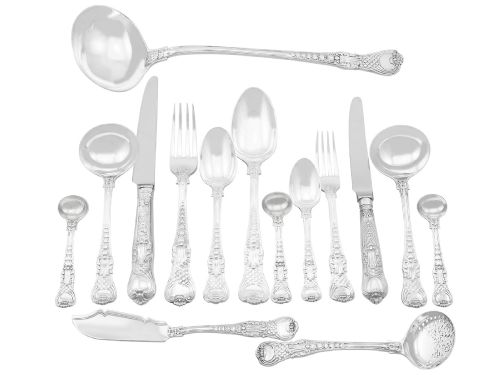
When buyers search for a vintage silverware canteen, they examine fitted wooden chests and tables designed to hold complete cutlery services. These sets span periods from the Victorian era and the Edwardian period through to the nineteen-twenties, incorporating both silver plate and sterling silver implements alongside steel blades.
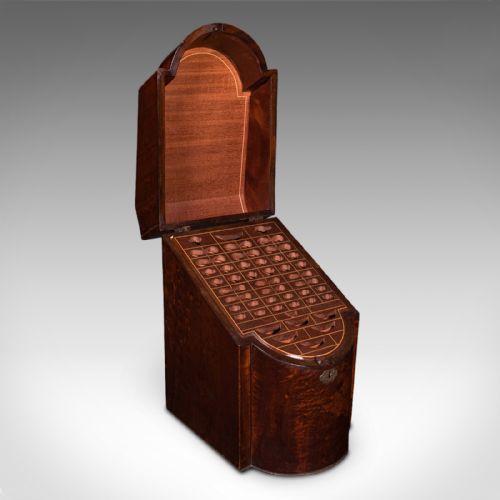
The objects take several distinct forms, including table-top cutlery boxes, floor-standing canteen tables, and fitted knife boxes made for domestic service. The materials encompass traditional hardwoods such as mahogany, oak, walnut, and coromandel, often lined internally with velvet or felt to protect the pieces.
The style ranges from plain functional Georgian forms to elaborate Victorian designs and geometric Art Deco flatware sets. Makers such as Walker & Hall, Mappin & Webb, Waring & Gillows, and Tiffany appear among the English and international examples.
Construction and Materials
Cabinetmakers constructed the exterior housings using sturdy timbers like mahogany, oak, walnut, and coromandel, shaping them into chests, boxes, and stands designed to endure heavy household use. These wooden enclosures frequently feature brass hinges, locks, and carrying handles.
The interior compartments rely on precision woodworking, lining individual slots and trays with felt or velvet to secure every spoon, fork, and knife. Cutlery inside these sets combines steel blades with handles and serving portions made from silver plate or solid sterling silver.
Vintage Silverware Canteen Retail Price Guide 2026
Typical asking prices for vintage silverware canteen among the pieces listed under this phrase on Sellingantiques today, from the lower quarter to the upper quarter. They describe what is for sale here now, not the wider market.
Listings feature oak, mahogany, walnut, and coromandel timbers alongside brass fittings and velvet or felt linings.
Factors of Quality
Quality rests in the integrity of the cabinetwork and the completeness of the original service. Superior pieces utilise dense hardwoods with sophisticated internal partitioning, while lesser examples show simpler box construction with mixed or replacement contents.
The distinction also lies in the reputation of the maker and retailer, such as established silversmiths and cabinetmakers, whose brand marks signify higher standards of metalwork and joinery. Preserved velvet and felt linings alongside original locking mechanisms elevate the standing of a set.
Walker & Hall·Mappin & Webb·Waring & Gillows·Tiffany
The Vintage Silverware Canteen Glossary
- Canteen
- A fitted box, chest, or table designed to hold a complete set of cutlery. It keeps dining implements organised and protected when not in use.
- Silver Plate
- A base metal coated with a thin layer of pure silver. This technique provided the appearance and utility of solid silver at a lower cost.
- Sterling Silver
- An alloy containing a high proportion of pure silver combined with other metals for durability. It is the standard for high-end flatware.
- Flatware
- Dining utensils such as spoons and forks that are relatively flat, distinguished from cutlery items with blades like knives.
Vintage Silverware Canteen: Frequently Asked Questions
What is a vintage silverware canteen?
It is a dedicated storage chest, box, or table built to hold an organised set of dining flatware and cutlery. These pieces secure spoons, forks, and knives in fitted interior slots.
They emerged from domestic traditions where proper service required complete sets of matching implements kept safely together in the dining room or pantry.
How do I date a canteen?
Dating relies on the style of the cabinetwork, the wood used, and any maker marks stamped on the metal implements inside. Edwardian and Victorian pieces often show distinct decorative motifs and construction methods.
Examining the hinges, locks, and lining materials also helps place the object within periods ranging from the nineteenth century to the nineteen-twenties.
What woods were used for canteens?
Cabinetmakers employed durable hardwoods such as mahogany, oak, and walnut to build the exterior structures of these storage chests. More decorative items occasionally utilised exotic timbers like coromandel.
These woods were selected for their strength and appearance, ensuring the heavy weight of metal flatware could be supported safely.
How should I clean the interior lining?
Interior velvet and felt linings require gentle brushing or vacuuming with a soft attachment to remove dust and debris. Avoid using liquids or chemical cleaners that might damage the fabric or the underlying wood.
Keeping the chest in a stable environment away from direct sunlight protects both the textiles and the exterior timber.