




Antique Silver Canteen Service
These antique silver canteen service sets are fitted collections of tableware made to organise and elevate formal dining.
Antique Silver Canteen Service
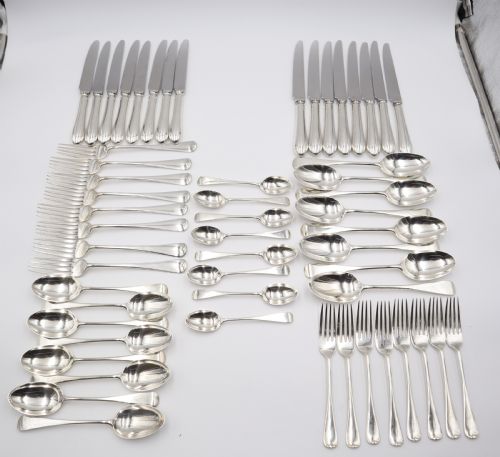
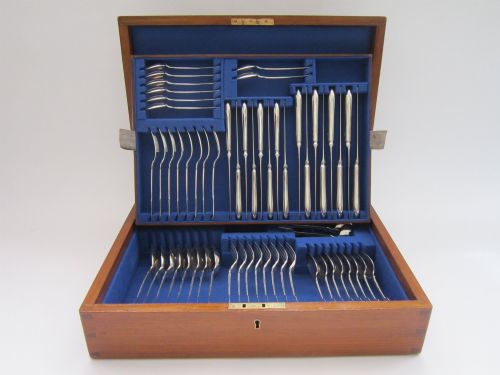
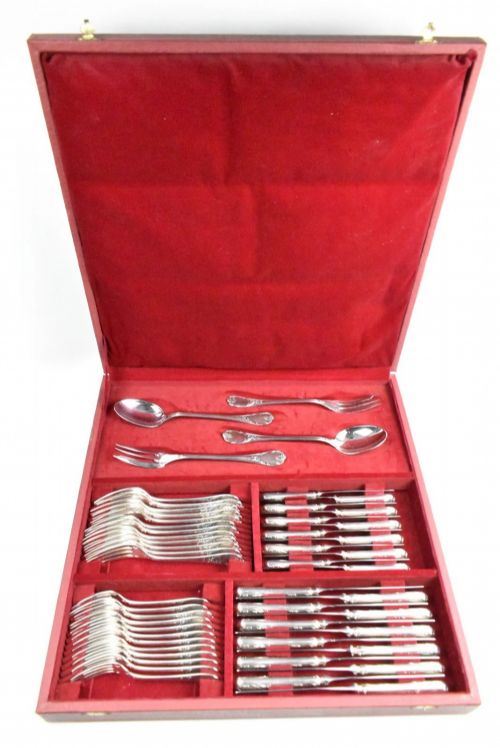
An antique silver canteen service comprises matched sets of knives, forks, and spoons housed within dedicated fitted boxes or chests. The items seen on this page span the Victorian, Edwardian, and Art Deco periods, alongside pieces dated from eighteen hundred through to nineteen thirty.
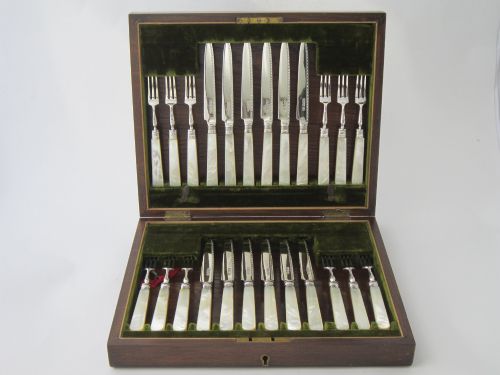
Buyers encounter forms ranging from large canteens for twelve persons down to compact dessert sets and specialised fish or fruit services. Materials include sterling silver and silver plate, frequently paired with wooden cases lined in velvet.
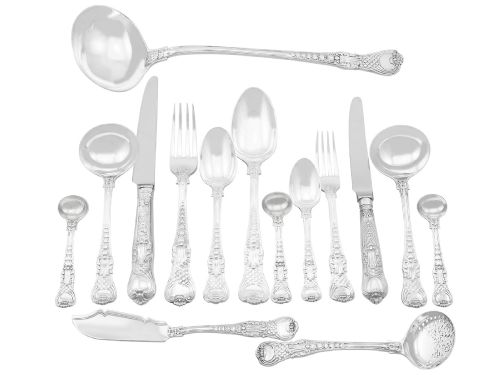
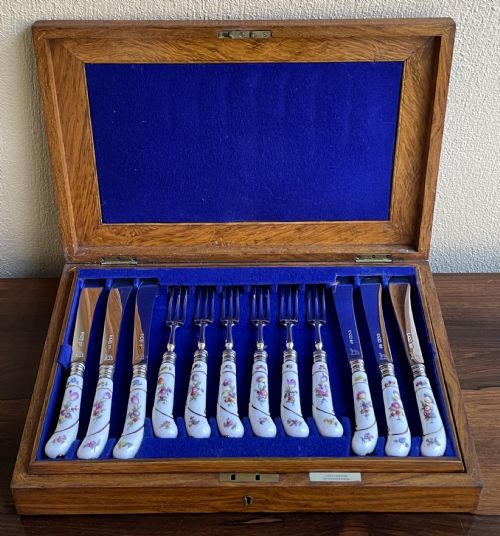
Stylistic expressions vary widely, encompassing traditional Fiddle pattern designs, ornate Rococo Revival motifs, and streamlined Art Deco geometric forms. Many sets combine precious metals with organic handles such as mother of pearl or porcelain.
Materials and construction methods
The primary metal utilised is sterling silver or silver plate, shaped into flatware and cutlery through traditional smithing and casting techniques. Handles often incorporate contrasting natural materials like wood, steel, and mother of pearl, secured to metallic blades or tines.
Storage enclosures are constructed from sturdy timbers such as oak, tailored internally with plush velvet linings to protect individual utensils. Metal surfaces display hand-engraved details, hallmarks, and specific pattern stamps like Fiddle or Faneuil.
Antique Silver Canteen Service Retail Price Guide 2026
Typical asking prices for silver canteen service among the pieces listed under this phrase on Sellingantiques today, from the lower quarter to the upper quarter. They describe what is for sale here now, not the wider market.
Some Edwardian dessert sets slyly tucked mother of pearl handles into oak boxes alongside porcelain plates for the ultimate dining flourish.
Distinctions in craftsmanship and origin
Quality separates by the integrity of the silver content, the heft of the individual pieces, and the precision of the fitted case construction. Maker attribution also plays a role, with distinguished retailers and silversmiths commanding greater recognition.
The completeness of the service and the preservation of original velvet linings and wooden cabinetry dictate the overall desirability of the set. Matching flatware patterns across larger multi-person settings reflect higher initial commissioning standards.
Christofle Marly·Tiffany Sterling Silver·Carrington·Waring and Gillows
The Antique Silver Canteen Service Glossary
- Canteen
- A fitted box, chest, or case designed specifically to store a complete set of cutlery. These enclosures keep flatware organised and protected when not in use.
- Fiddle Pattern
- A traditional nineteenth-century flatware design characterised by a stem that widens towards the terminal in a shape reminiscent of a fiddle.
- Sterling Silver
- An alloy consisting of ninety-two point five percent silver and seven point five percent other metals, usually copper, ensuring durability for daily dining.
- Silver Plate
- A base metal coated with a thin layer of pure silver through electroplating or older mechanical methods, offering the appearance of solid silver at a different scale.
- Flatware
- Table utensils such as spoons and forks used for eating and serving food. In antique contexts, these pieces often feature distinct regional and period styles.
Antique Silver Canteen Service: Frequently Asked Questions
How many place settings do these canteens typically include?
The capacity of a canteen service varies considerably, ranging from compact dessert or fish sets for smaller gatherings up to large services intended for eight or twelve persons.
Buyers should examine the specific listing details to confirm the exact count of individual utensils and whether the service remains complete.
What is the difference between sterling silver and silver plate?
Sterling silver is a solid precious metal alloy containing a standardised high purity of silver throughout the entire piece. Silver plate involves applying a thin outer layer of silver over a durable base metal core.
Hallmarks stamped directly onto the metal usually help distinguish solid sterling items from plated alternatives.
How should an antique wooden cutlery canteen be maintained?
Wooden cases benefit from being kept away from direct sunlight and excessive humidity to prevent warping of the timber and fading of the internal velvet. Regular gentle dusting preserves the exterior finish of the oak or other woods used.
Silver contents require periodic polishing with appropriate compounds designed specifically for precious metals to prevent tarnishing.
Are these vintage cutlery sets suitable for daily dining?
Many collectors and homeowners use antique canteens for special occasions or everyday meals, depending on the durability and material of the specific set. Sterling silver and robust silver plate handle regular use well when washed by hand.
Care must be taken with delicate handles made of mother of pearl or porcelain, which generally require gentler handling than all-metal pieces.