

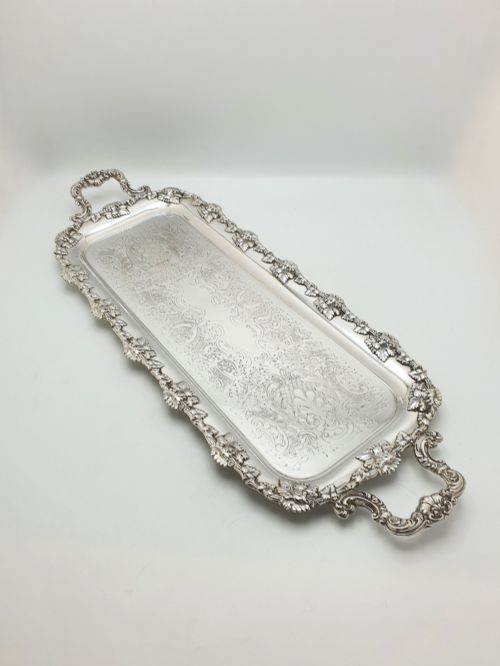
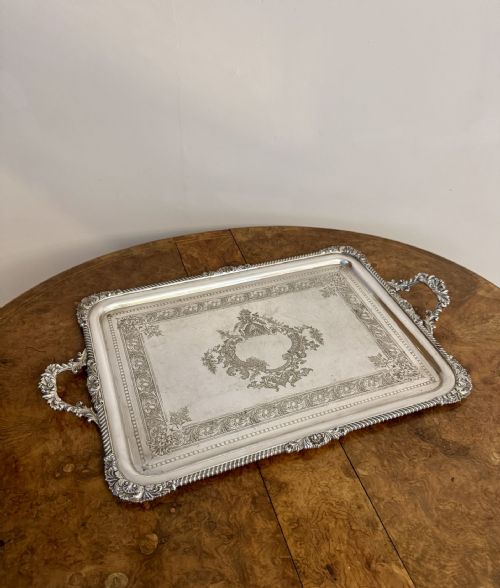
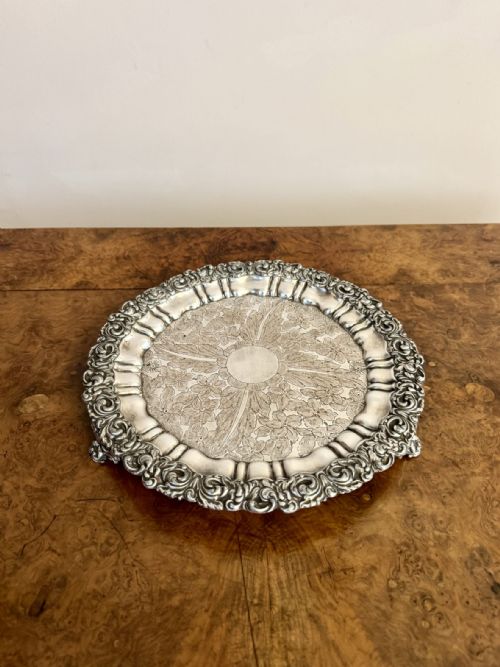
Vintage Silver Serving Platter
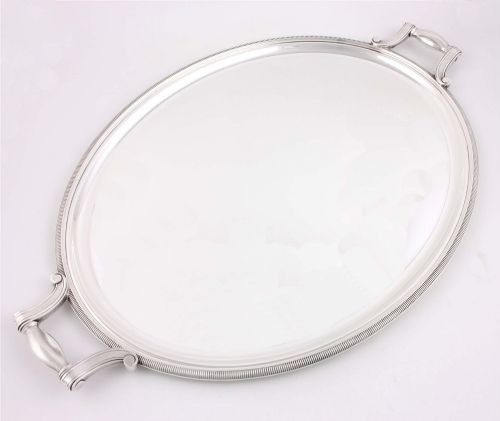
A vintage silver serving platter delivers instant presence to a dining table or cocktail bar, offering a generous stage for drinks, roasts and hors d'oeuvres.
Vintage Silver Serving Platter
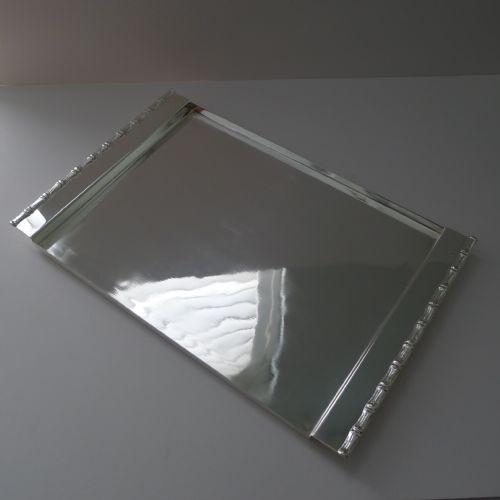
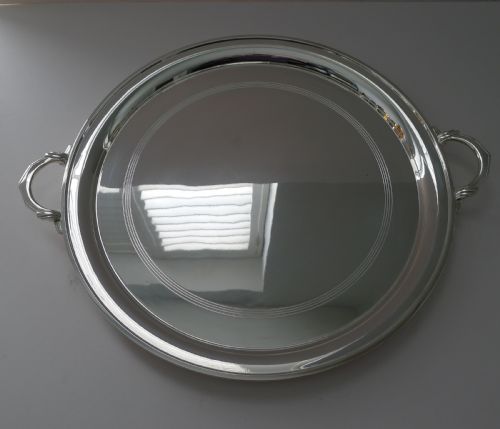
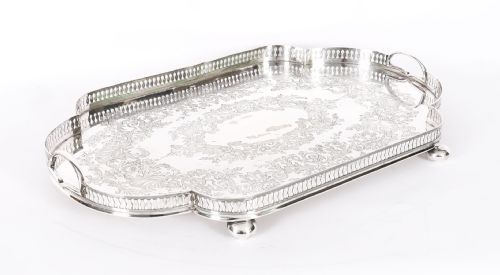
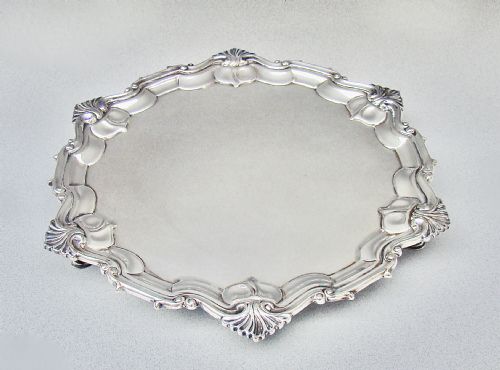
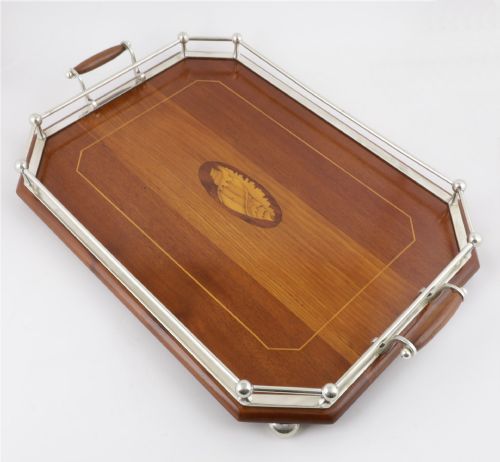
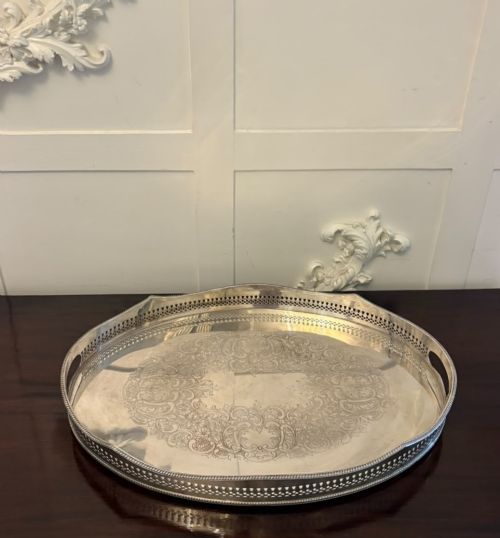
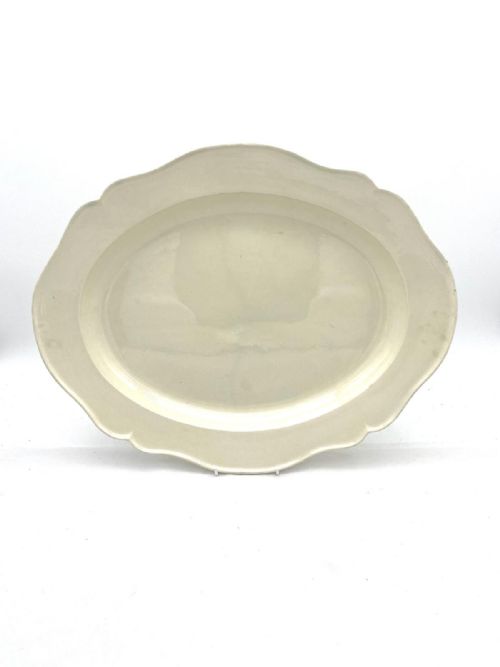
A vintage silver serving platter encompasses a wide variety of forms designed to present food and drink, including gallery trays, salvers, oval platters, and entree dishes. When searching for a vintage silver serving platter, buyers frequently encounter Edwardian and Art Deco examples alongside Victorian and mid-century designs. These pieces range from simple domestic tableware to elaborate presentation items equipped with handles, engraved surfaces, and decorative borders.
The materials span standard silver plate, Electroplated Nickel Silver, and Old Sheffield Plate, occasionally combined with mahogany, wood, copper, or cut glass. Forms vary from octagonal and diamond shapes to traditional circular and rectangular silhouettes, often reflecting the specific aesthetic preferences of the period in which they were manufactured.
Methods and materials of manufacture
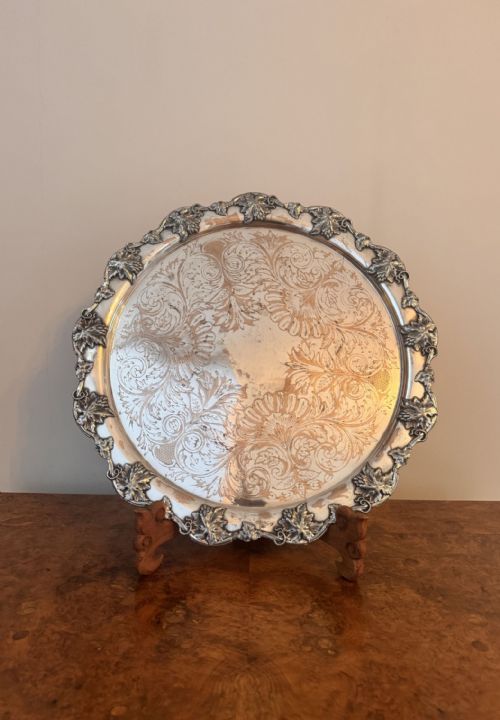
Production largely relies on plating techniques, predominantly applying a layer of silver over a base metal such as nickel silver, copper, or standard metal. Old Sheffield Plate involves fusing a thin sheet of silver to a copper core, a method visible in earlier pieces before electroplating became widespread. Maker workshops also incorporated structural wooden elements, such as inlaid mahogany bases or gallery rims, alongside applied decorative borders featuring grapevine, shell, or scroll motifs.
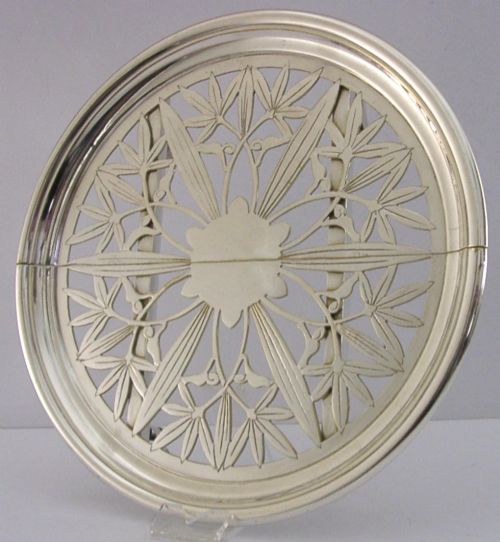
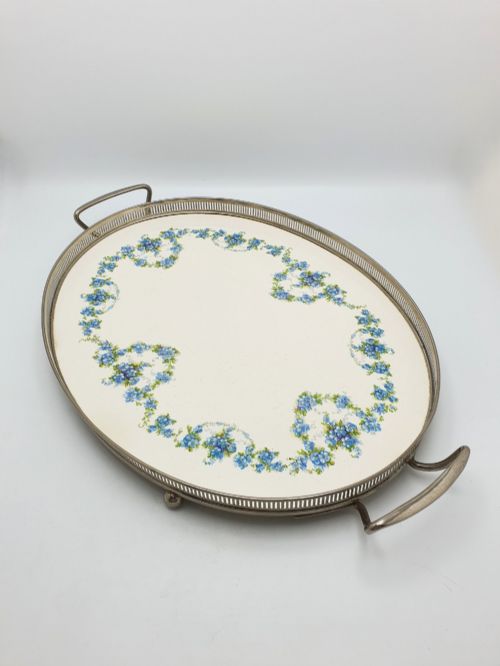
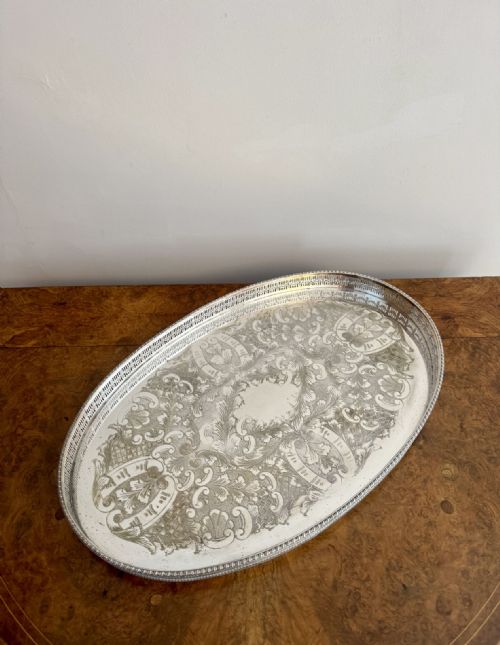
Surface ornamentation is achieved through hand engraving, piercing, repoussé work, and embossed scrolls. Many items utilise cut glass mirror inserts or ceramic elements to provide contrast against the reflective silver surface.
Materials documented across the inventory include silver plate, EPNS, Old Sheffield Plate, copper, mahogany, and cut glass mirror.
Distinctions in standard and execution
Quality in these items is determined by the crispness of the chased or engraved detail and the integrity of the underlying metalwork. Superior examples display deeply embossed borders, solid handle attachments, and well-balanced proportions that remain stable on a flat surface.
The thickness and durability of the silver plating dictate longevity, with better makers applying heavier coats that withstand decades of polishing. The integration of secondary materials, such as finely inlaid wood or undamaged cut glass, further separates standard domestic production from exceptional studio output.
James Deakin·William Hutton and Sons·Mappin and Webb·Padley Parkin·Henry Wilkinson·Christofle
The Vintage Silver Serving Platter Glossary
- Silver Plate
- A base metal coated with a thin layer of silver through chemical or electrochemical processes. This technique allowed makers to produce domestic tableware at a lower cost than solid silver.
- Old Sheffield Plate
- An early method of fusing silver to a copper ingot before rolling them into sheets together. Items made this way often reveal hints of copper along the edges.
- Gallery Tray
- A serving tray featuring an openwork metal gallery or pierced railing around the perimeter. This architectural rim kept decanters and glasses secure during transport.
- Salver
- A flat tray, typically circular and raised on small feet, traditionally used for presenting letters, visiting cards, or glasses. They form a distinct subcategory within formal serving ware.
- Repoussé
- A metalworking technique where the design is hammered into relief from the reverse side. This creates tactile, raised patterns across borders and central panels.
Vintage Silver Serving Platter: Frequently Asked Questions
What is the difference between EPNS and Old Sheffield Plate?
EPNS stands for Electroplated Nickel Silver, a nineteenth-century method where an electric current bonds silver to a nickel-copper alloy base. It produces a uniform finish.
Old Sheffield Plate is an earlier fused-layer technique where silver and copper are heated and rolled together. Look closely at the edges to spot thin copper lines.
Can these platters be used for serving food daily?
Many vintage silver serving platters and entree dishes remain entirely functional for hosting dinner parties and serving roasted meats or canapés. Ensure acidic foods are not left on the surface for extended periods.
Hand wash the items immediately after use with mild soap and warm water. Avoid putting silver plated items into a modern mechanical dishwasher.
How do I date a piece without a hallmark?
Examine the overall aesthetic style, such as the geometric lines of Art Deco or the flowing floral motifs of Edwardian designs. Construction methods also provide strong clues.
Look for maker stamps, registration numbers, or retailer marks stamped into the base metal. Comparing these stamps against known trade records helps narrow down the production decade.