
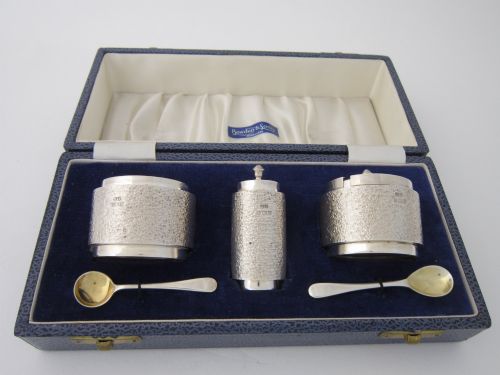
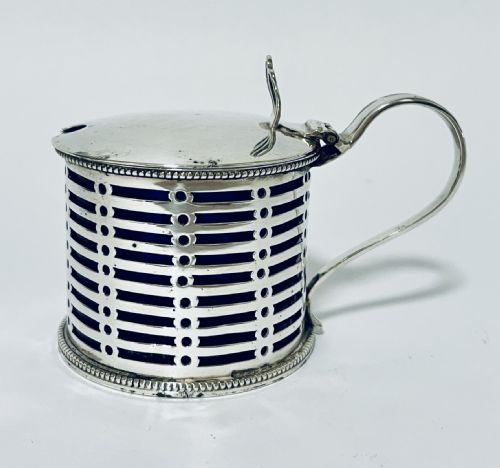
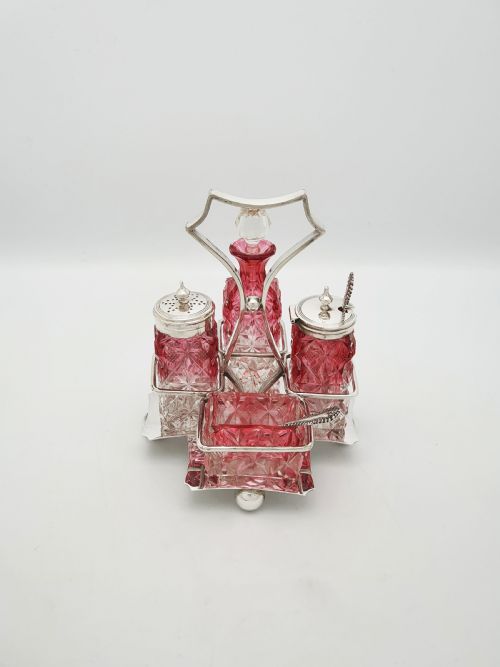


Vintage Silver Salt Mustard Pot
These vintage silver salt mustard pot examples span Georgian elegance to Art Deco precision, bringing traditional dining table form and function to the home.
Vintage Silver Salt Mustard Pot
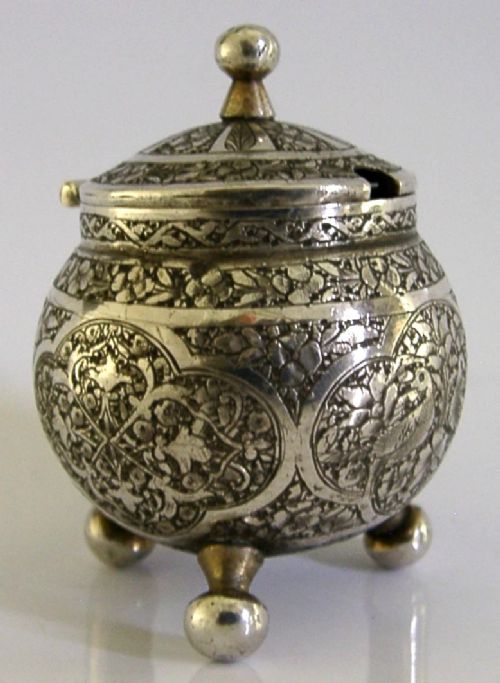
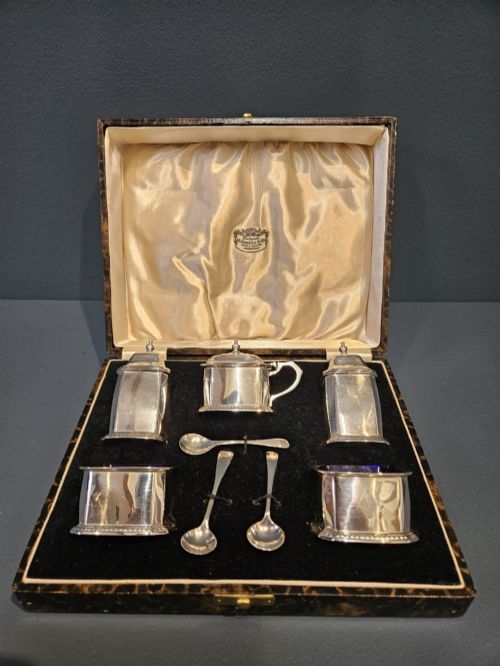
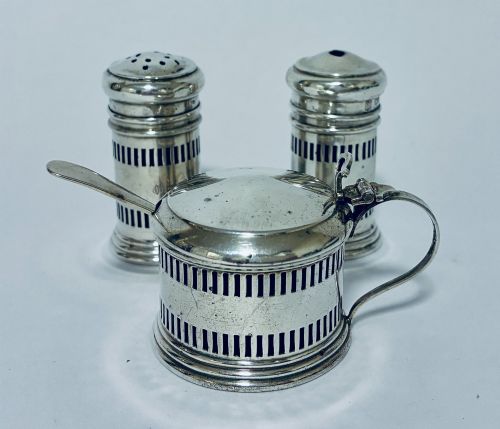
A vintage silver salt mustard pot serves as a traditional table condiment vessel, often appearing as an individual pot or alongside matching cruet sets. These pieces range from simple single containers to multi-piece condiment collections intended for salt, pepper and mustard.
The selections available here cover diverse periods including Georgian, Victorian, Edwardian, Art Deco and Mid-Century Modern. Buyers frequently encounter silver plate, sterling silver and cut glass combinations spanning the nineteenth and twentieth centuries.
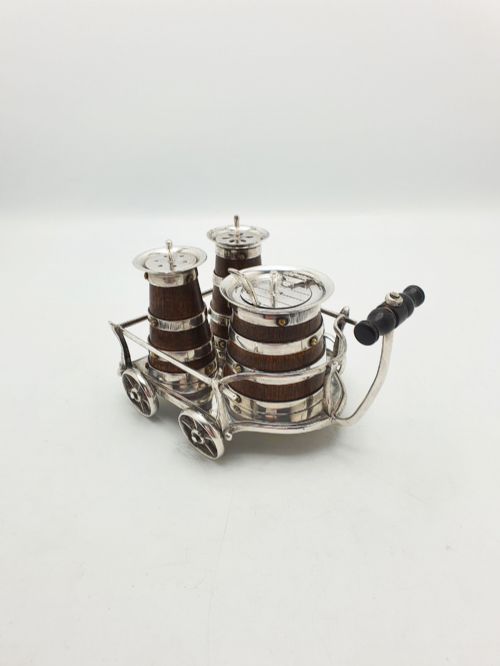
Forms vary from straightforward cylindrical mustard pots to novelties shaped like barrels, carriages and owls. Many pieces retain internal glass liners designed to protect the metal from corrosive mustard and salt.
Materials and methods
Silversmiths utilised sterling silver and silver plate over base metals, shaping bodies through spinning, stamping or casting. Cut glass vessels feature heavily, often paired with pierced silver mounts or fitted hinged lids.
Interiors frequently incorporate blue or clear glass liners held securely within pierced or solid silver frames. Makers employed techniques such as cranberry flashing, surface engraving and hallmark stamping to denote metal purity and origin.
Owl-shaped condiment sets demonstrate that Victorian and mid-century dining tables appreciated a touch of feathered humour alongside the salt and mustard.
Distinctions in craftsmanship
Quality rests upon the weight of the metal, the crispness of the chasing or piercing, and the presence of clear hallmarks. Superior examples maintain intact glass liners and tight hinges on the lids.
Makers known for high output, such as established silversmiths and named firms, generally command greater attention from collectors. The integration of materials, such as heavy cut glass paired with solid sterling frames, distinguishes finer productions from standard plated wares.
Bricks & Sons·Wilmot Manufacturing Co·Viners·Mappin & Webb
The Vintage Silver Salt Mustard Pot Glossary
- Cruet set
- A collection of small bottles or pots for holding condiments such as oil, vinegar, salt, pepper and mustard. These often sit within a dedicated silver or plated stand.
- Hallmark
- An official stamp applied to precious metals indicating purity, the maker and the year of assay. English silver typically bears a sequence of specific marks.
- Sterling silver
- An alloy consisting of ninety-two point five percent silver and seven point five percent other metals, usually copper. It provides durability while maintaining a bright finish.
- Silver plate
- A layer of silver fused or electroplated onto a base metal such as brass, copper or nickel silver. This technique offered an accessible alternative to solid silver.
- Cranberry glass
- A rich red glass produced by adding gold oxide to the molten batch. It appears frequently in Edwardian cruet sets paired with silver-plated frames.
Vintage Silver Salt Mustard Pot: Frequently Asked Questions
How do I clean a silver mustard pot?
Wash the piece gently in warm soapy water using a soft cloth, taking care to remove any residual mustard from the interior. Dry thoroughly with a lint-free cloth to preserve the surface.
Avoid harsh abrasive dips that can strip away thin plating or damage delicate cut glass liners. Regular, gentle polishing maintains the natural lustre of the metal.
What is the purpose of the glass liner?
Condiments such as mustard and salt are chemically reactive and can corrode silver over extended periods. The removable glass liner protects the metal body from direct contact.
Lift the liner out carefully during cleaning to wash away any trapped residue underneath. Many antique sets survive in good condition specifically because these liners absorbed the wear.
How do I date an antique silver mustard pot?
Examine the stamped hallmarks on the base or rim, which typically include a maker's mark, a standard purity mark and a date letter. Reference tables for English assay offices help translate these letters into specific years.
Stylistic cues also help determine age, such as the geometric lines of Art Deco pieces or the ornate piercing found in Victorian and Edwardian examples.
Can I use these pots for everyday dining?
Solid silver and silver-plated mustard pots are robust enough for regular use provided they receive proper care. Ensure you clean them promptly after meals to prevent condiment corrosion.
Many collectors enjoy integrating these historical tableware items into modern dining settings alongside contemporary tableware.