



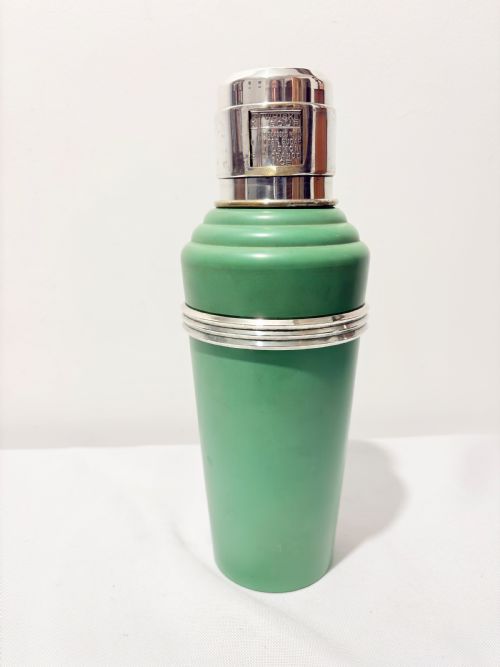


Vintage Silver Plated Shaker
A vintage silver plated shaker brings the weight of the cocktail bar and the dining table from the early twentieth century into modern rooms.
Vintage Silver Plated Shaker
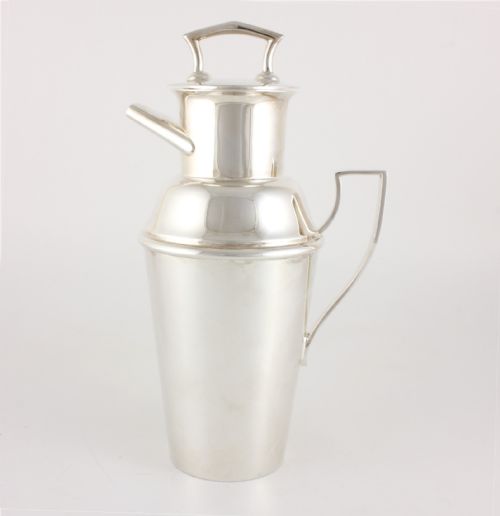
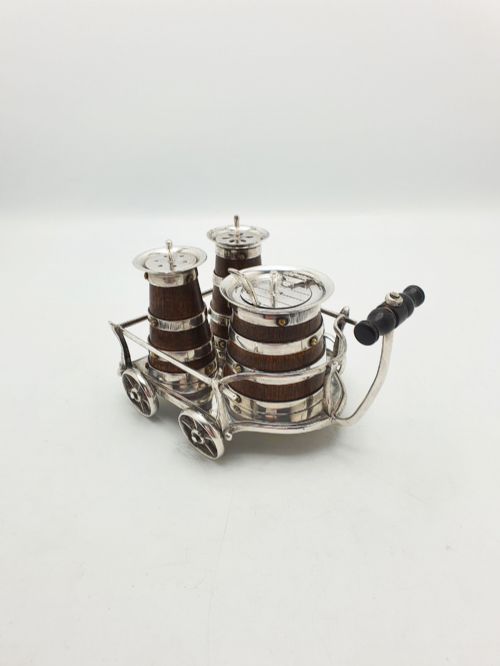
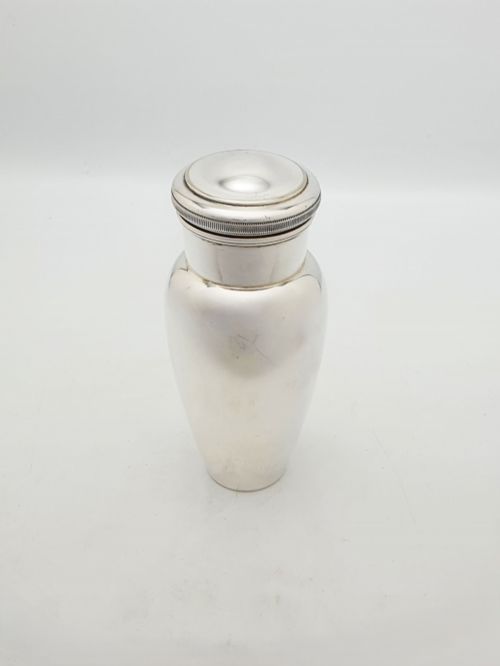
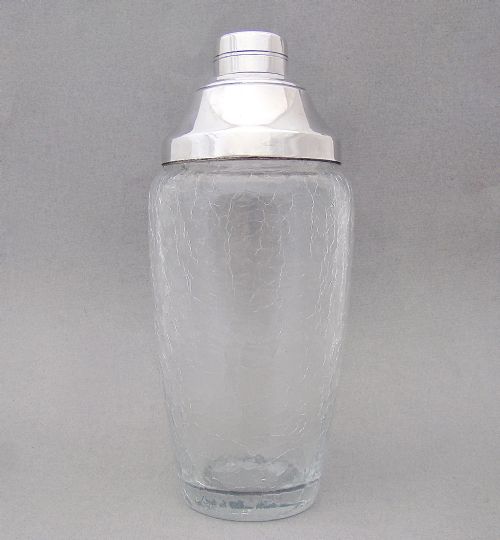
A vintage silver plated shaker encompasses functional vessels designed for preparing mixed drinks or dispensing condiments at the table. Cocktail shakers dominate the selection, spanning simple cylindrical bodies to elaborate novelty forms shaped like milk churns or barrels.
The material record points heavily toward the Art Deco period of the nineteen-thirties, alongside Edwardian and Victorian cruet sets and condiment holders. These items range from compact bachelor pieces to large capacity jugs fitted with internal mechanisms.
Makers focused on combining utility with social display, creating vessels equipped with built-in lemon squeezers, ice breakers, or rotating recipe bands. Table cruet sets similarly gather multiple glass bottles within framed metal stands for vinegar, oil, and sauces.
What Varies in Quality
Quality depends upon the weight of the metal base and the precision of mechanical components such as rotating recipe dials or integrated lemon squeezers. Heavier gauge metals resist dents and maintain a more substantial balance in the hand.
The reputation of the maker and the complexity of the design dictate distinction. Pieces bearing signatures from established silversmiths or featuring specialised utilitarian attachments stand apart from standard commercial production.
Vintage Silver Plated Shaker Retail Price Guide 2026
Typical asking prices for vintage silver plated shaker among the pieces listed under this phrase on Sellingantiques today, from the lower quarter to the upper quarter. They describe what is for sale here now, not the wider market.
Some mid-century shakers double as rotating recipe books, ensuring no host ever forgets the proportions for a proper martini after midnight.
Asprey and Co·James Dixon and Sons·Hukin and Heath·William Suckling·C S Green and Co·Christofle·Lino Sabattini·Elkington and Co·Mappin and Webb
The Vintage Silver Plated Shaker Glossary
- Electroplated Nickel Silver
- A base alloy of copper, nickel, and zinc coated with a layer of pure silver through an electrolytic process. This acronym appears frequently on nineteenth and twentieth-century barware.
- Engine-Turning
- A mechanical technique used to engrave intricate geometric patterns of precise lines onto metal surfaces. It adds texture and diffuses light across the body of a shaker.
- Cruet Set
- A matched collection of glass bottles or jars held within a dedicated metal stand, designed to hold condiments for the dining table. Victorian and Edwardian examples often incorporate elaborate silver-plated frames.
- Bakelite
- An early form of synthetic phenol formaldehyde resin used for handles, knobs, and decorative accents on mid-century barware. Its presence helps date items to the modernist design eras.
- Sugar Caster
- A perforated vessel designed for sprinkling castor sugar over desserts or baked goods. These tall pieces often feature pierced silver-plated tops paired with cut glass bodies.
Vintage Silver Plated Shaker: Frequently Asked Questions
How do I clean silver plate?
Cleaning requires a soft cloth and a gentle, non-abrasive silver polish formulated specifically for plated items. Harsh scrubbing wears away the thin silver layer over the underlying nickel or brass base metal.
Resting pieces on a soft towel and washing them by hand preserves both the finish and any internal cork or plastic components.
What is an ice breaker?
An ice breaker is a specialised internal grid or spiked mechanism built into the top of a cocktail shaker. It crushes large cubes as the liquid pours through the strainer.
This addition allowed bartenders to chill drinks rapidly without diluting the mixture excessively with loose ice shards.
Are these shakers leak proof?
Most vintage shakers rely on metal-on-metal friction fits, cork seals, or threaded collars to prevent spills during shaking. Over decades of use, cork dries out and metal fittings experience minor wear.
Testing the seal with cold water helps determine whether a specific vessel functions safely for active cocktail preparation.