




Vintage Silver Place Holders
These vintage silver place holders organise a formal table with sculptural miniature charm, spanning Edwardian novelty fauna to clean Art Deco geometry.
Vintage Silver Place Holders
Vintage silver place holders encompass menu holders, place card holders, and table accessories designed to guide guests to their seats. They appear across Edwardian, George V, George VI, Victorian, and Mid-Century Modern periods, reflecting changing dining customs.
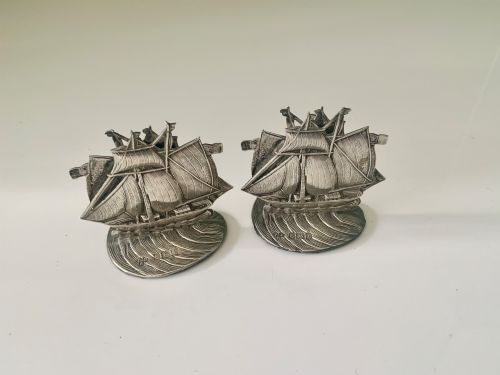
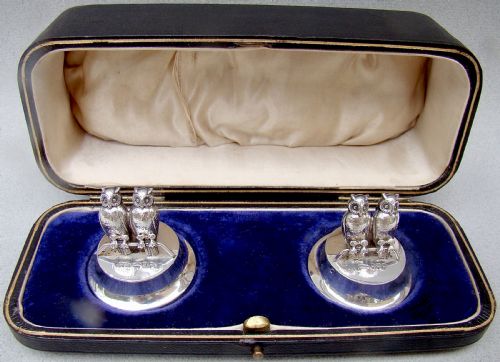
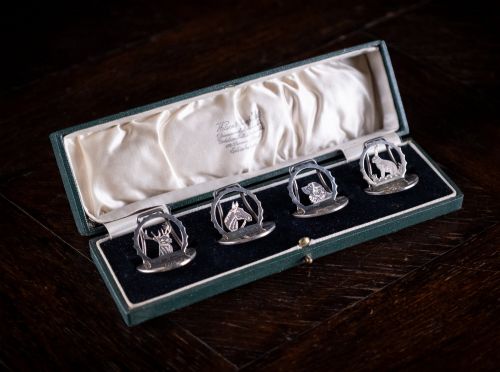
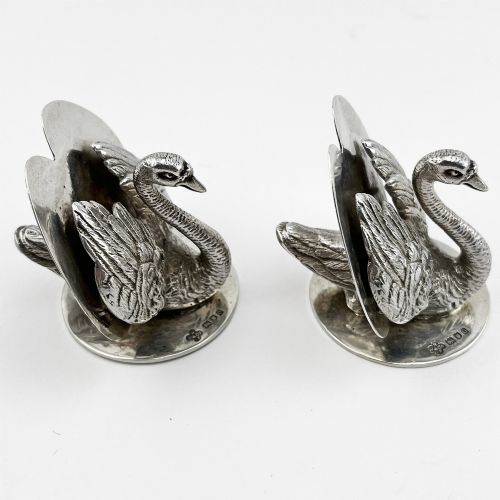
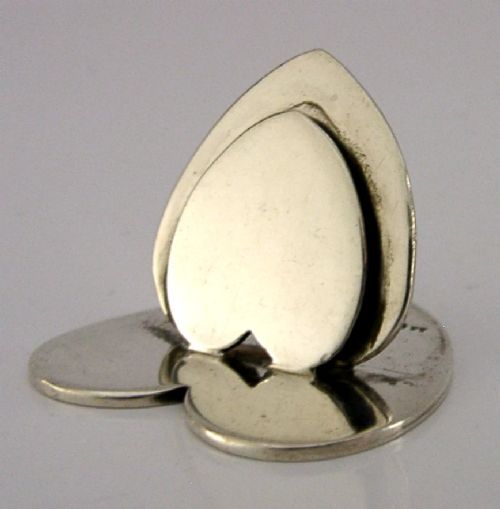
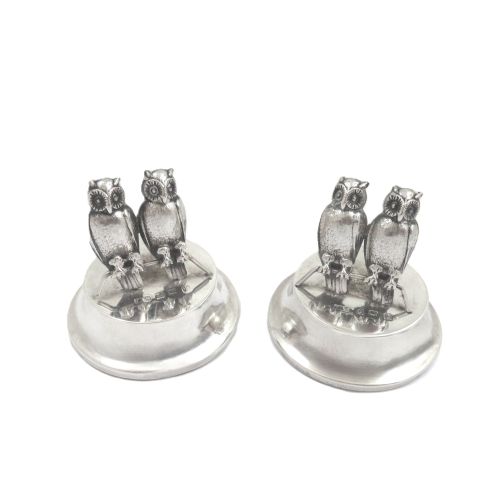
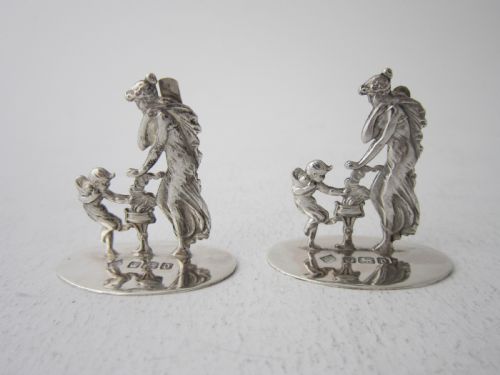
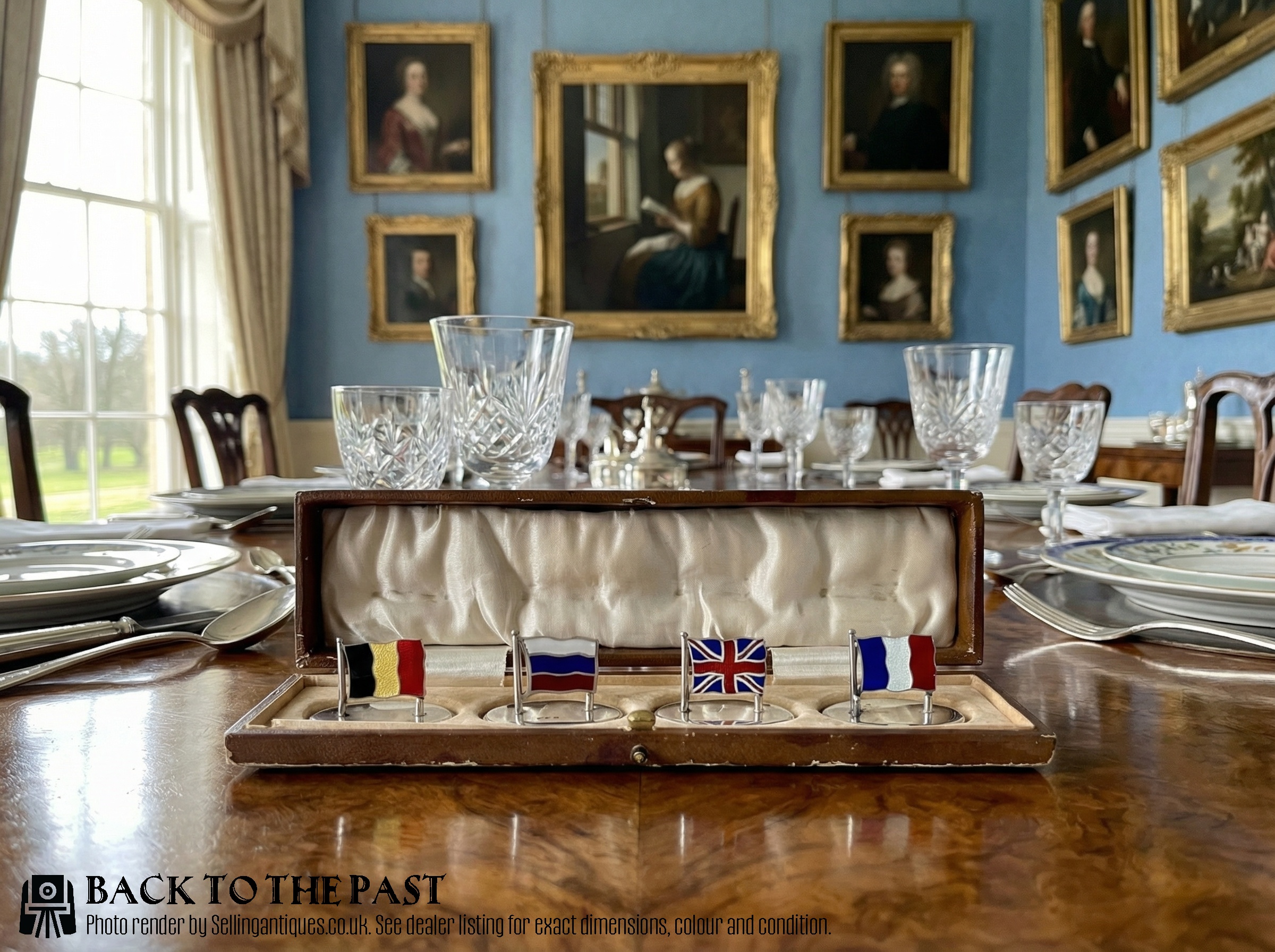
The most common examples on this page take sculptural forms, including owls, swans, foxes, grouse, horses' heads, and galleons. Makers also produced enamel flags, Alice in Wonderland characters, and simple love heart markers.
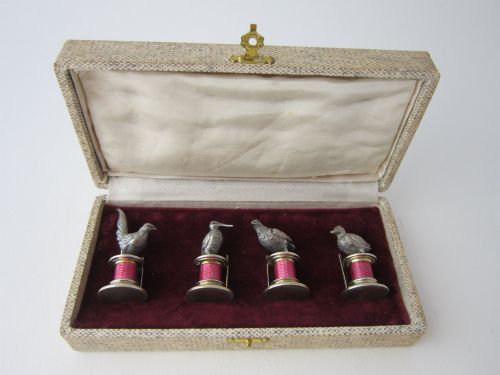
Most items survive as pairs or sets of three, four, six, or twelve, often housed in fitted boxes with silk or velvet linings. These tableware accessories bridge functional dining utility and decorative silver artistry.
How they were made
Silversmiths utilised sterling silver and silver plate, shaping metals through casting and stamping to create detailed animal and figural forms. Skilled artisans added guilloche enamel and standard enamel details to flags, motifs, and military insignia.
Workshops lined presentation cases in leather, velvet, and silk to protect the delicate clips and weighted bases of each piece. Hallmarks stamped into the silver record assay offices such as Birmingham, Chester, and London alongside specific production dates.
Dining guests at the turn of the century might find their names held upright by a tiny solid silver owl or Wonderland rabbit.
What varies in quality
Quality depends upon the crispness of the casting and the complexity of the subject, distinguishing standard clips from sculptural models like owls or galleons. The presence of undamaged enamel work and intact original presentation boxes elevates individual sets.
Maker attribution to known firms like Sampson Mordan, Levi & Salaman, or Asprey separates standard workshop output from distinguished silversmith production.
Levi & Salaman·A. Wilcox·Sampson Mordan·Asprey·Liberty
The Vintage Silver Place Holders Glossary
- Sterling silver
- A silver alloy containing 92.5 percent pure silver and 7.5 percent other metals, usually copper, ensuring durability for tableware accessories.
- Guilloche enamel
- A decorative technique where translucent enamel is layered over engine-turned metalwork, visible on flag and decorative card holders.
- Hallmark
- A series of official marks stamped onto precious metal items to guarantee purity, assay office origin, and date of manufacture.
- Menu holder
- A tabletop accessory fitted with a small clip or slot to display the meal selection for diners.
- Place card holder
- A miniature stand designed to display a guest's name card clearly beside their plate.
Vintage Silver Place Holders: Frequently Asked Questions
How were place holders used?
Hosts placed them on dining tables to hold printed menu cards or individual name cards for seated guests.
They helped manage seating arrangements and informed diners of the courses during formal Victorian, Edwardian, and mid-century meals.
What periods do these pieces date from?
The listings span the Victorian era, the Edwardian period, the reigns of George V and George VI, and the mid-century modern era.
Most items originate from the early decades of the twentieth century.
Are they sold individually or in sets?
While some survive as isolated pairs, many appear as matching sets of three, four, six, or twelve.
Complete sets often retain their original fitted presentation cases lined with silk or velvet.
What themes appear on the holders?
Designs range from naturalistic animals like owls, foxes, swans, and horses' heads to literary characters like Alice in Wonderland.
Other examples feature military flags, galleon ships, and geometric Art Deco shapes.