




Vintage Silver Perfume Flask
A vintage silver perfume flask is a portable vessel for scent, combining precious metalwork with glass or crystal to hold fragrance.
Vintage Silver Perfume Flask
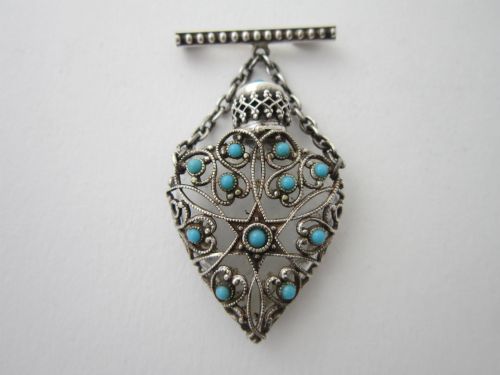
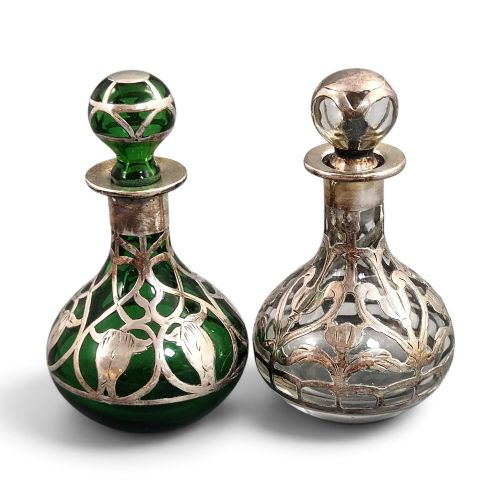
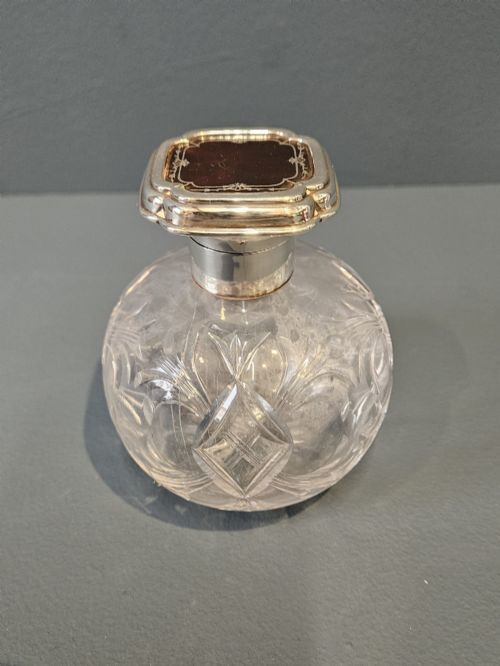
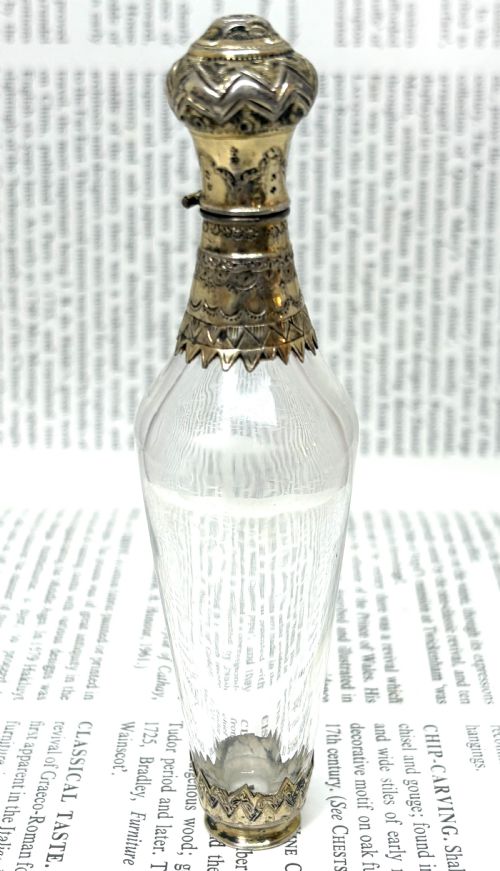
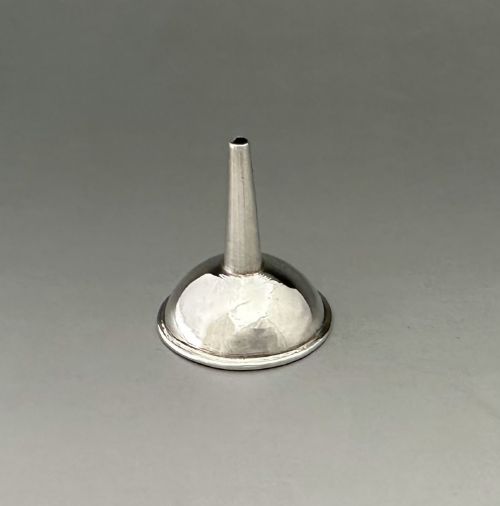
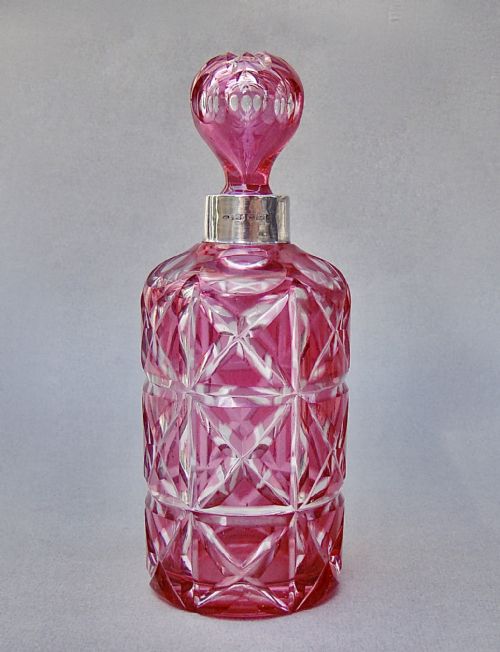
A vintage silver perfume flask brings together precious metal and glass, forming small portable vessels designed for personal scent. These objects appear in forms such as scent bottles, vanity bottles, and perfume funnels.
The pieces on this page span several eras, originating from the nineteenth century, the Victorian period, the Edwardian era, and into the 1920s and 1930s. Continental and French examples sit alongside English makes.
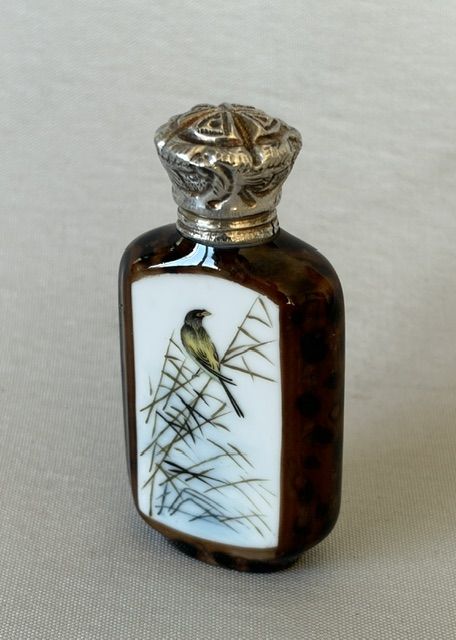
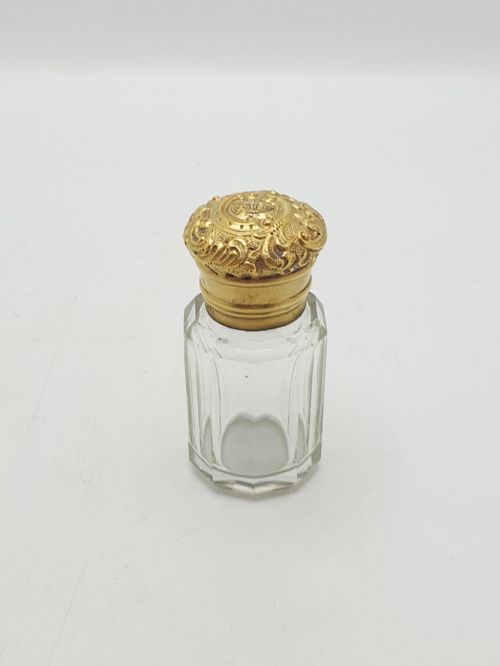
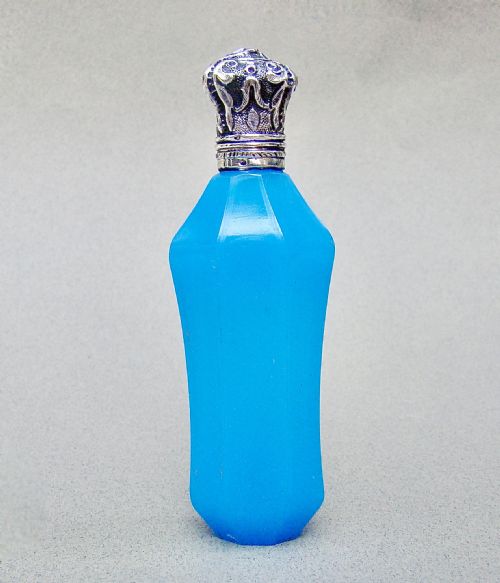
Buyers will encounter vessels housed in cut glass, opaline glass, cranberry glass, and tortoiseshell, each secured with sterling silver, silver gilt, or Old Sheffield plate mounts.
How They Were Made
Maker's workshops combined blown or cut glass bodies with fitted metal mounts, often utilising sterling silver, silver gilt, and tortoiseshell. Glassmakers produced coloured, opaline, or layered overlay glass before silversmiths added collars, hinged lids, and screw caps.
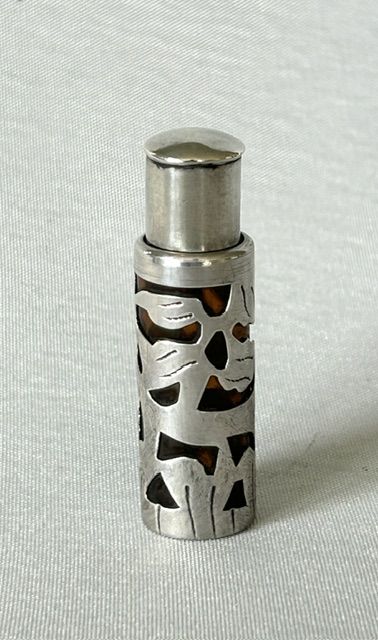
Decorative techniques include intricate silver overlay work, guilloche enamel panels, and hand-cut facets on crystal bodies. Silversmiths stamped their hallmarks directly onto the metal caps and collars to record the metal standard and year of assay.
Vintage Silver Perfume Flask Retail Price Guide 2026
Typical asking prices for vintage silver perfume flask among the pieces listed under this phrase on Sellingantiques today, from the lower quarter to the upper quarter. They describe what is for sale here now, not the wider market.
Listings feature periods spanning from the early 19th century through the Victorian and Edwardian eras into Art Deco the 1930s.
What Varies in Quality
Quality rests in the harmony between the glass body and the precision of the metal mount. Heavier crystal bodies and crisply cast silver mounts indicate finer production.
The execution of decorative elements, such as multi-coloured enamel work or detailed organic silver overlay, distinguishes standard examples from masterworks.
Tonnel Paris·Gorham·Harold Bushell and Co·Karl Palda·Henry Perkins·G H James and Co·Barnsley and Co·S Morden and Co
The Vintage Silver Perfume Flask Glossary
- Sterling silver
- A silver alloy containing 92.5 percent pure silver by mass, utilised extensively for the hinged lids and collars of these bottles.
- Guilloche enamel
- A decorative technique where intricate geometric patterns are engraved beneath translucent enamel, seen frequently on Art Deco pieces.
- Silver gilt
- Sterling silver that has been coated with a thin layer of gold, providing a rich interior or exterior finish to early metal mounts.
- Overlay
- A technique involving a layer of coloured glass cut away to reveal a contrasting base glass, or a pierced silver sheath fitted over a glass bottle.
Vintage Silver Perfume Flask: Frequently Asked Questions
What is a vintage silver perfume flask?
A vintage silver perfume flask is a small container designed to hold liquid fragrance, featuring a glass or crystal body enclosed or topped with silver components.
These pieces served a practical function on dressing tables and inside evening bags during the nineteenth and early twentieth centuries.
How do I date a silver perfume bottle?
Dating relies on reading the silver hallmarks stamped on the metal mounts, which indicate the assay office, metal standard, and specific year.
Stylistic markers such as Art Nouveau curves or Art Deco geometric enamel also help place the piece within the Victorian, Edwardian, or later periods.
What materials are used in these flasks?
The bodies utilise clear cut glass, opaline glass, cranberry glass, and tortoiseshell, paired with sterling silver or silver gilt mounts.
Some examples also incorporate coloured guilloche enamel panels and intricate metal overlay work.
How should I clean my silver scent bottle?
Cleaning requires a soft cloth for the silver mounts, avoiding harsh polishes that might damage delicate enamel or glass surfaces.
Care must be taken to keep moisture away from the interior linings and historical stoppers.