


Chatelaine Perfume Bottle
A chatelaine perfume bottle is a small container worn at the waist, and these pieces combine practical scent storage with decorative metalwork.
Chatelaine Perfume Bottle
When you search for a chatelaine perfume bottle, you encounter small personal scent containers designed to suspend from a belt or chatelaine hook. These objects appear most frequently from the nineteenth century, including Victorian examples and French pieces.
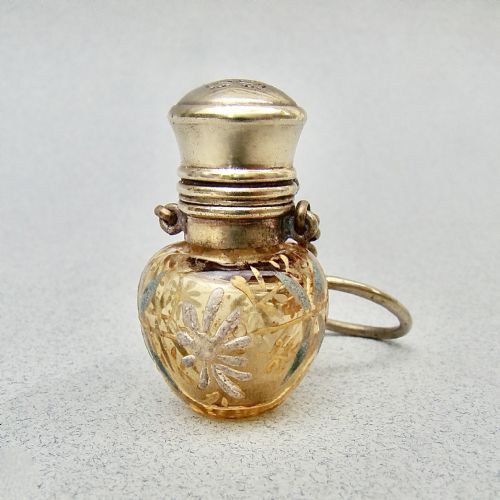
The selection ranges from simple sterling silver mountings to elaborate novelty forms, such as miniatures shaped like violins. Glass bodies in colours like cranberry, opaline, or layered glass frequently appear alongside continental silver and gilded metal mounts.
Materials and construction
Silver components often feature embossed decoration, such as cherubs, or bear hallmarks indicating origins in centres like Birmingham and London. Miniature novelty shapes require precise metal fabrication to form functional hinged caps and small suspension loops.
Some nineteenth-century makers transformed scent bottles into miniature musical instruments, crafting solid silver violins designed to dangle from a lady's waist.
Distinctions in quality
Quality rests in the precision of the metal mounts and the complexity of the glass body, such as triple overlay techniques or intricate enamel details. Pieces featuring identifiable maker's marks or specialised glass from workshops like Moser demonstrate higher craftsmanship.
The harmony between the glass vessel and its metal housing dictates the overall success of the piece, where secure fittings and intact decorative stones elevate the object.
S. Morden and co·Moser
The Chatelaine Perfume Bottle Glossary
- Chatelaine
- A decorative belt hook or clasp worn from the waist to suspend utilitarian items such as keys, scissors, or perfume bottles. This accessory served both practical and decorative functions in historical dress.
- Opaline glass
- An opaque or translucent glass developed in pale shades, frequently utilised for nineteenth-century scent bottles. It provides a smooth background for metal mountings and hand-painted decoration.
- Sterling silver
- A silver alloy containing a high proportion of pure silver by weight, standard for British and Victorian silverwork. Hallmarks on these mounts often record the assay office and year of production.
- Vermeil
- Sterling silver plated with a layer of gold, providing a rich golden finish to metal mounts and chatelaine chains. This technique combined the durability of silver with the appearance of solid gold.
- Lithyalin glass
- A type of heavily stained glass developed to imitate gemstones, occasionally found in historical scent bottles. It presents marbled or translucent effects within small-scale vessels.
Chatelaine Perfume Bottle: Frequently Asked Questions
How were chatelaine perfume bottles worn?
These bottles suspended from a chatelaine hook or belt clip attached to a woman's waistband, allowing quick access to scent throughout the day. The short chains kept the container secure yet accessible during daily activities.
Over time, fashion changes moved these items from functional waist wear to decorative vanity objects, though the suspension loops remained part of their design.
What materials are common in these bottles?
Glass and silver form the primary components, with sterling silver and continental silver dominating the metal mounts. Glass bodies range from clear coloured varieties to opaque opaline and complex layered glass.
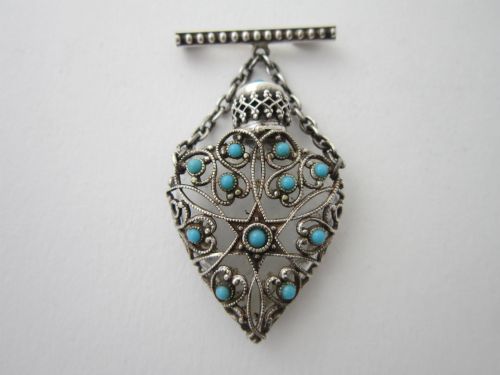
Additional decorative elements include turquoise stones, enamel work, and gilded metal accents that enhance the visual appeal of the miniature containers.
How do I identify a Victorian piece?
Victorian examples frequently display British sterling silver hallmarks that indicate the assay office, such as Birmingham or London, along with date letters. Stylistic clues include embossed cherub motifs and specific glass colours like cranberry.
Comparison with documented nineteenth-century forms helps confirm the period of manufacture and distinguishes British production from continental European work.
How do I clean a silver and glass bottle?
Gentle maintenance preserves the metal mounts and fragile glass without damaging historical surfaces or enamel work. Use soft cloths to remove dust and avoid harsh chemical dips that strip patination from silver.
Keep moisture away from the interior corks or stoppers to prevent swelling or deterioration of the original sealing components.