


Victorian Silver Flacon
A victorian silver flacon is a pocket perfume vessel combining precious metal mountings with decorative glass, prized for carrying scent or cologne securely.
Victorian Silver Flacon
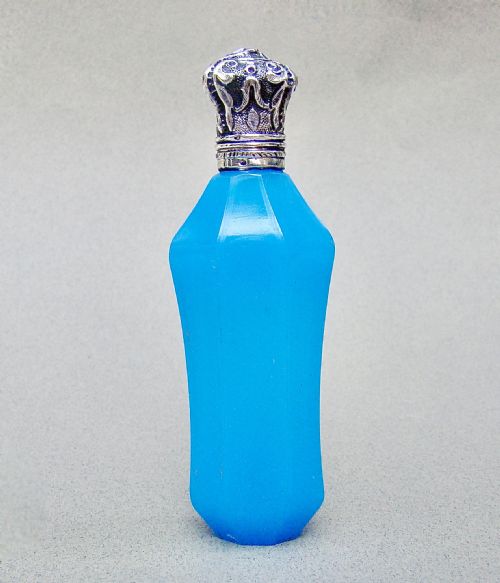
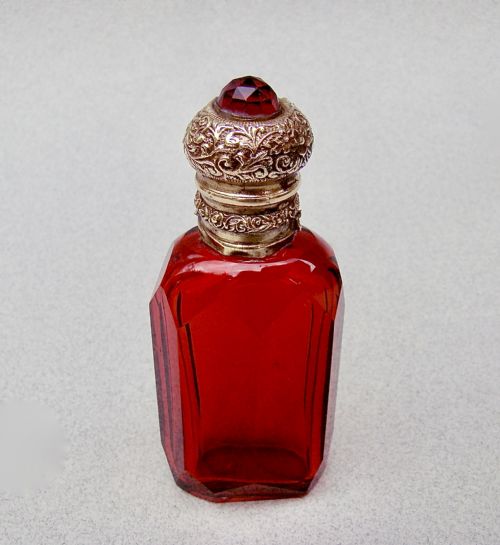
A victorian silver flacon unites functional perfume storage with ornamental glasswork, designed for pocket or dressing table use during the nineteenth century. These vessels combine silver collars, caps or mountings with bodies formed from glass, ruby glass, opaline glass, cut glass or overlay glass.
The pieces appearing in this category span English and French workshops, encompassing dates from the early nineteenth century through to nineteen ten. Buyers encounter both miniature scent bottles and larger perfume decanters fitted with sterling silver or silver-gilt hardware.
Makers utilised diverse glass colours including blue, turquoise and ruby, occasionally housing the flacons within fitted leather and velvet cases. The physical forms range from plain silver-topped cut glass cylinders to elaborate French Second Empire creations.
Materials and construction
Makers formed the bodies of these vessels by blowing glass into moulds or gathering molten material, subsequently employing cutting, casing, or layering techniques to achieve coloured effects like ruby and blue overlay. Glass surfaces were often wheel-cut or polished to catch the light.
Silver mountings, collars and screw caps were shaped from sterling silver or silver-gilt, frequently bearing hallmarks from assay offices such as Birmingham alongside the makers' marks. These metal components were secured to the glass necks with specialised cements or threaded collars.
Fitted presentation pieces incorporated leather outer shells lined with velvet or silk interiors to cradle the delicate glass and silver flacons safely during travel.
Judging quality in flacons
The distinction between standard production and superior examples rests upon the complexity of the glasswork and the crispness of the silver mounts. Heavy, deep-cut glass and substantial sterling silver tops denote a higher grade of manufacture than thin-walled moulded glass with plated hardware.
French pieces frequently display advanced glass layering, such as Clichy or opaline techniques, alongside finely chased or gilt metal mounts. The presence of a matching leather and velvet case elevates the completeness and historical integrity of the piece.
The Victorian Silver Flacon Glossary
- Flacon
- A small stoppered bottle used for perfume or smelling salts. These vessels are typically pocket-sized and fitted with a secure metal cap.
- Silver-Gilt
- Silver that has been coated with a thin layer of gold on its surface. This finish provides a warm golden tone while maintaining a silver base.
- Overlay Glass
- Glass created by fusing a layer of coloured glass over a base of clear or contrasting glass. Subsequent cutting through the outer layer reveals the contrasting colour beneath.
- Opaline Glass
- An opaque or semi-translucent glass developed in France during the nineteenth century. It often exhibits soft pastel shades such as turquoise.
- Assay Mark
- A stamp or series of marks applied to precious metals to guarantee their purity. English pieces commonly display town marks and date letters.
Victorian Silver Flacon: Frequently Asked Questions
How do I clean the inside of a glass flacon?
Residue inside historical scent bottles should be cleaned with warm water and gentle bottle brushes, avoiding harsh chemical solvents that might damage internal cement.
Silver mounts require careful polishing with a soft cloth to prevent abrasive compounds from contacting the fragile glass body.
Were these bottles meant to be carried?
Many nineteenth-century perfume bottles were manufactured with secure screw caps specifically for travel within reticules or pockets. Miniature examples were particularly suited for daily personal use.
Larger perfume decanters and cased sets remained stationary on dressing tables rather than travelling with the owner.
How do English and French flacons differ?
English examples often feature classic sterling silver collars paired with standard cut glass bodies and predictable Birmingham hallmarks. French production tends to emphasise decorative glass techniques like opaline, ruby or blue overlay, combined with ormolu or French silver mounts.
Both regional traditions reflect the distinct aesthetic preferences of Victorian and Second Empire collectors.
What does silver-gilt mean on a perfume bottle?
Silver-gilt refers to solid silver that has undergone a gilding process to cover the metal with a thin layer of real gold. This treatment protected the silver from tarnishing when exposed to aggressive perfume oils.
Collectors often find this interior or exterior wash on higher-grade nineteenth-century vanity items.