


Vintage Silver Pepper Shakers
These vintage silver pepper shakers range from everyday Edwardian table salt pots and cruet sets to detailed Victorian novelty animals.
Vintage Silver Pepper Shakers
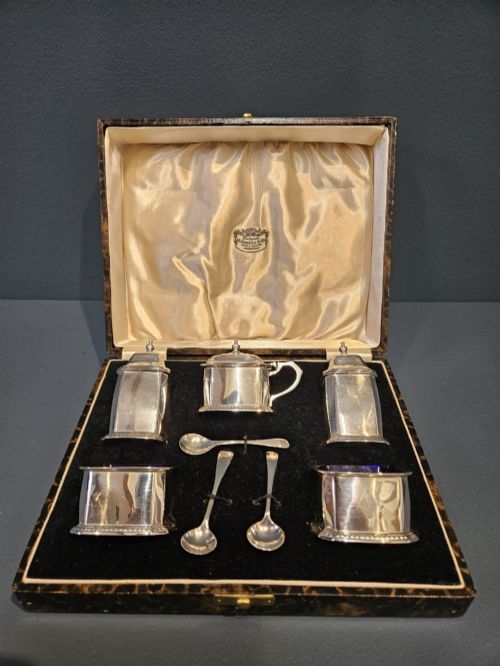
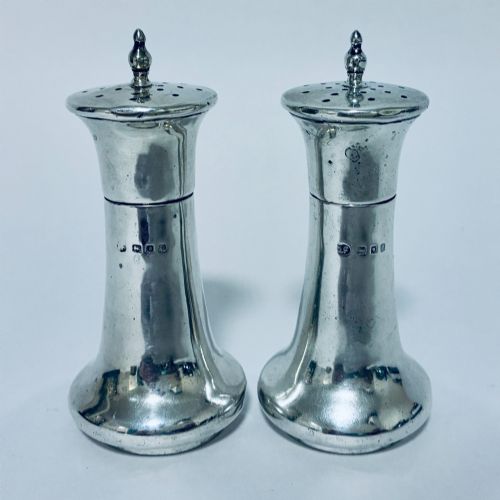
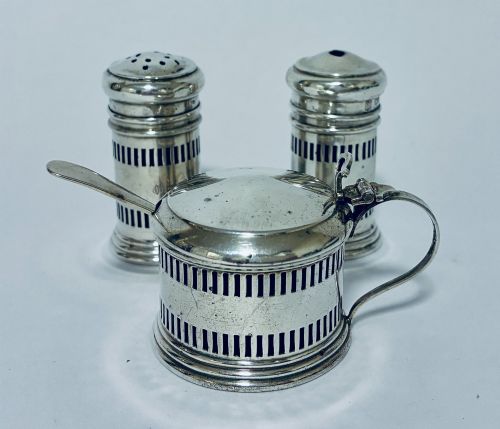
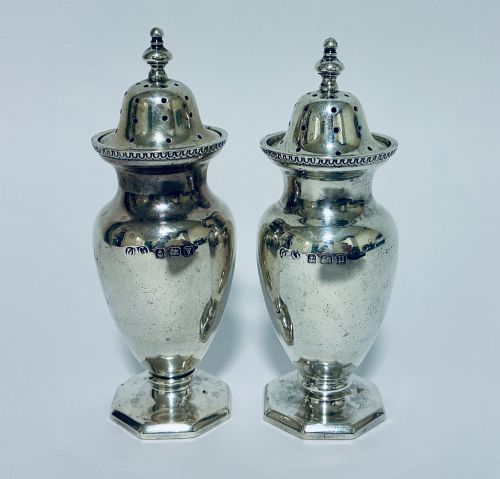
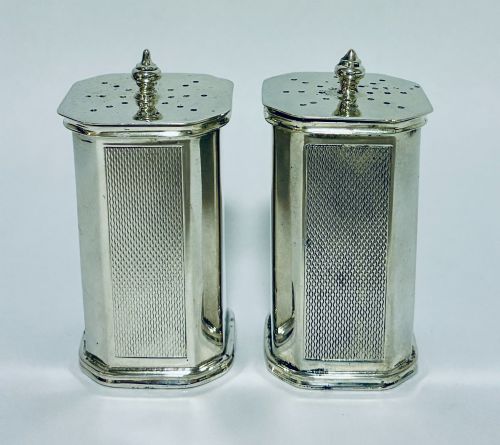
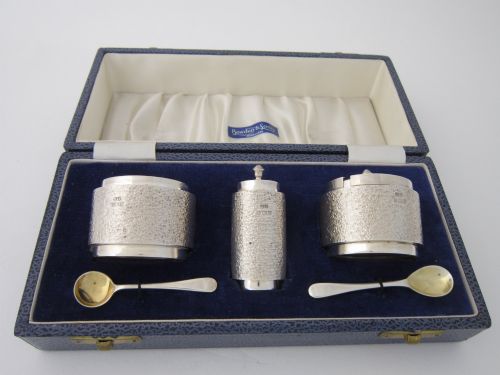
When you search for vintage silver pepper shakers, you encounter a varied selection of domestic tableware spanning the nineteenth and twentieth centuries. The assortment includes individual pepper pots, pairs of pepperettes, and complete condiment cruet sets containing mustard pots and salt cellars.
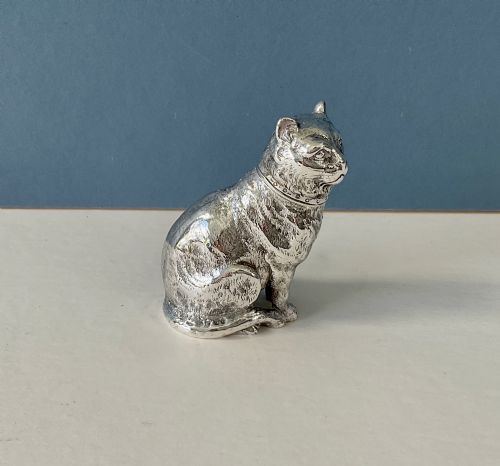
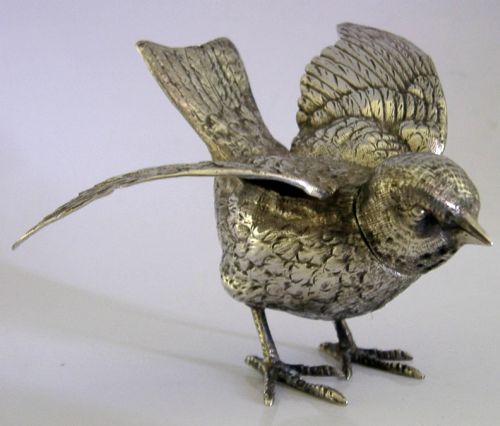
You are most likely to meet standard sterling silver or silver plated casters alongside playful novelty forms. Animal pepper pots shaped as birds, cats, owls, dogs, and foxes appear frequently across Edwardian, Victorian, and later twentieth-century periods.
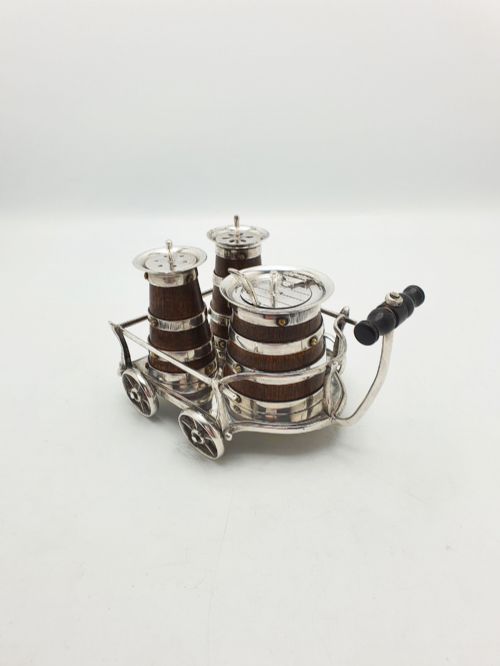
The objects serve both practical dining functions and decorative display roles on the table. Many pieces form part of larger matched or assembled cruet sets housed in silver plated frames or oak barrel stands.
Materials and technique
Makers utilised sterling silver, silver plate, and pewter, often combining metal bodies with cut glass inserts or fabric linings. Cast silver techniques allowed artisans to shape complex animal forms such as pheasants, chicks, and owls with textured feather and fur details.
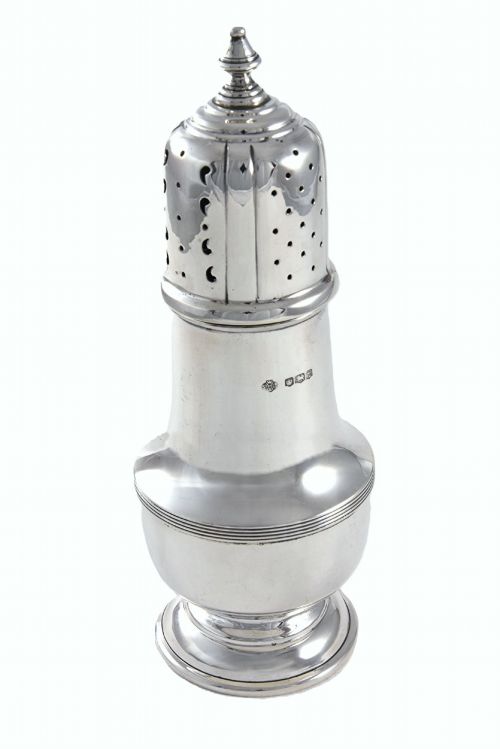
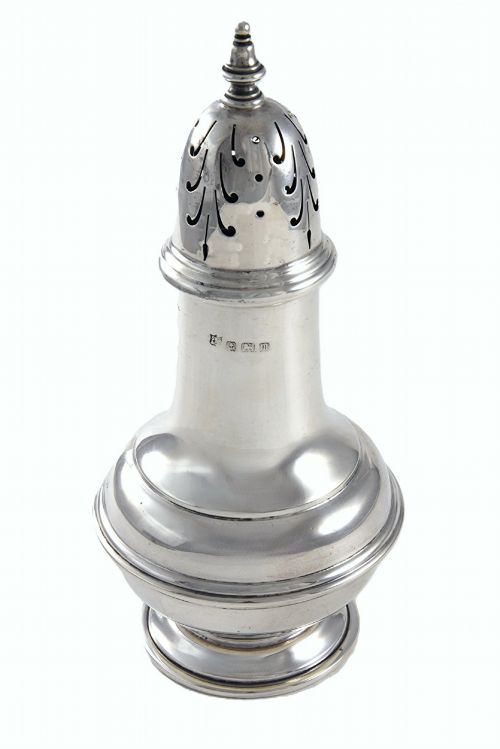
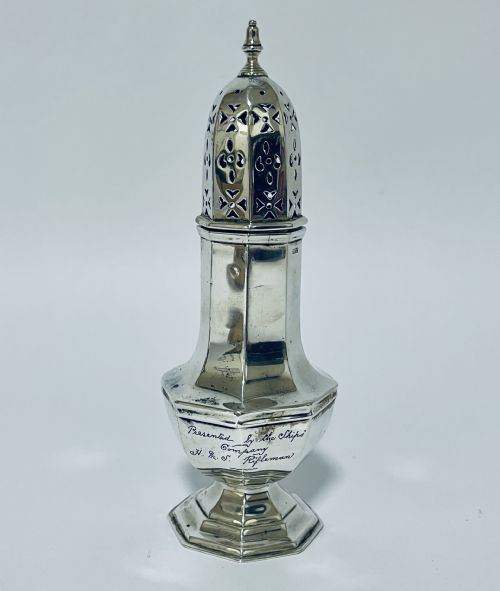
Functional pepper pots and sugar shakers incorporate pierced lids or screw fittings secured to cylindrical, bulbous, or panelled bodies. Hallmarks stamped into the silver provide official confirmation of the metal standard, assay office location, and date of manufacture.
Object forms range from traditional sugar shakers and condiment cruet sets to novelty animal pepper pots shaped as cats and owls.
Quality variations
The standard of a piece depends heavily on the crispness of the modelling in cast novelty items and the integrity of the original hallmarks. Superior examples retain sharp detail in fur and feathers without smoothing from excessive cleaning over decades.
Completeness dictates the distinction between individual survivors and full sets. Original matching cruet frames holding intact cut glass bottles command greater interest than assembled groups or lone shakers lacking their companion pieces.
Barker Brothers·James Dixon & Sons Ltd·Wilmot Manufacturing Co·Mappin & Webb·Berthold Muller
The Vintage Silver Pepper Shakers Glossary
- Cruet set
- A matched collection of condiment containers, typically including mustard pots, salt cellars, and pepper shakers held in a shared frame.
- Pepperette
- A small shaker designed specifically for ground pepper, often styled as a miniature standing figure or animal.
- Sugar caster
- A tall shaker with a pierced domed top utilised for sprinkling caster sugar over food.
- Pounce pot
- A small container with a perforated lid used to dust powdered resin or sand onto paper to blot ink.
- Hallmark
- Official stamps struck into precious metal indicating the maker, purity standard, assay office, and year of production.
Vintage Silver Pepper Shakers: Frequently Asked Questions
How do I clean antique silver pepper shakers?
Use a soft cloth and a dedicated silver polish to remove tarnish gently without damaging engraved details or hallmarks. Avoid harsh chemical dips that strip the natural patina accumulated over the decades.
Rinse the interior thoroughly if moisture enters the shaker body during washing, ensuring the metal dries completely before refilling with dry peppercorns.
Are novelty pepper pots functional?
Most novelty animal pepper pots retain their original pierced heads or base plugs, allowing them to function as practical tabletop shakers. Collectors often use them for dining despite their decorative appeal.
Care must be taken with delicate cast silver mechanisms, particularly on older Victorian and Edwardian bird or mammal figures with removable heads.
How do I date an unmarked pepper shaker?
Examine the overall style, manufacturing technique, and any accompanying glass inserts to establish a stylistic period. Victorian and Edwardian pieces often display distinct aesthetic motifs compared to later mid-century modern designs.
Official hallmarks remain the most reliable method for dating, as assay offices stamped specific letter codes and monarch profiles onto British silver across different reigns.