


Vintage Silver Paste Jewellery
Vintage silver paste jewellery brings together hand-cut stones and precious metal to create the brilliance of fine gems from the Georgian, Victorian, and Art Deco eras.
Vintage Silver Paste Jewellery
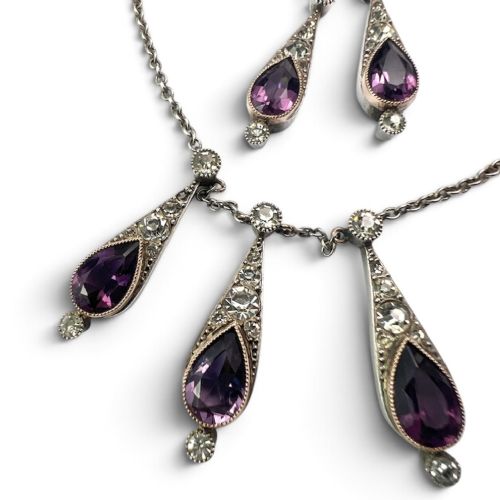
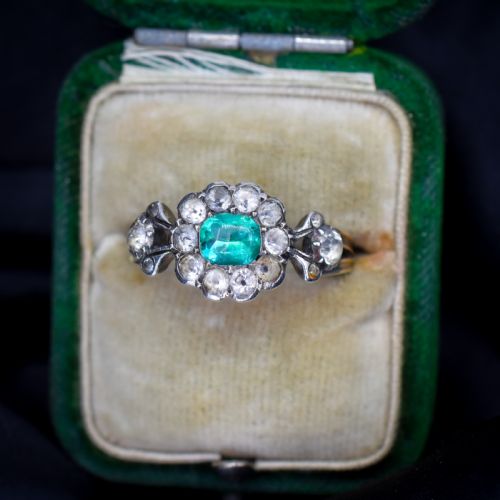
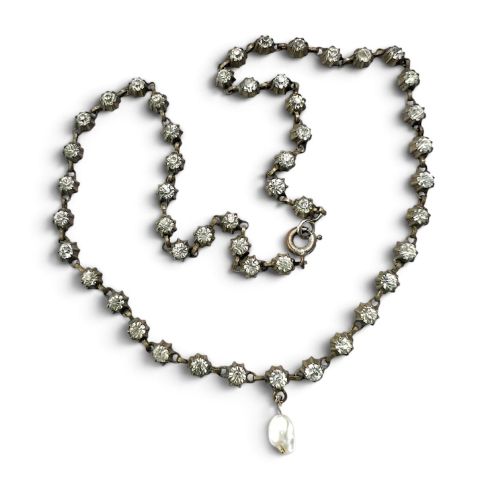
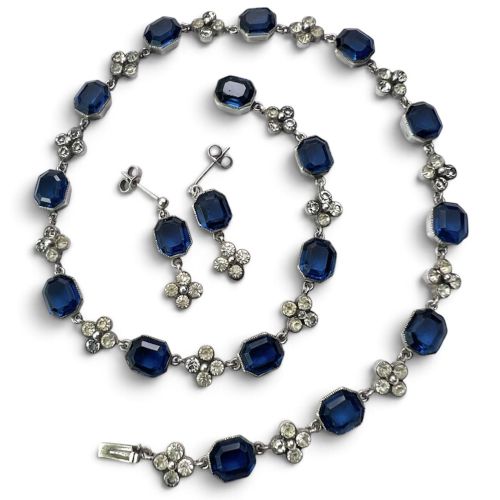
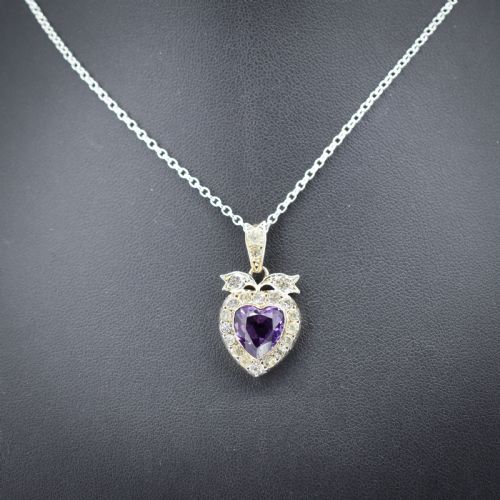
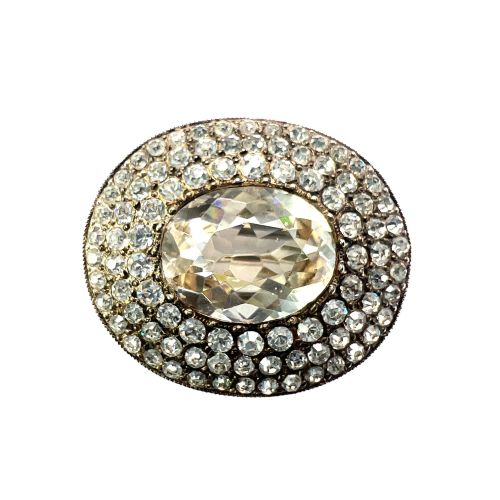
Vintage silver paste jewellery encompasses items designed to imitate high-value diamond and gemstone adornments using hand-faceted lead glass set in silver, often backed by gold. The selection spans rings, brooches, earrings, and necklaces originating from the eighteenth, nineteenth, and twentieth centuries.
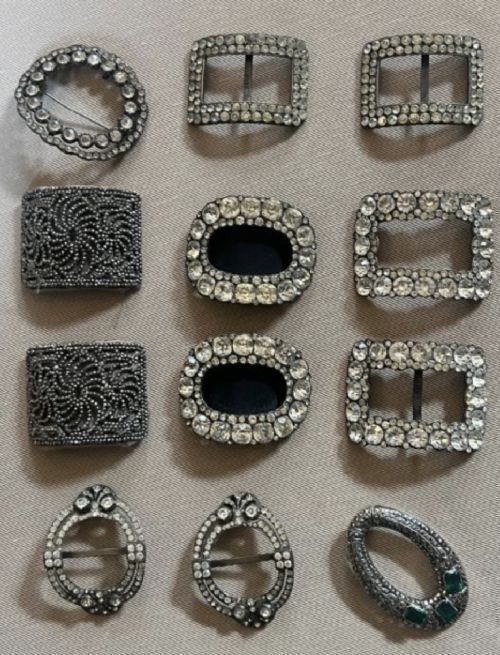
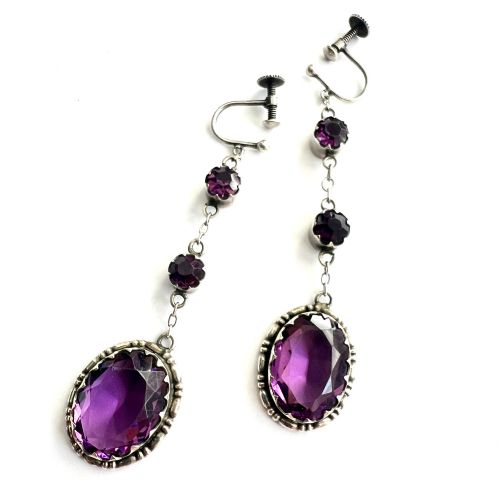
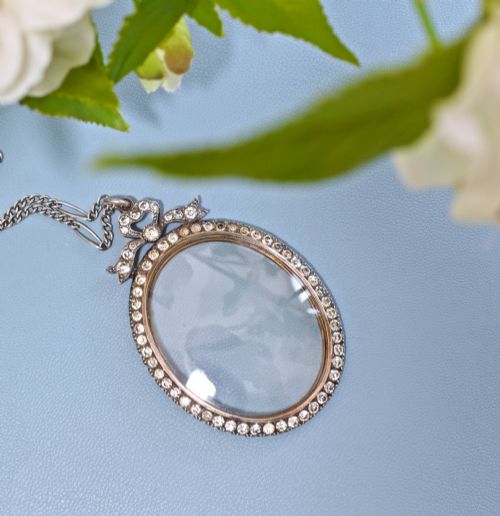
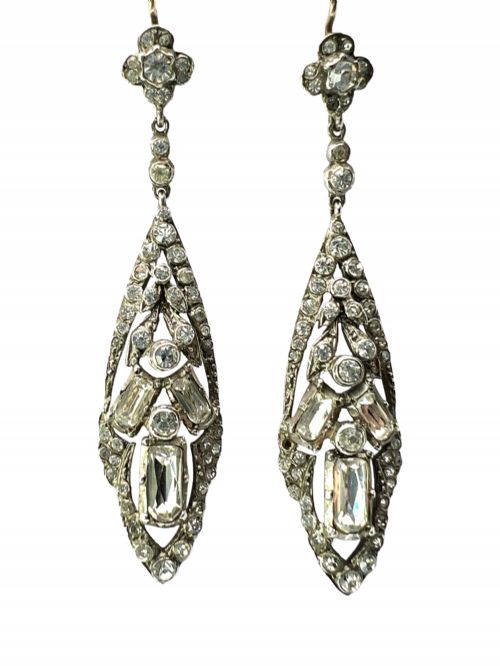
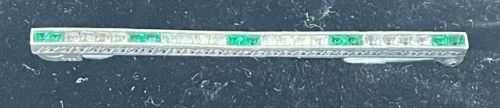
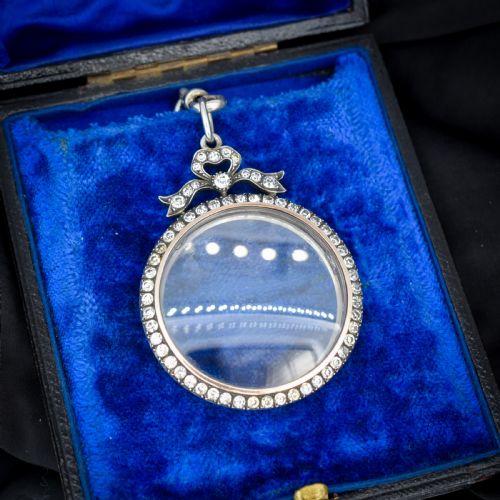
The most frequent examples encountered on this page belong to the Art Deco and Edwardian periods, alongside earlier Georgian and Victorian pieces. Common forms range from cluster rings and drop earrings to elaborate lockets, shoe buckles, and statement brooches set with clear, white, or coloured glass stones.
Materials and construction
Items in this category combine silver and sterling silver with paste glass, frequently mounted over gold foils or combined with nine-carat and eighteen-carat gold settings. Metalwork techniques involve filigree, cast components, and silver gilt to hold the hand-cut stones securely in place.
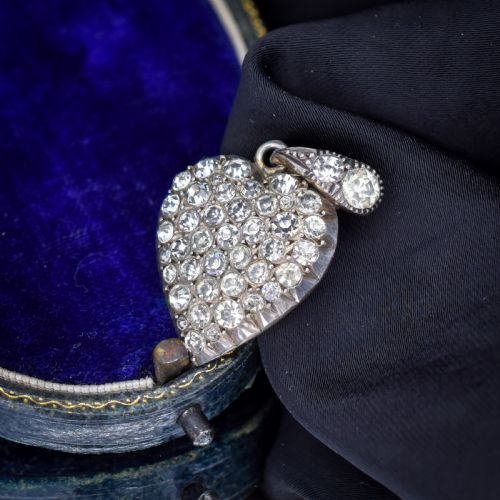
The glass stones are cut by hand to mimic old mine and old European diamond cuts, as well as faceted coloured gemstones like emerald, sapphire, amethyst, and ruby. Foil backings are often placed behind the paste to enhance reflection and colour depth within closed-back settings.
Listings incorporate silver paste items spanning the Georgian, Victorian, Edwardian, and Art Deco eras, alongside mid-century pieces.
Factors determining quality
Quality rests primarily on the crispness of the stone faceting and the precision of the metalwork. Hand-cut stones with sharp facets and minimal wear show greater craftsmanship than mass-produced replacements.
The integrity of the setting also defines the standard of the piece, particularly where delicate silver filigree, granulation, or original foil backings remain intact and undisturbed over centuries of use.
Knoll & Pregizer·Charles Horner
The Vintage Silver Paste Jewellery Glossary
- Paste
- A heavy, high-refractive-index lead glass used to imitate gemstones. It is hand-cut and polished just like natural stones.
- Black dot paste
- A specific eighteenth-century technique where a tiny dark spot is painted on the culet of a paste stone to simulate the natural culet decay of a genuine mine-cut diamond.
- Closed-back setting
- A setting style where the metal completely encloses the reverse of the stone, frequently incorporating coloured foil to intensify brilliance.
- Old cut
- A term describing hand-faceted stones with small tables, high crowns, and open culets, characteristic of jewellery made before the twentieth century.
- Silver gilt
- Silver that has been coated with a thin layer of gold, providing a warm two-tone appearance often seen in antique settings.
Vintage Silver Paste Jewellery: Frequently Asked Questions
How do I care for antique paste jewellery?
Clean these pieces gently with a dry, soft cloth to avoid damaging fragile foil backings behind the stones. Moisture can seep behind closed-back settings and permanently discolour the foil.
Keep items stored separately in lined boxes to prevent scratches on the soft glass facets. Avoid immersion in liquid jewellery cleaners entirely.
Were paste stones worn instead of real diamonds?
Wealthy individuals often commissioned paste copies of their actual diamond collections for travel or evening wear to deter theft. The craftsmanship required to cut paste glass meant these items held significant value in their own right.
Craftspeople treated paste as a legitimate medium for artistic expression rather than a mere substitute for precious gems. This explains the elaborate gold and silver mountings found on early examples.
How can I tell a Georgian paste piece from an Art Deco one?
Georgian pieces typically feature closed-back settings with hand-foiled stones and heavier silver work often combined with gold. Shoe buckles and large cluster rings dominate this early period.
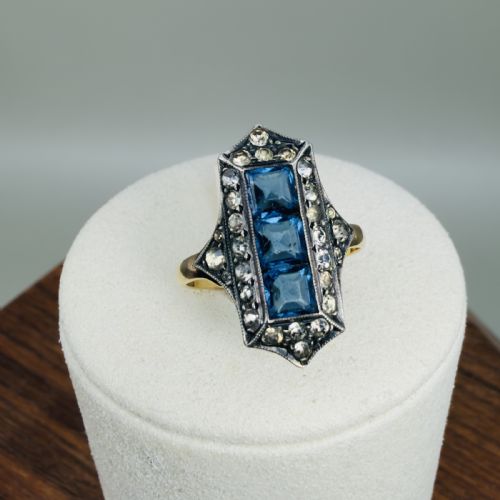
Art Deco items display geometric symmetry, open-back settings, and calibrated coloured paste stones like emerald and sapphire. Platinum-look sterling silver settings and screwback earrings appear frequently in this twentieth-century era.
Can I wear these items every day?
Daily wear requires caution because paste glass is softer than natural gemstones and scratches easily under impact. Delicate filigree and claw settings on antique items demand gentle handling during regular use.
Special occasions suit these pieces best, particularly vintage earrings, lockets, and brooches. Checking the security of the stones with a jeweller helps ensure safe occasional wear.