
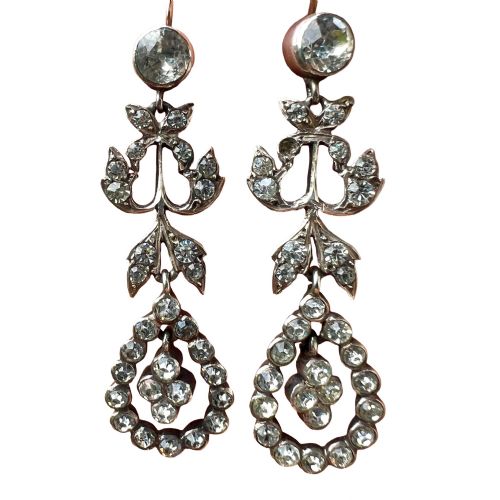
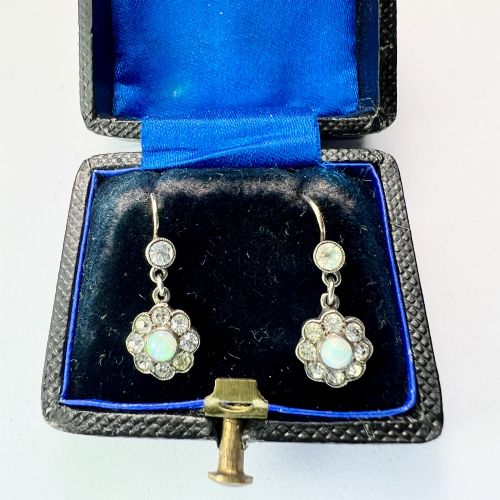


Silver Paste Drop Earrings
Silver paste drop earrings catch the light like genuine gems and offer period elegance for modern wear.
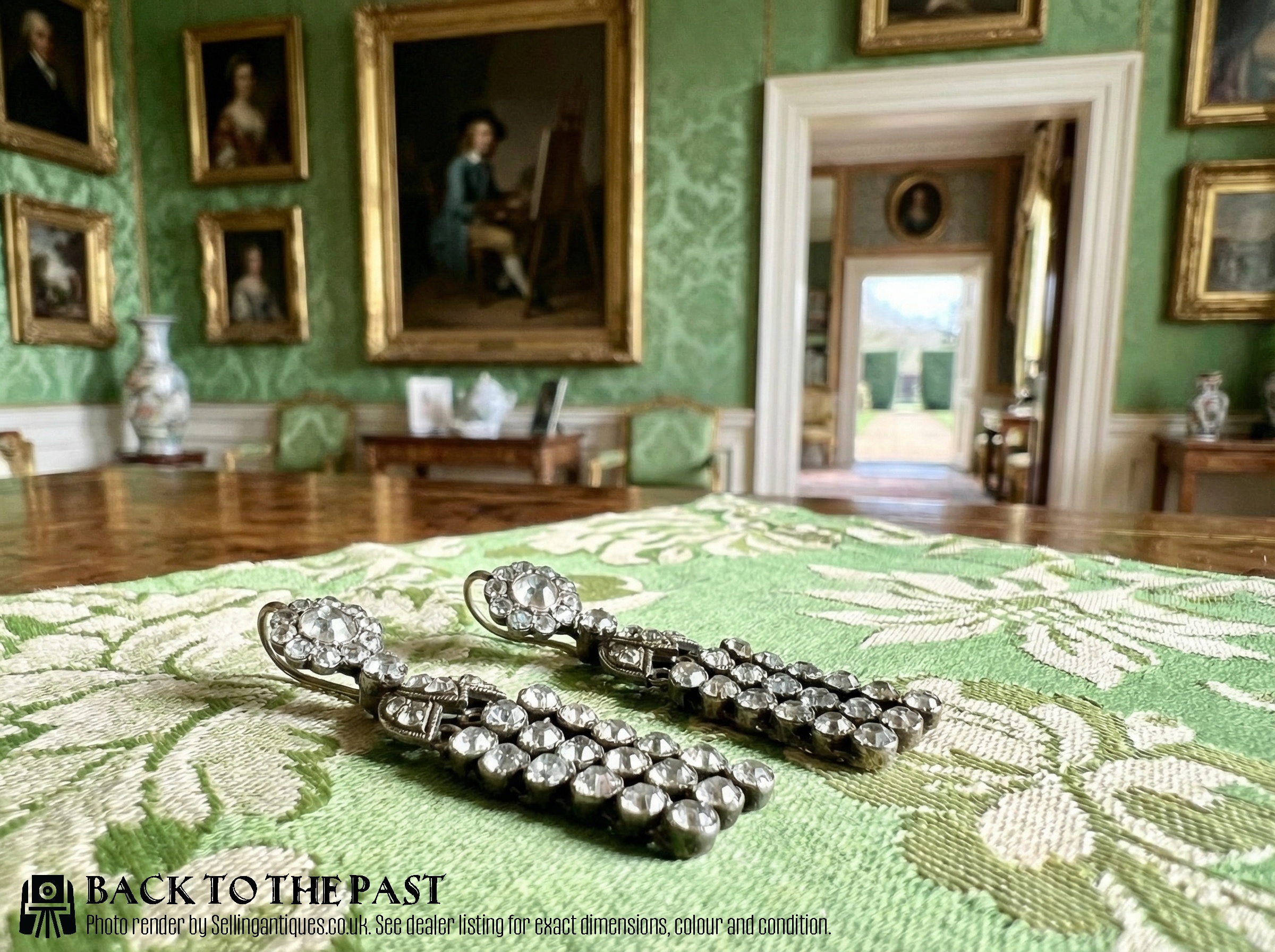
What silver paste drop earrings are
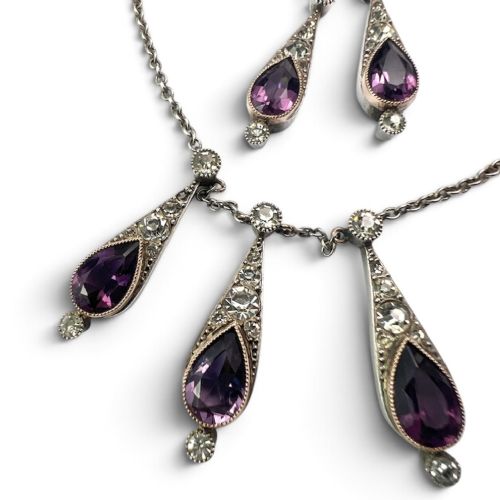
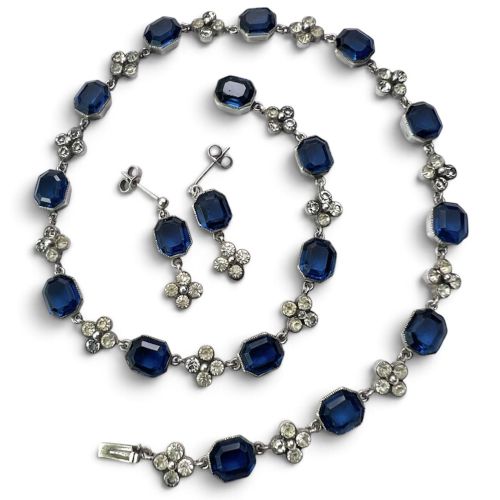
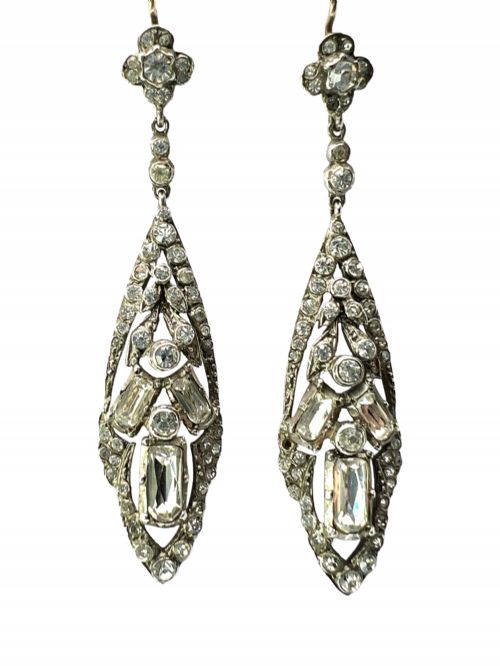
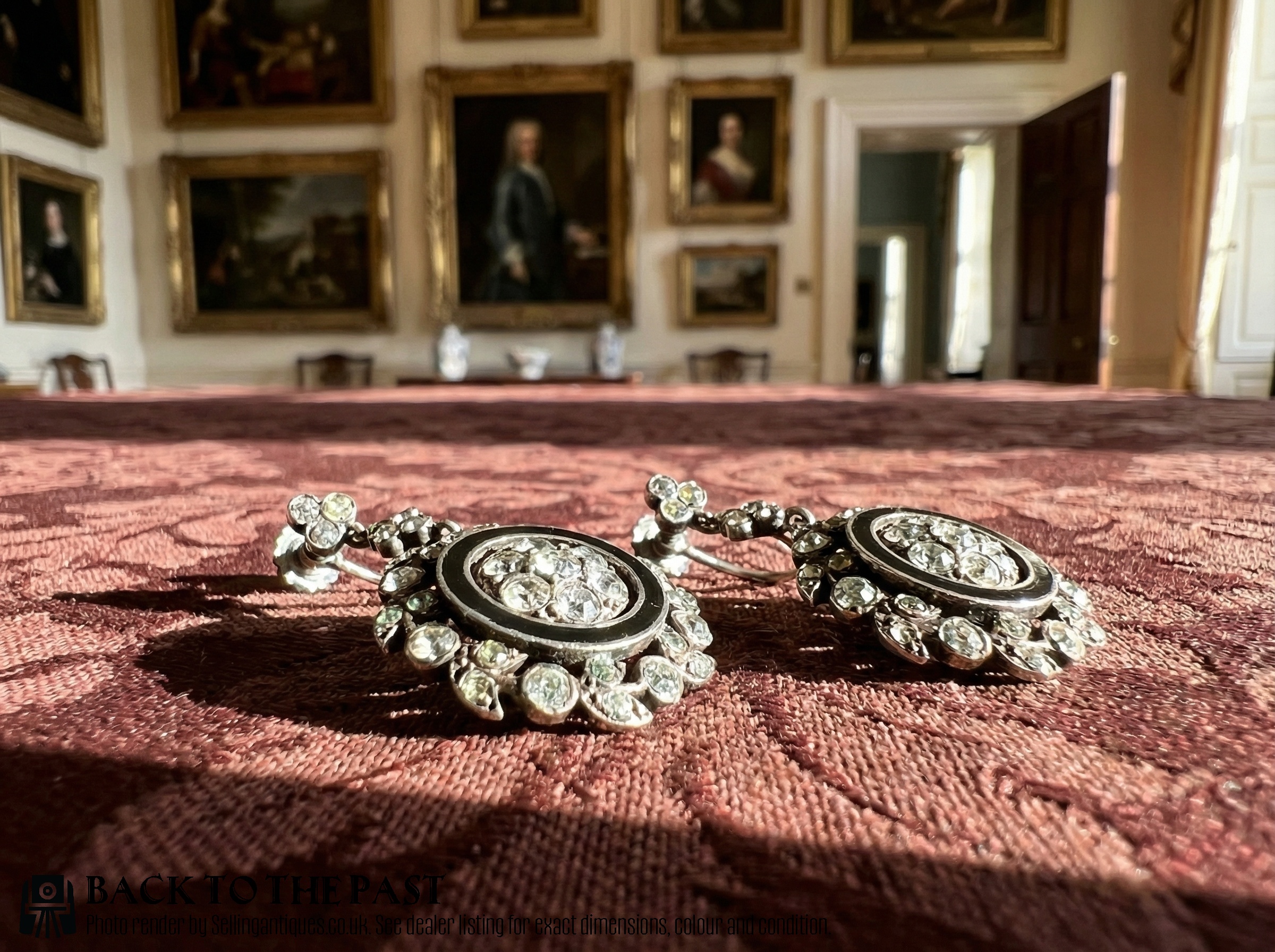
Silver paste drop earrings encompass items designed to hang from the earlobe, featuring faceted glass stones set into precious metal. These pieces emerge across several eras, including the Georgian, Victorian, and Art Deco periods, alongside vintage 1940s examples.
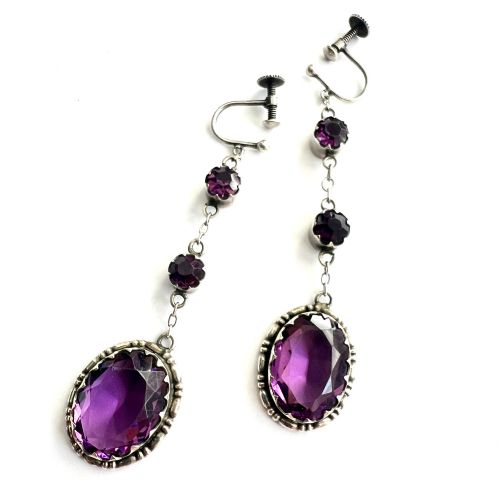
A buyer examining silver paste drop earrings will frequently encounter screwback fastenings, tassel forms, and floral cluster motifs alongside classic drop silhouettes. The surviving items demonstrate a steady tradition of adapting fine diamond jewellery designs into accessible sparkling alternatives utilising glass paste.
The inventory ranges from single pairs of earrings to pieces associated with matching necklaces and rings. Certain examples incorporate complementary materials such as enamel, pearls, and gold alongside the standard silver settings.
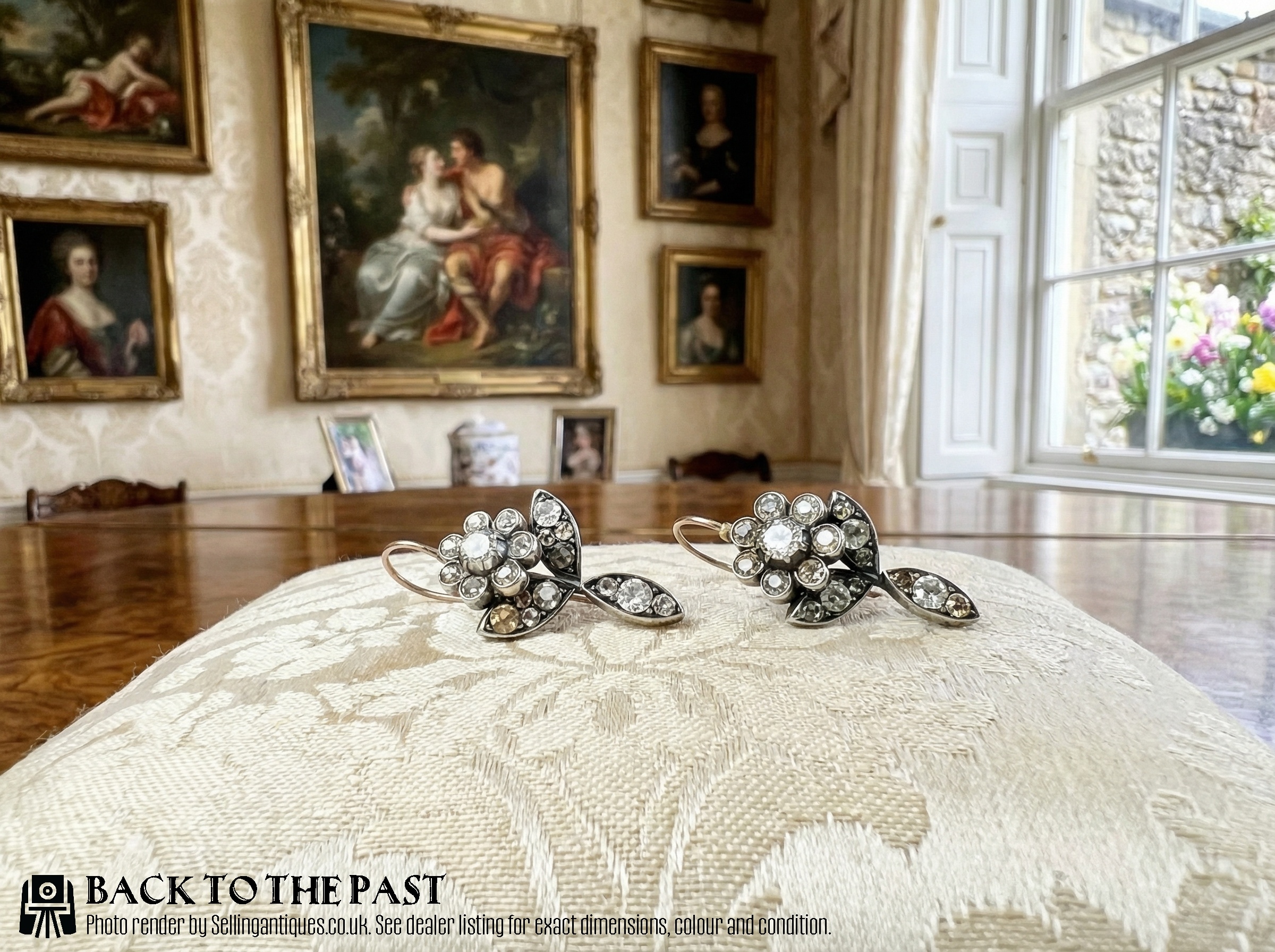
How they were made
The construction of silver paste drop earrings relies heavily on hand-setting faceted glass paste into precious metal mounts of silver or gold. Goldsmiths and jewellers often combined silver with gold or nine-carat gold components to provide both structural integrity and contrasting colour.
Specialised techniques such as black dot foiling appear in Georgian examples to imitate the dark backings found behind old-cut diamonds. Enamel work and screwback mechanisms demonstrate the evolving mechanical skill applied to earring manufacture across the nineteenth and twentieth centuries.
Retail Price Guide 2026
Typical UK retail prices for silver paste drop earrings, calculated from the Sellingantiques database of over a million retail prices indexed since 2003. This retail price guide relies exclusively on Sellingantiques data; no external sources or auction records are used, so the figures do not describe the wider market.
Listings feature silver paste drop earrings across Georgian, Victorian, Edwardian, and Art Deco periods, frequently combined with gold and enamel.
What varies in quality
The refinement of the paste stones themselves dictates much of the visual appeal, where crisp facets and secure foil backings create superior brilliance. Finer examples maintain precision in the metalwork, ensuring that settings wrap cleanly around each stone without excess solder or clumsy claw work.
Design complexity also separates standard pairs from superior items, particularly where multi-drop configurations, integrated tassel details, or secondary metals like gold and enamel are involved. The integrity of the fastening mechanism, whether wire or screwback, contributes to the overall standard of preservation.
Ciro
The Silver Paste Drop Earrings Glossary
- Paste
- Faceted lead glass cut and polished to imitate gemstones such as diamond, amethyst, emerald, and sapphire. This material has been utilised in fine jewellery for centuries.
- Screwback
- A mechanical earring fastening utilising a threaded post and a small rotating disc to secure the piece to an unpierced earlobe. This mechanism is common in antique and vintage earrings.
- Black dot paste
- A specific Georgian technique where a tiny dark spot is applied to the culet of a foil-backed paste stone to simulate the open culet of a genuine old-cut diamond.
- Tassel drop
- A decorative element consisting of multiple hanging chains or articulated metal strands suspended from the main earring body. This form appears in Victorian jewellery designs.
Frequently Asked Questions
Are silver paste drop earrings fragile?
These earrings require careful handling because glass paste can chip and foil backings are sensitive to moisture. Storing them in a dry, padded box protects the stones and metal settings from unnecessary impact.
Gentle cleaning with a dry microfiber cloth maintains the surface without damaging historic settings or loosening the foil inside closed-back mounts.
How do I date silver paste earrings?
Stylistic clues such as Georgian black dot foiling, Victorian tassel forms, and geometric Art Deco lines help identify the era of manufacture. The presence of screwback findings often points towards the twentieth century.
Examining the construction methods, metal combinations like silver and nine-carat gold, and the cut of the paste stones provides further confirmation of the period.
Can screwback earrings be converted?
Jewellers can convert screwback fastenings into wire hooks or posts, though many collectors prefer to keep the original mechanisms intact. Preserving original fittings maintains the historic integrity of vintage and antique pieces.
Any conversion work should be undertaken carefully to avoid altering the main drop components or damaging the surrounding metalwork.