




Vintage Screwback Earrings
These vintage screwback earrings span periods from the nineteenth century through the mid-twentieth, offering non-pierced options in gold and silver.
Vintage Screwback Earrings
Vintage screwback earrings are non-pierced items featuring a threaded mechanism that adjusts against the earlobe for a secure fit. When searching for vintage screwback earrings, buyers encounter varied forms spanning the Victorian, Edwardian, and Art Deco eras up to the mid-twentieth century.
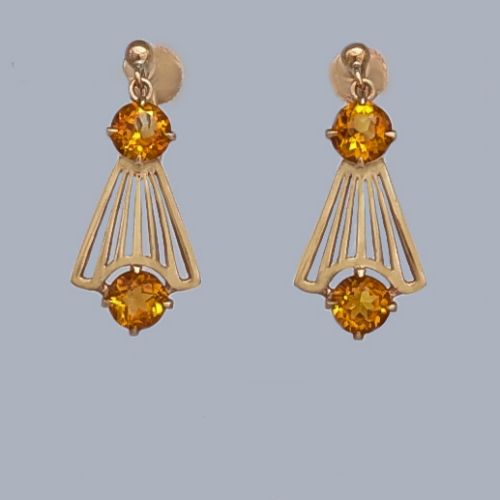
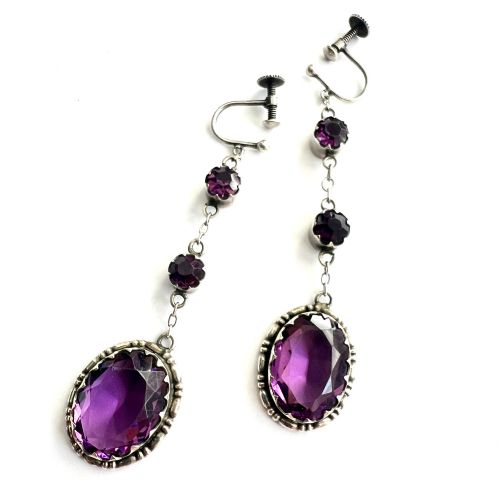
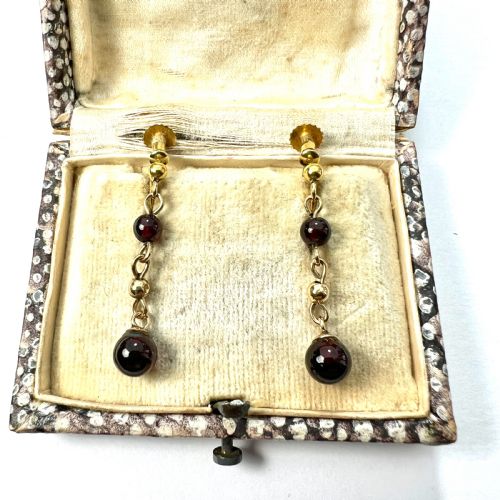
The selection includes drop earrings, clusters, hoops, and sunburst designs created from the nineteenth century to the 1960s. Common configurations feature gemstones or paste stones mounted in silver or nine-carat gold frameworks.
Earrings from the 1920s and 1930s frequently display geometric Art Deco styling, whilst Victorian and Edwardian examples showcase citrine, garnet, tourmaline, and pearl elements. Pieces range from delicate drop styles to bolder cluster and dangle formats.
How they were made
Craftsmen utilised nine-carat gold and silver as primary metal foundations for mounting stones and forming screw mechanisms. Gemstones such as citrine, garnet, tourmaline, and moonstone appear alongside glass paste, marcasite, enamel, and pearls.
Metalwork techniques combine cast or wire-formed screw fittings with detailed settings including bezel, prong, and cluster arrangements. Early twentieth-century pieces frequently integrate fine wirework, granulation, or enamel alongside hand-set stones.
Design styles represented include Victorian, Edwardian, Art Deco, Arts and Crafts, Aesthetic Movement, and Mid-Century Modern.
What varies in quality
Quality differences lie in the precision of the screw mechanism operation and the integrity of the metalwork. Finer examples display robust threading that holds adjustment smoothly alongside secure stone settings.
Material selection dictates distinction, separating simple glass paste or faux pearl variants from solid nine-carat gold mountings set with natural garnets, citrines, or moonstones. The intricacy of period details like marcasite encrustation or enamel work also elevates the standard.
Georg Jensen
The Vintage Screwback Earrings Glossary
- Screwback
- A non-pierced earring fastening utilising a threaded post and paddle turned by hand to tighten against the lobe. This mechanism allows comfortable wear without requiring pierced ears.
- Paste
- Hand-cut and polished lead glass used to imitate gemstones. It appears frequently in period jewellery for vivid colour and brilliance.
- Marcasite
- Small faceted pieces of iron pyrite set closely in silver. This technique provides a dark metallic sparkle popular in Art Deco designs.
- Cluster
- An arrangement of stones clustered tightly around a central element. This style maximises visual impact in earrings from the Victorian and later periods.
- Sunburst
- A radiating design motif resembling sun rays. Victorian and vintage makers utilised this pattern frequently in gold and silver.
Vintage Screwback Earrings: Frequently Asked Questions
How do vintage screwback earrings work?
These earrings rely on a small threaded screw mechanism attached to the back of the finding. Turning the screw moves a paddle plate closer to or further from the main setting, allowing the wearer to adjust the pressure on the earlobe.
This design provided a secure alternative for individuals without pierced ears throughout the nineteenth and twentieth centuries. The mechanism requires gentle handling to maintain proper alignment of the threads.
How do I date a pair?
Dating relies on stylistic markers, materials, and the construction of the screw mechanism. Victorian and Edwardian pieces often display organic motifs, clusters, and natural gemstones like tourmaline or garnet.
Art Deco examples from the 1920s and 1930s favour geometric lines, blue stones, and silver with marcasite. Mid-century items introduce bolder modern forms and cleaner lines.
Are screwbacks comfortable to wear?
Comfort depends on adjusting the threaded paddle to a light, secure pressure rather than clamping down tightly. Many wearers find they can be worn for hours if adjusted correctly.
The weight of the drop or cluster also influences comfort, with lighter faux pearl or paste pairs feeling less noticeable than large gold and gemstone formations.