


Antique Silver Paste Earrings
Antique silver paste earrings catch the light with genuine brilliance, offering centuries of hand-cut sparkle without the diamond price tag.
Antique Silver Paste Earrings
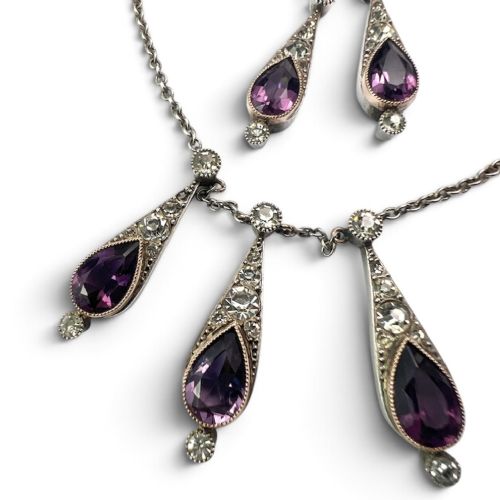
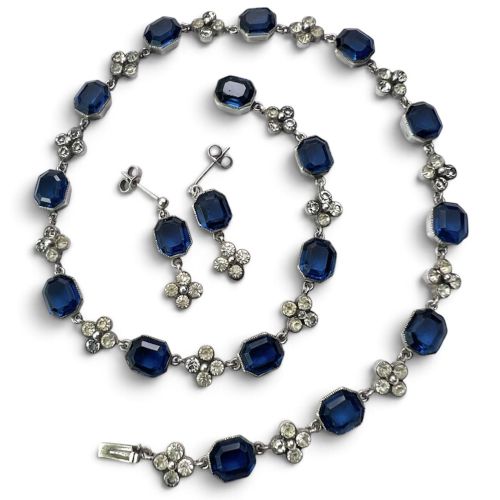
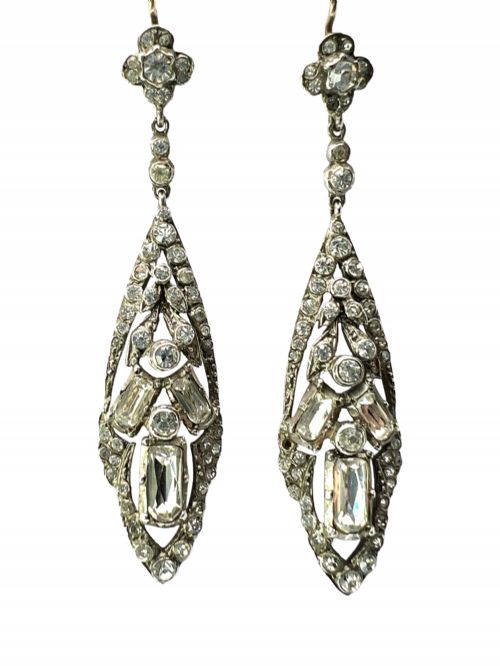
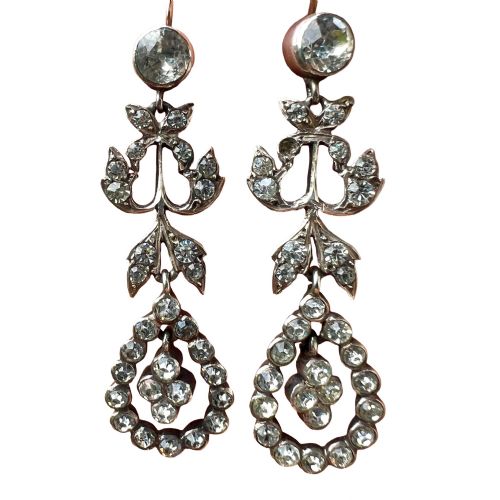
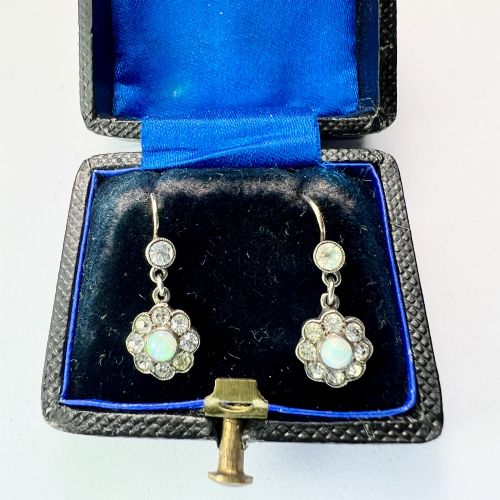
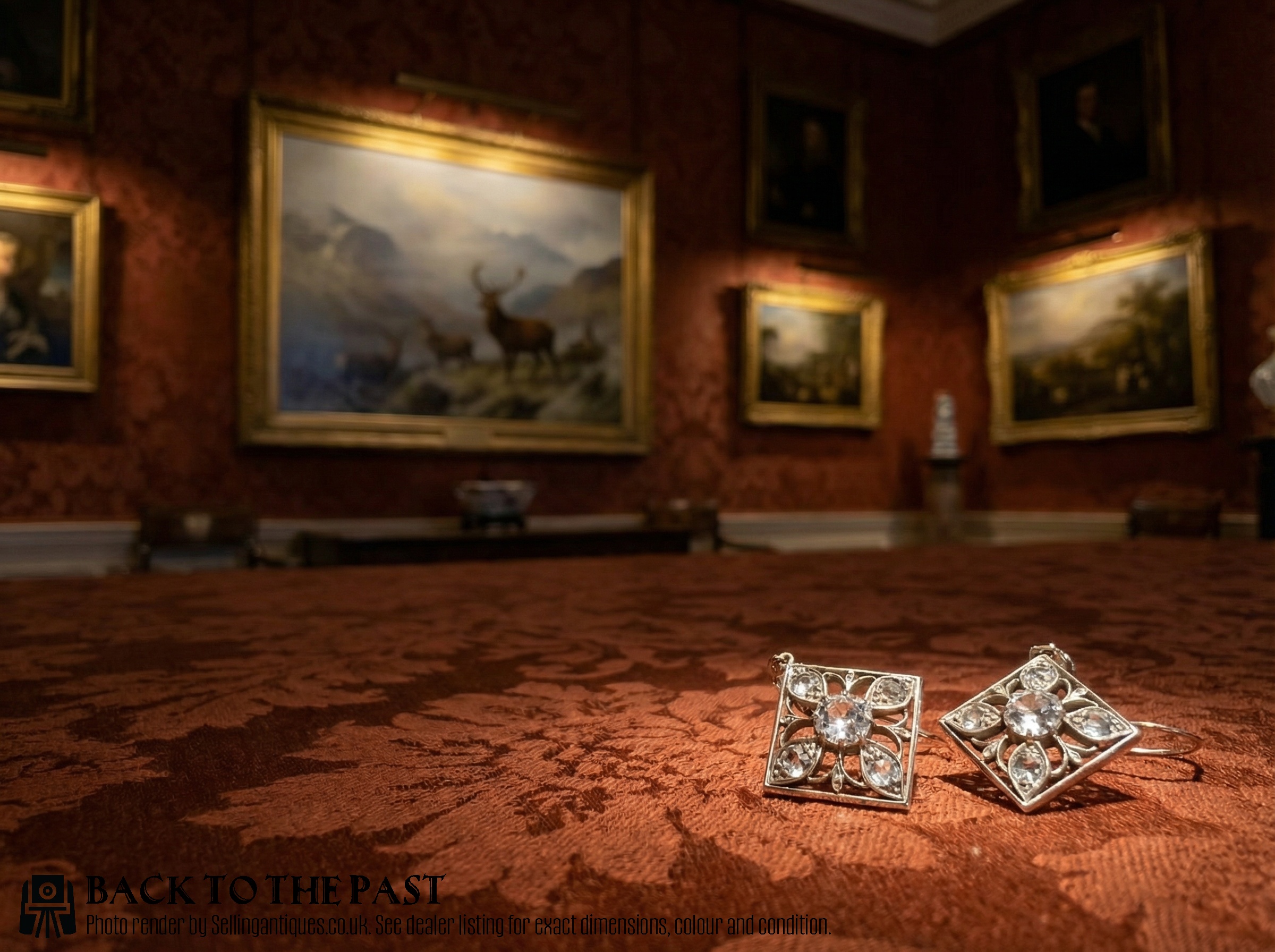
When you search for antique silver paste earrings, you uncover an array of historic jewellerry ranging from Georgian floral clusters to Art Deco geometric drops. These pieces combine silver settings with hand-faceted lead glass stones designed to imitate precious gems like diamonds, emeralds, and amethysts.
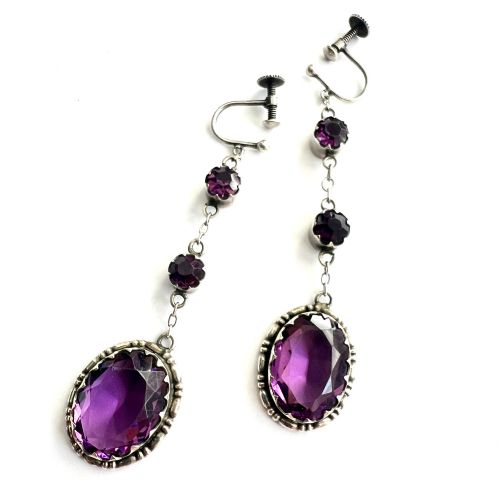
The versions most frequently met on this page span the Georgian, Victorian, Edwardian, and Art Deco periods. Surviving examples often appear as screwbacks, chandelier drops, or components of matching jewellery sets alongside necklaces and brooches.
Materials and construction
Craftsmen forged these earrings using silver, frequently paired with gold or 9ct gold accents to enhance the mountings. Stones were fashioned from dense glass paste, occasionally foiled at the back to intensify their reflective qualities and mimic the depth of natural gemstones.
Early makers set these glass stones into closed-back metal settings typical of Georgian and Victorian metalwork. Later Edwardian and Art Deco iterations shifted towards lighter mountings, accommodating screwback closures and intricate channel or bezel arrangements.
Georgian makers painted tiny black dots onto glass paste so fake stones could successfully fool eighteenth-century dinner guests.
Assessing quality in paste jewellery
The standard of these earrings rests largely on the precision of the stone cutting and the integrity of the metalwork. Hand-faceted paste stones with crisp edges and minimal surface wear distinguish superior pieces from mass-produced or heavily worn alternatives.
Another measure of quality is the subtlety of the foil backing and the security of the settings. Intact foils free from moisture staining and secure prong or collet work indicate a piece that was handled with care throughout its history.
Knoll & Pregizer
The Antique Silver Paste Earrings Glossary
- Paste
- A heavy, high-refractive glass hand-cut and polished to imitate gemstones. It served as a luxury material in its own right during the Georgian and Victorian eras.
- Foil back
- A thin sheet of reflective metal placed behind a transparent paste stone within a closed setting. This technique boosts the brilliance and colour of the glass.
- Screwback
- A mechanical earring fastening utilising a threaded screw mechanism. This design allowed non-pierced ears to wear substantial drop and chandelier styles safely.
- Chandelier drop
- A multi-tiered earring design featuring cascading elements that sway with movement. These elaborate forms gained popularity for evening wear across multiple centuries.
- Demi parure
- A matched set of jewellerry consisting of two pieces, commonly earrings paired with a brooch or necklace. They provide a unified aesthetic typical of formal historic dress.
Antique Silver Paste Earrings: Frequently Asked Questions
How do I clean antique silver paste earrings?
Clean these earrings gently with a dry microfibre cloth to remove surface dust. Avoid liquid immersion entirely, as moisture can seep behind closed settings and ruin the delicate foil backings.
Harsh chemical dips and ultrasonic cleaners will strip the antiqued finish from the silver and permanently damage the glass paste stones. If tarnish requires attention, apply a specialist silver polish carefully with a cotton bud, keeping well away from the stones.
Can screwback earrings be converted for pierced ears?
A skilled jeweller can convert screwback fastenings into posts or hooks for pierced ears. This modification alters the original historic hardware, which some collectors prefer to leave intact.
Before proceeding with any conversion, consider the structural integrity of the earring top. Many antique settings are delicate and require specialist laser welding rather than standard soldering to protect the surrounding paste stones.
What is black dot paste?
Black dot paste is a Georgian technique where a tiny dark spot was painted onto the culet of a foiled paste stone. This simulated the dark open culet found in old-cut mine diamonds of the period.
The presence of this subtle detail helps date pieces securely to the Georgian era. It demonstrates a high level of artisanal mimicry aimed at replicating genuine diamond characteristics under candlelight.
Are these earrings safe for daily wear?
Historic silver paste pieces demand gentle treatment due to their age and delicate construction. Daily wear exposes fragile screw mechanisms and closed-back foils to sweat, cosmetics, and accidental knocks.
Reserve these items for special occasions rather than everyday use to preserve the integrity of the soft glass stones. Storing them individually in lined boxes prevents scratching and structural strain.