



Silver Paste Dangle Earrings
Silver paste dangle earrings combine glittering hand-cut stones with precious settings, offering centuries of wearable history for everyday collections.
Silver Paste Dangle Earrings
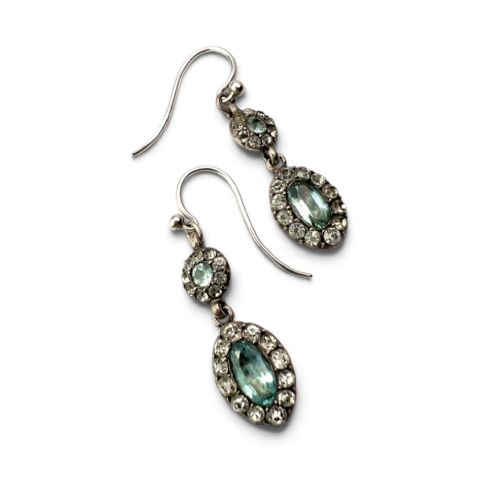
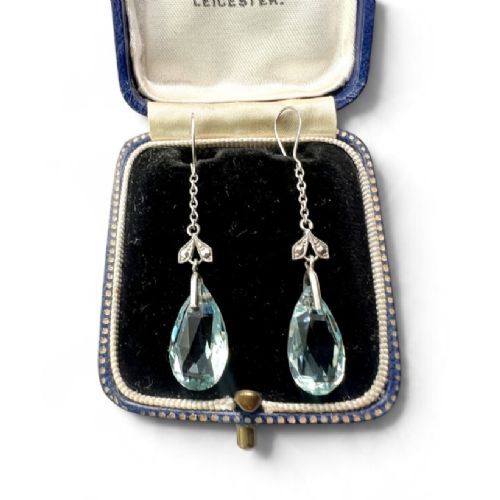
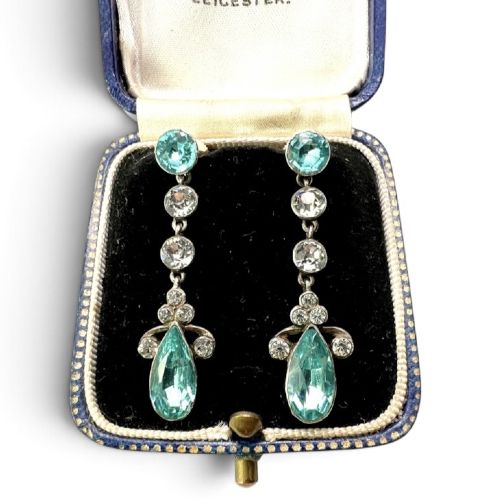
Silver paste dangle earrings are pendant jewels designed to catch the light from the earlobe, spanning periods from the Georgian era through the Edwardian years and the Art Deco movement. These drops incorporate glittering lead glass stones set into silver, often backed with gold or foil to enhance their brilliance under candlelight or daylight.
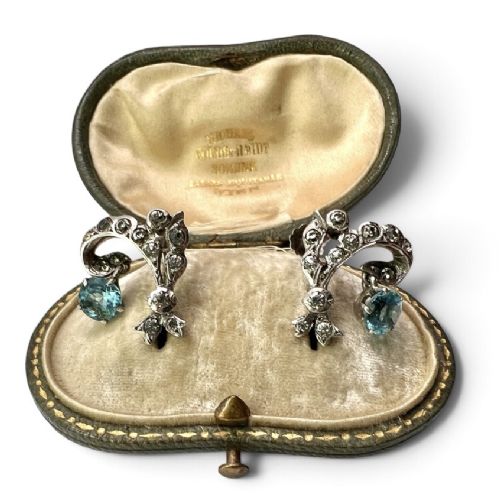
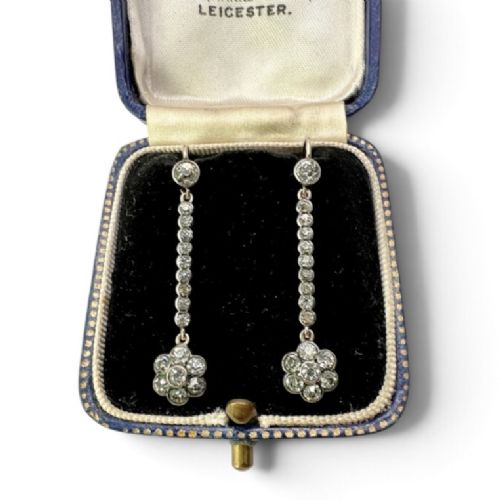
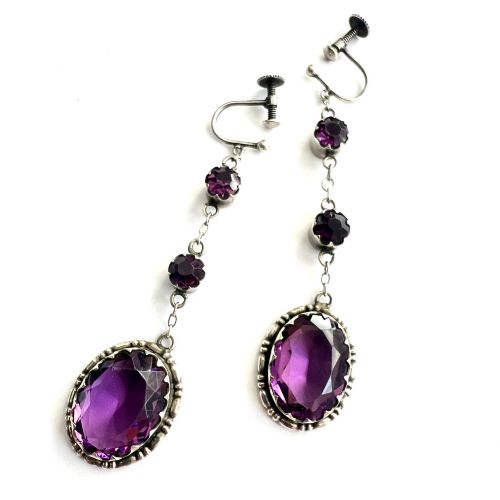
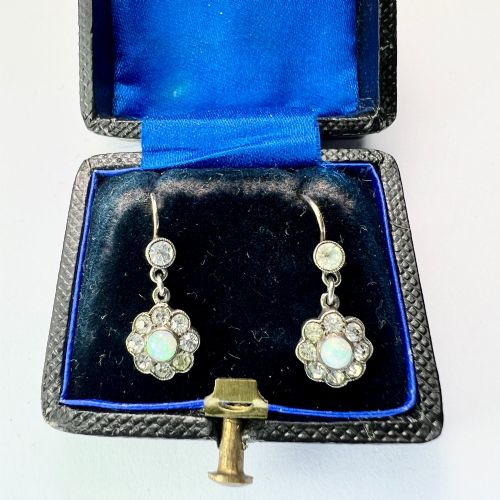
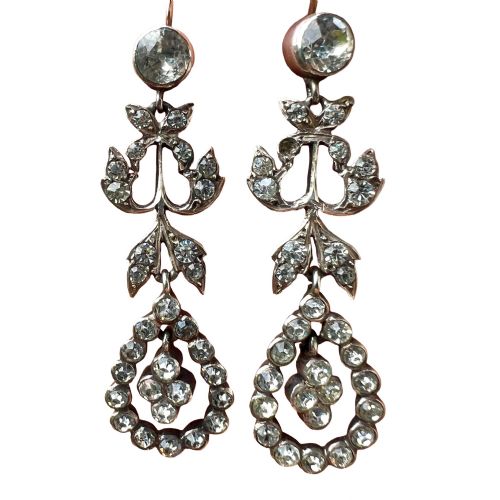
Buyers browsing silver paste dangle earrings encounter varied drop configurations, including teardrops, chandeliers, tassels, and floral clusters. Screwback mechanisms and wire hooks support these dangling formats, reflecting the changing jewellery fastenings of the nineteenth and early twentieth centuries.
The most frequent examples on this page hail from the Victorian and Edwardian periods, featuring articulated sections that sway with movement. Makers of these eras combined silver with paste glass, sometimes incorporating opal, citrine, amethyst, or rock crystal alongside coloured foils.
Materials and construction
Goldsmiths and jewellers constructed these dangling jewels using silver mounted over gold, a technique that provided a bright white metal face for the stones while retaining the warmth and durability of gold on the reverse. Paste glass stones were hand-cut and faceted individually before being secured in closed-back or open settings.
Articulated joints and wire or screwback fixings allowed the drops to hang freely and move with the wearer. Enamel accents and black dot paste details were sometimes added to mimic the deep facets of genuine diamonds and gemstones of the period.
Silver Paste Dangle Earrings Retail Price Guide 2026
Typical asking prices for silver paste dangle earrings among the pieces listed under this phrase on Sellingantiques today, from the lower quarter to the upper quarter. They describe what is for sale here now, not the wider market.
Some Victorian makers added a tiny painted black dot to the back of their paste stones, happily fooling admirers into thinking they were wearing genuine diamonds.
Assessing quality and craftsmanship
Superior examples of silver paste dangle earrings demonstrate precision in the faceting of each glass stone and meticulous uniformity in the claw or collet settings. The quality of the paste itself determines the depth of light reflection, with finer stones displaying crisp edges and brilliant internal sparkle rather than dull opacity.
Artistic complexity in the drop configuration, such as multi-tiered chandeliers or intricate floral clusters with original screwback or hook mechanisms, separates standard production from exceptional pieces. The harmonious integration of silver and gold work further distinguishes the upper tier of these historical jewels.
Knoll and Pregizer
The Silver Paste Dangle Earrings Glossary
- Paste
- Hand-cut lead glass used to imitate gemstones. It was faceted and polished by hand to achieve high brilliance.
- Screwback
- A type of earring fastening featuring a threaded post and a small turning nut. This mechanism allowed non-pierced ears to wear heavy drop earrings securely.
- Black dot paste
- A specific Georgian technique where a tiny dark spot was painted on the culet of a paste stone. This simulated the natural culet decay seen in old-cut diamonds.
- Chandelier drop
- A multi-tiered pendant earring style featuring cascading tiers of stones. It creates a wide pool of reflected light with every movement.
- Collet setting
- A metal band or collar that encircles the girdle of a stone to hold it in place. It represents a traditional method of securing stones before modern prong settings became standard.
Silver Paste Dangle Earrings: Frequently Asked Questions
How do I date silver paste dangle earrings?
Dating relies upon examining the metal combinations, stone cuts, and fastening types present in the piece. Georgian and early Victorian examples often feature closed-back settings and wire hooks, while Edwardian and Art Deco pieces frequently utilise screwbacks and lighter articulated silver mounts.
Changes in stylistic motifs, such as floral clusters versus geometric chandelier drops, provide further clues to the decade of manufacture. Comparing the setting techniques with known period jewellery standards confirms the timeline.
How should I clean antique paste jewellery?
Cleaning requires a dry, soft cloth to remove surface dust without introducing moisture to the delicate foils and settings. Submersing historical paste pieces in liquid can damage the backing materials and discolour the metal work.
Gentle maintenance preserves the integrity of the silver and gold mounts. Professional cleaning is advisable for pieces with complex articulated drops or foil-backed stones.
What is the difference between paste and glass?
Paste is a dense, high-lead glass specifically formulated for jewellery, offering greater weight and a higher refractive index than ordinary glass. Master artisans faceted paste by hand to mimic the fire and brilliance of genuine gemstones.
Standard glass lacks this specialised lead content and optical weight. Paste stones were treated as precious items in their own right during the Georgian and Victorian periods.