




Vintage Silver Name Holders
Vintage silver name holders bring charm to a dining table, marking places with miniature sculpture and gleaming metal.
Vintage Silver Name Holders
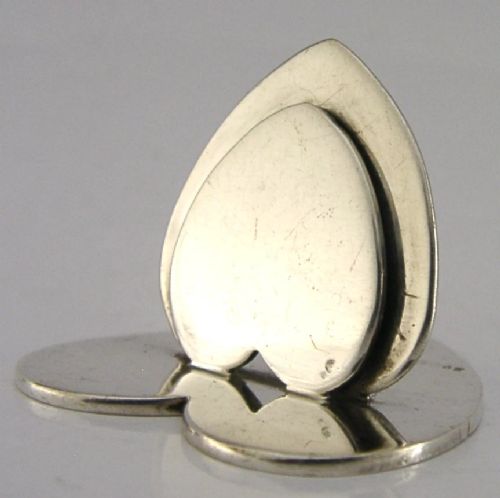
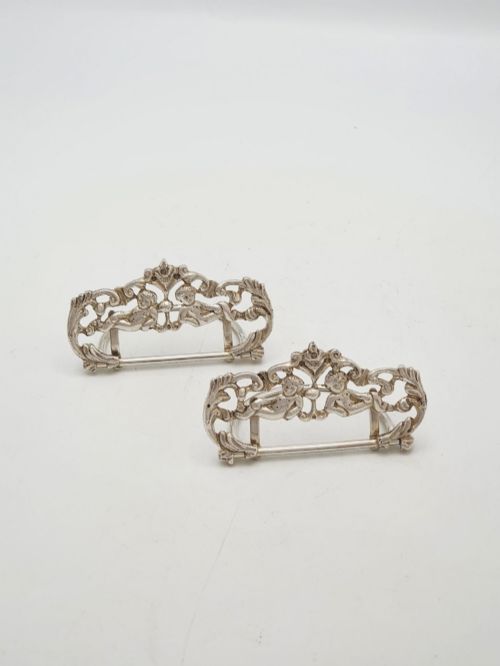
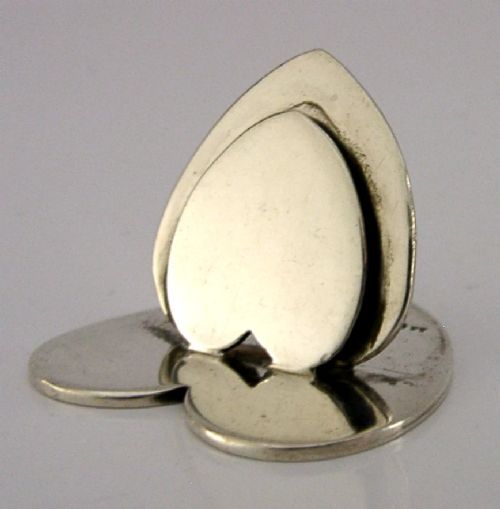
Vintage silver name holders serve as decorative table accessories designed to display menu cards or place names for guests. These small pieces range from simple clips to elaborate figural designs set across dining tables.
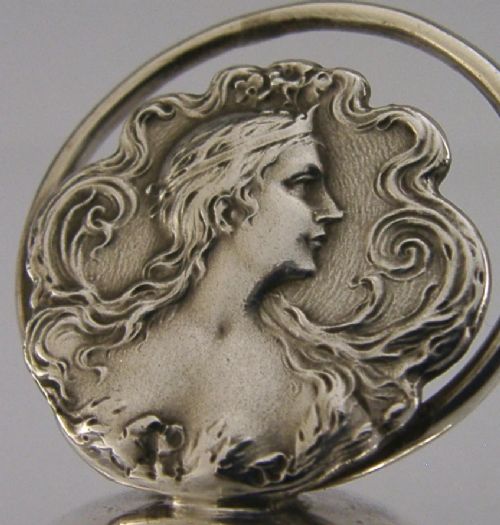
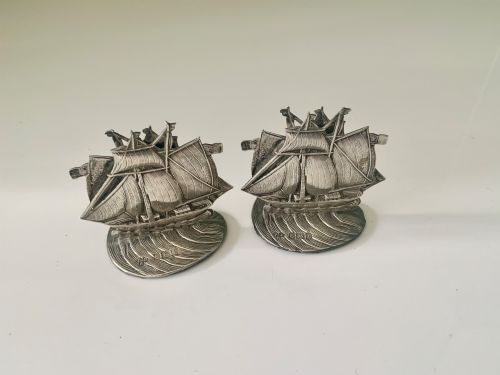
Most examples encountered on this page originate from the Edwardian and Victorian periods, alongside later twentieth-century items. Makers shaped sterling silver and silver plate into animals, figures, and geometric forms suited for formal dining.
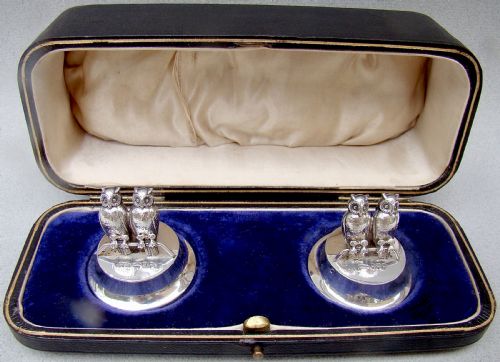
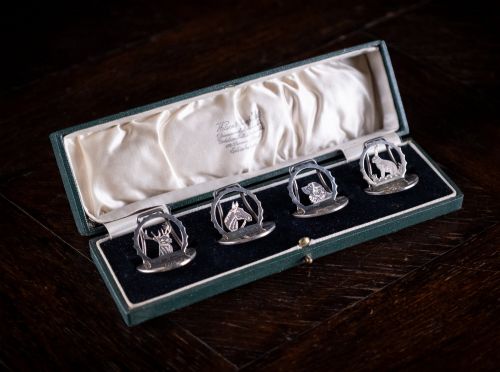
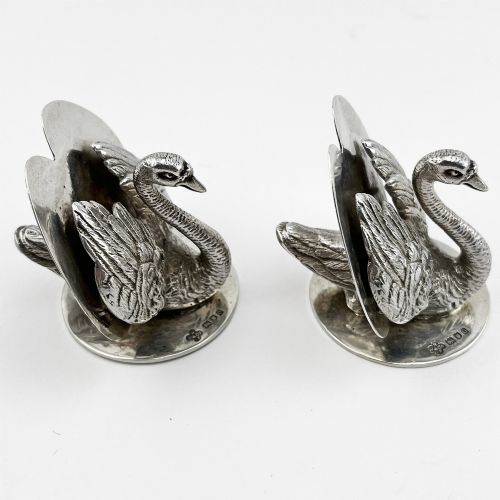
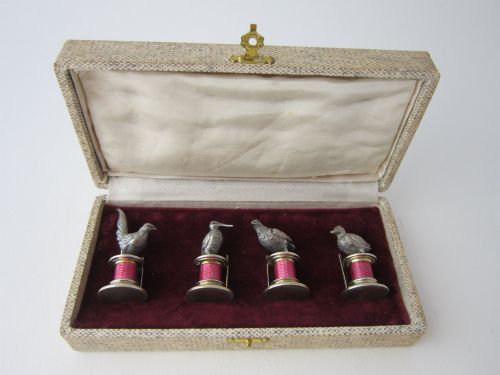
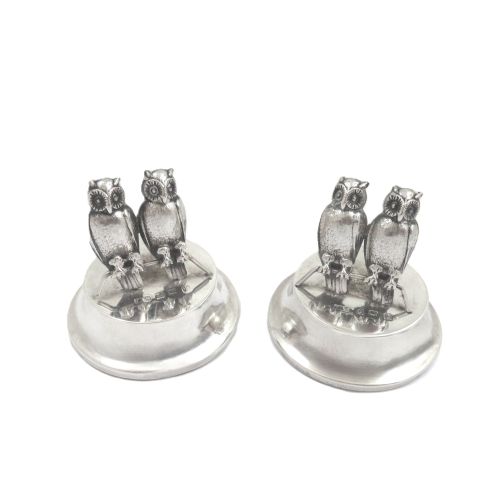
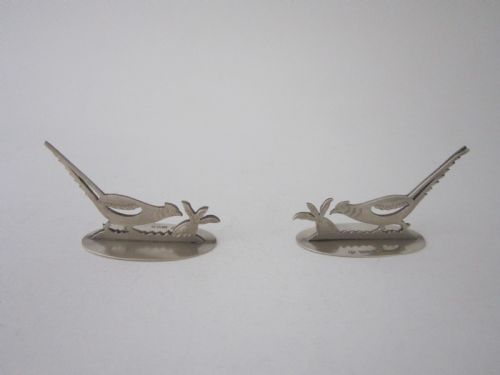
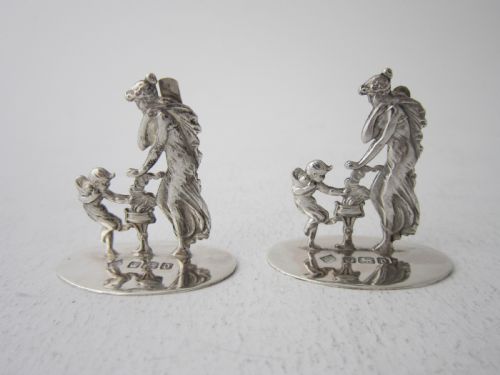
Buyers will find individual items, matched pairs, and larger sets designed for grander gatherings. Common motifs include birds, foxes, owls, swans, horses, and heraldic or military themes.
Materials and construction
Silversmiths utilised sterling silver and silver plate as the primary metals for these table accessories. Workshops often cast or pressed the metal to create detailed figural subjects such as owls, swans, and horses.
Certain pieces incorporate guilloche enamel, velvet, silk, or leather details to add colour and texture to the metallic design. Artisans soldered weighted bases or stands onto the back of the figural elements to ensure the holders remained upright on the dining cloth.
Distinguishing quality in silver name holders
Quality depends on the crispness of the casting and the level of hand-finishing applied to the silver figures. Finely detailed models show distinct feathers, fur, and facial expressions rather than soft, worn contours.
Makers and hallmarks influence the standing of a piece, with registered marks from notable firms indicating higher standards of craftsmanship. The presence of original fitted cases or complete, uniform sets elevates the desirability of the objects.
SAMPSON MORDAN·LEVI & SALAMAN·A. WILCOX·ASPREY·Liberty
The Vintage Silver Name Holders Glossary
- Sterling silver
- A standard alloy consisting of ninety-two point five percent silver by mass, with the remainder being other metals, usually copper. This durable composition provided the primary material for high-end table accessories.
- Place card holder
- A small table accessory intended to hold a card identifying a diner at a formal meal. These items often matched the style of adjacent menu holders.
- Guilloche enamel
- Decorative enamel applied over a mechanically engraved metal background. This technique created a translucent, patterned finish seen on select Edwardian pieces.
- Silver plate
- A layer of silver applied to a base metal core such as copper or brass. This method offered a brighter table presence at a lower cost than solid sterling.
Vintage Silver Name Holders: Frequently Asked Questions
What is the difference between menu holders and place name holders?
Menu holders generally feature a larger clip or support designed to hold a printed menu card for the table to share. Place name holders are smaller accessories meant to hold individual cards indicating where each guest should sit.
Despite their different original functions, makers often produced them in matching sets using identical figural motifs.
How do I date an antique silver name holder?
Dating relies heavily upon the hallmarks stamped into the silver, which indicate the assay office, date letter, and maker's mark. Comparing the stylistic elements, such as Art Nouveau curves or Edwardian proportions, also helps narrow down the period of manufacture.
Detailed inspection of the base often reveals registration numbers or maker stamps that confirm the exact year of production.
How were these holders used in period dining?
Hostesses placed them along the dining table to inform guests of their assigned seats during formal multi-course dinners. Menu holders stood near the host or at intervals so diners could view the dishes being served.
They formed part of an elaborate tablescape that included silver tableware and candelabras.
How should I clean antique silver holders?
Cleaning requires a soft microfibre cloth and a reputable silver polish formulated to remove tarnish without stripping the underlying metal. Care must be taken around enameled or velvet sections to avoid moisture damage.
Gentle wiping preserves the subtle details and hallmarks that define the character of each piece.