


Vintage Silver Games Box
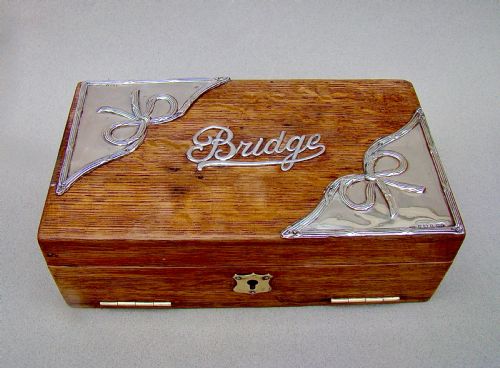
These vintage silver games box selections combine precious metal with timber, leather and glass to hold cards and counters for parlour amusements.
Vintage Silver Games Box
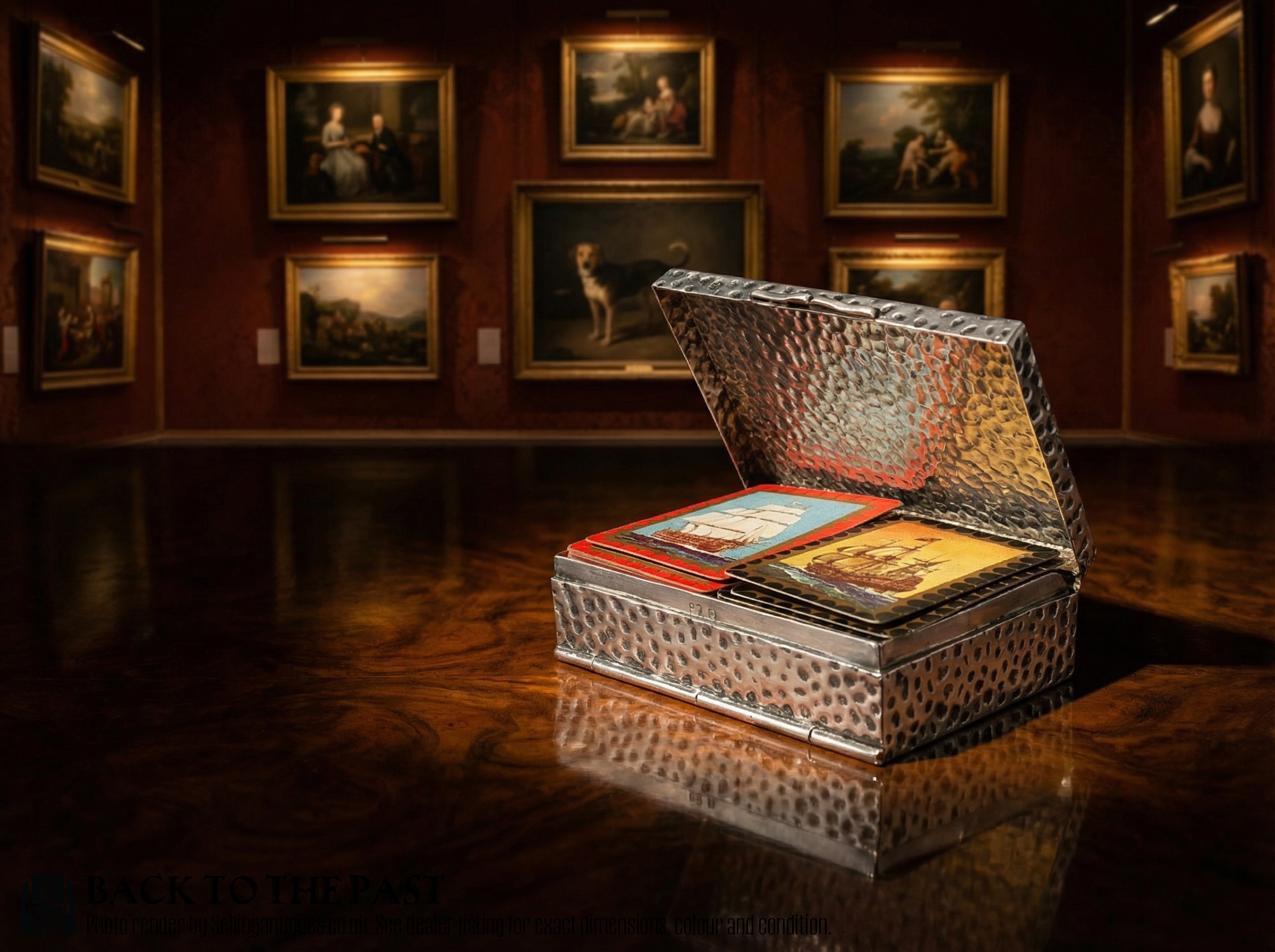
When you search for a vintage silver games box, you encounter containers built to house card decks, cribbage boards, and counter sets for Victorian and Edwardian drawing rooms. These pieces frequently merge silver mounts with oak carcasses, leather coverings, or glass compartments, extending into larger compendiums and tantalus sets.
The selections on this page span the Victorian and Edwardian eras through to the 1930s and 1940s, originating from English workshops alongside German and Italian makers. You meet smaller single-game boxes alongside substantial combination cabinets containing decanters and drinking vessels alongside gaming apparatus.
Materials and Construction
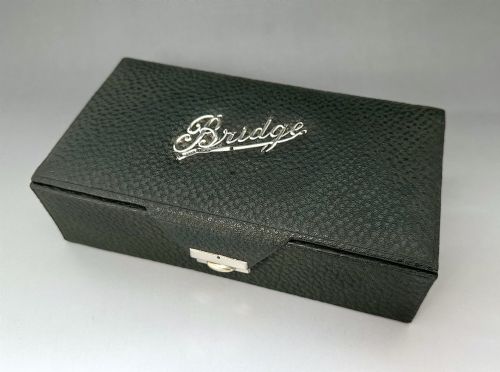
Makers built the structural carcasses of these boxes from blonde oak or other dense timbers, wrapping certain examples in fitted leather to protect the wooden core. Sterling silver or silver plate formed mounts, hinges, corner brackets, and decorative plaques that framed the lids and key escutcheons.
Interiors frequently utilised fitted wooden partitions, paper linings, and cut glass containers to separate playing cards, markers, and score boards. Silversmiths stamped hallmarks onto metal mounts to record the assay office, city, and date of manufacture.
Listings feature items from the Victorian and Edwardian eras, alongside pieces from the 1930s and 1940s.
Distinctions in Quality
The tier of a piece rests upon the weight of the silver mounts and the complexity of the internal mechanism, such as rising card trays or fitted partitions. Heavier gauge sterling silver and substantial oak timbers indicate superior workshop production compared to lighter silver-plated alternatives.
Design ambition separates standard containers from elaborate compendiums that integrate drinking decanters, multiple card boxes, and specialised scoring markers into a single cabinet. The precision of the joinery and the intact preservation of interior leather and paper linings also govern the standing of an item.
A. Wilcox·Levi & Salaman·Nelson and Drake
The Vintage Silver Games Box Glossary
- Compendium
- A multi-purpose box containing equipment for several distinct pastimes, such as cards, cribbage, and dice within a single cabinet. These units often house integrated decanters and glasses alongside the gaming apparatus.
- Tantalus
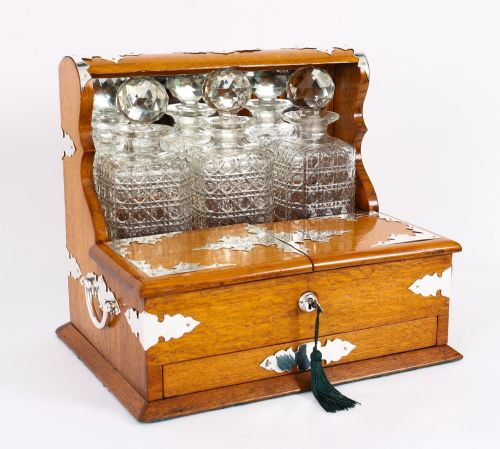
- A locking wooden frame holding decanters that prevents removal of the bottles without a key. This mechanism was frequently combined with games boxes in Victorian and Edwardian entertaining cabinets.
- Hallmark
- A series of stamped marks on silver indicating the maker, assay office, purity standard, and year of manufacture. English pieces commonly display town marks and date letters alongside the lion passant.
- Cribbage
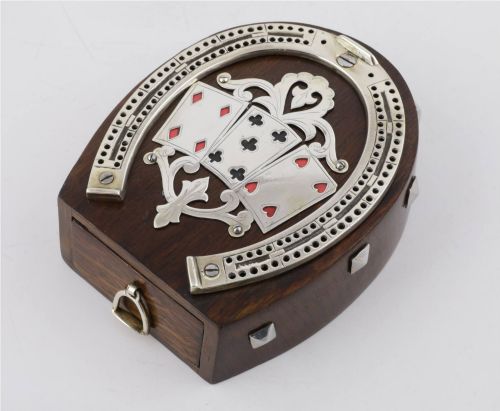
- A card game involving pegging scores on a wooden board with drilled holes. Cribbage boxes incorporate sliding lids to store the pegs and cards internally.
Vintage Silver Games Box: Frequently Asked Questions
What is a games compendium?
A games compendium is a fitted cabinet designed to hold equipment for multiple pastimes, including playing cards, cribbage boards, and counters.
These large containers combine storage for social amusements with drinking vessels and decanters in certain multi-purpose configurations.
How do I date a silver games box?
Dating relies upon reading the silver hallmarks stamped onto the metal mounts, which reveal the assay office and exact year of manufacture.
The overall style, such as Victorian ornamentation or Edwardian proportions, also assists in identifying the period.
Were all games boxes made of solid silver?
Most containers used timber carcasses like oak or leather coverings, featuring sterling silver or silver plate only for mounts, hinges, and decorative plaques.
Pure solid silver boxes exist alongside silver-mounted wood and leather variations.
How were these boxes used?
Victorian and Edwardian hosts placed them in drawing rooms to entertain guests with bridge, patience, and cribbage during evening gatherings.
The integrated compartments kept playing cards, counters, and markers organised between rounds of play.