

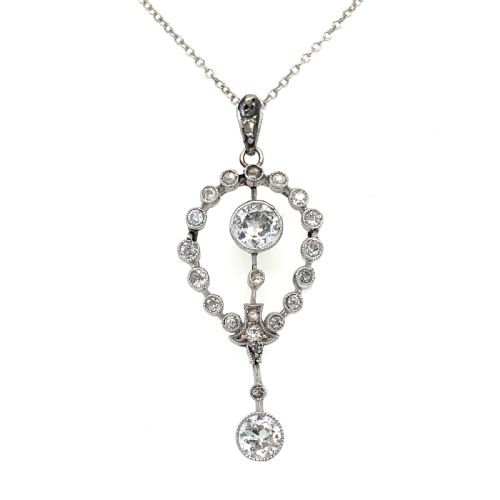
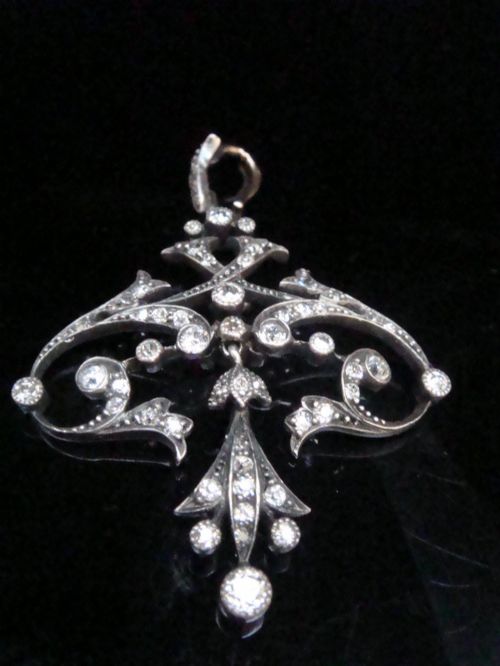
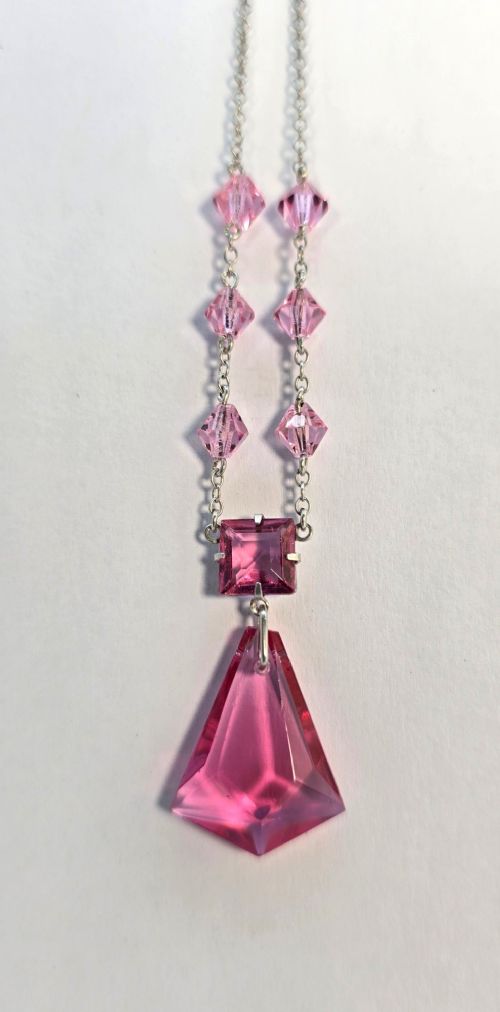
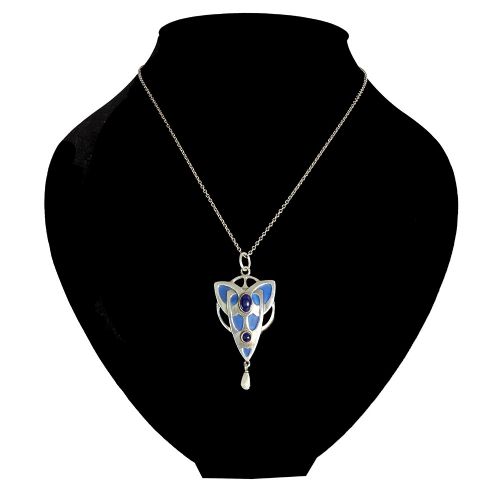
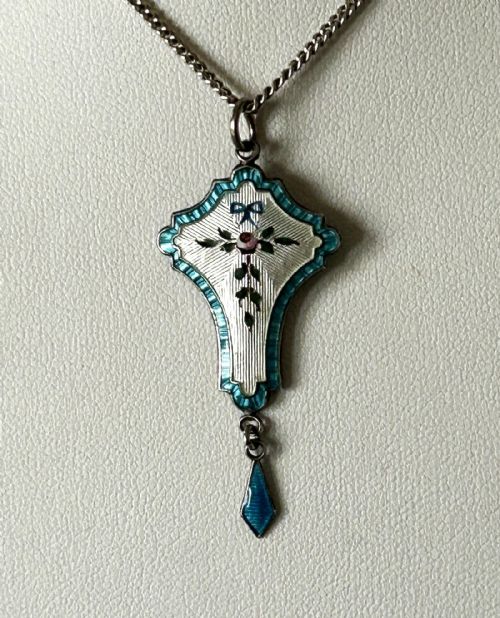
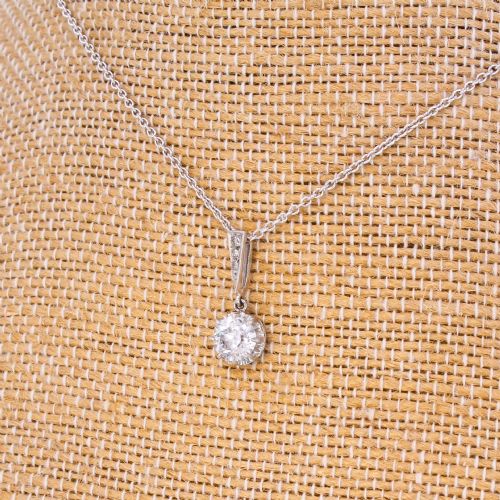
Vintage Silver Drop Pendant
A vintage silver drop pendant delivers understated movement at the collarbone, pairing precious metal with swinging gems or enamel.
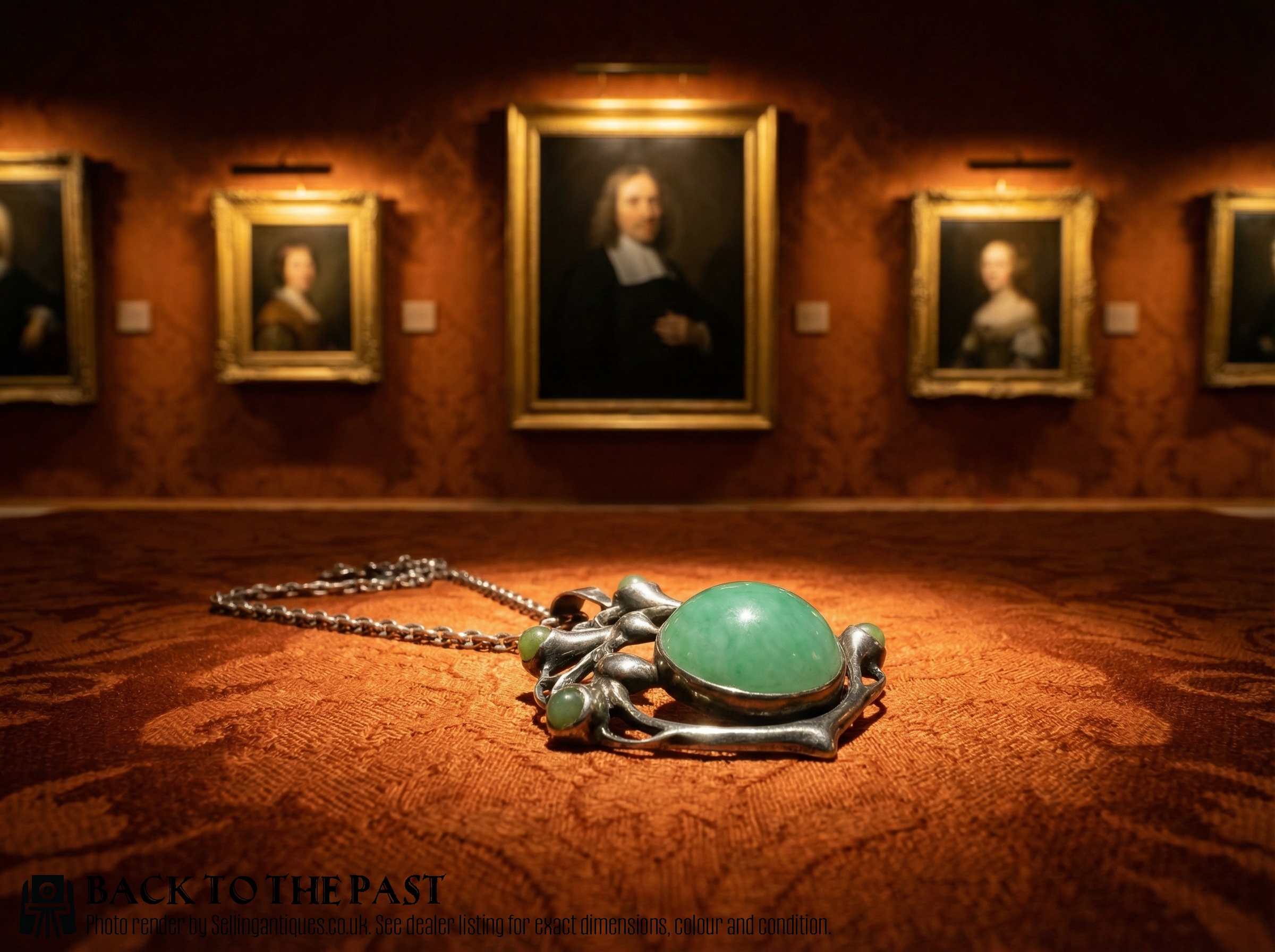
Vintage Silver Drop Pendant
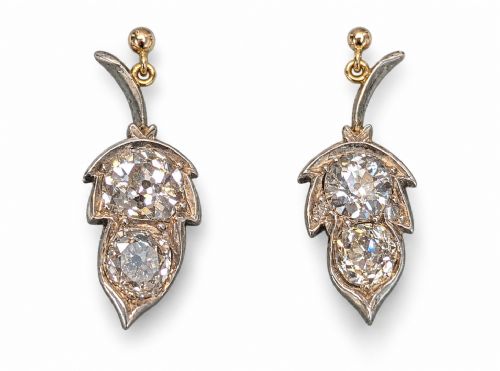
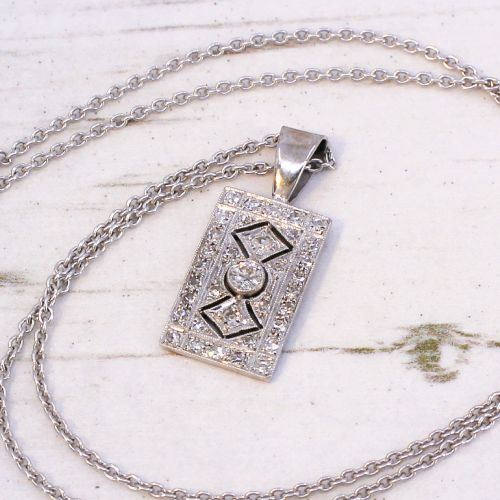
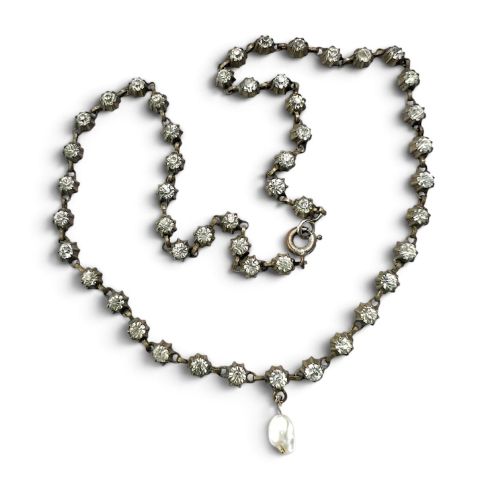
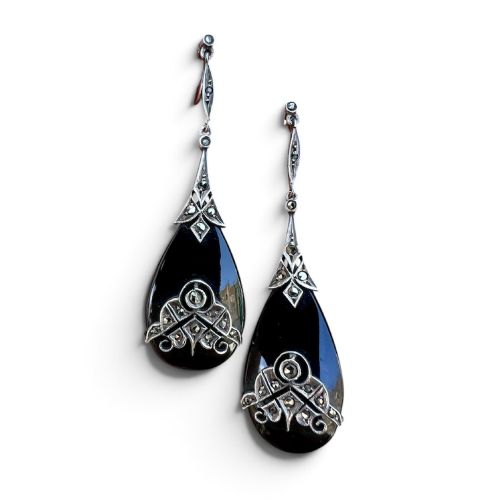
A vintage silver drop pendant sits suspended from a chain or collar, carrying stones, paste or enamel beneath a primary loop. When you search for a vintage silver drop pendant, you encounter pieces spanning from the nineteenth century through the Edwardian, Art Nouveau and Art Deco eras up to the mid-twentieth century.
The materials paired with silver on this page include diamond, enamel, pearl, crystal, chalcedony, amethyst, turquoise and onyx. Forms range from strict geometric Art Deco layouts to organic floral motifs characteristic of the Arts and Crafts and Art Nouveau movements.
Earrings, lavalieres and chandeliers also appear in the broader selection, but the core pendants rely on silver frames holding a single swinging gemstone or a fringe of stones. These items bridge daily wear and ornamental evening dress through varied historical design languages.
Materials and construction methods
Metals form the skeletal structure of these pendants, predominantly sterling silver alongside platinum and occasional gold accents or gilding. Stones are integrated through bezel settings, claw settings or pierced metalwork that secures diamonds, paste, chalcedony and amethyst.
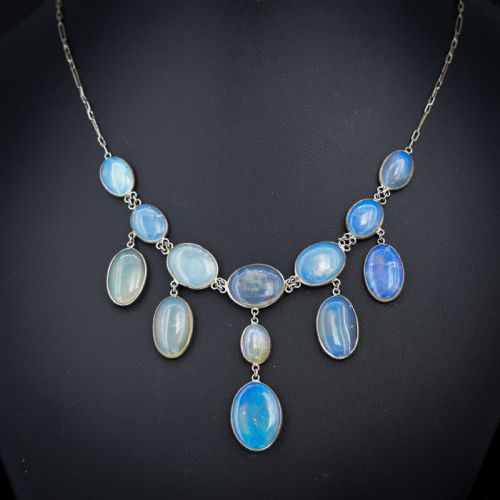
Enamel work appears in translucent or opaque applications, sometimes utilising plique-à-jour techniques to catch light through coloured glass panes without a backing. Stones like turquoise, moonstone, opal and onyx are cut into teardrop or cabochon shapes to weight the lower section of the pendant.
Chains and connectors involve soldered links, split rings and articulated hinges that allow the drop element to swing freely. Hand-cutting is evident in the shaping of crystals and older diamond cuts such as old mine and old European cuts.
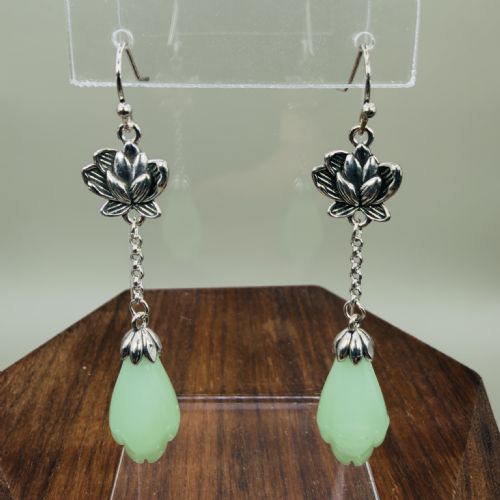
Nomadic Turkmen tribal drop earrings appear alongside delicate English Edwardian filigree, proving that swinging silver transcends borders.
Distinguishing quality in silver pendants
Quality rests in the precision of the metalwork and the integration of the stones. Pierced silver requires clean lines and sharp internal angles rather than soft, cast-blurred edges, particularly in Edwardian filigree and Art Deco geometric frames.
The selection of stones and enamel elevates a piece. Natural gemstones, clear paste without internal clouding, and undamaged enamel work with vibrant colour distribution separate standard production from superior examples.
Artistic attribution and structural integrity also divide the range. Pendants bearing maker signatures or specific design numbers from recognised workshops demonstrate higher design ambition and hand-finishing standard.
Mary Thew·Archibald Knox·Liberty and Co·Murrle Bennett·Marius Hammer
The Vintage Silver Drop Pendant Glossary
- Lavalier
- A pendant featuring a primary drop suspended from a shorter secondary chain or fixed loop. This style gained immense popularity during the Edwardian period.
- Cabochon
- A gemstone shaped and polished with a smooth, rounded surface rather than faceted edges. This cut is common for opaque stones like turquoise, moonstone and chalcedony.
- Plique-à-jour
- An enamelling technique where enamel is applied within a cellular metal framework without a backing, resembling miniature stained glass. It allows light to pass directly through the coloured medium.
- Paste
- Hand-cut and polished lead glass used to imitate gemstones in historical jewellery. High-quality paste displays sharp facets and deep refractive light.
- Old Cut Diamond
- A diamond cut by hand before modern symmetrical standards were established in the twentieth century. These stones typically feature high crowns and smaller tables that catch candlelight effectively.
Vintage Silver Drop Pendant: Frequently Asked Questions
What is a lavalier pendant?
A lavalier is a specific pendant style featuring one or more suspended drops hanging below the main neckline assembly. These pieces typically offer more vertical movement than standard fixed pendants.
They emerged prominently during the early twentieth century and frequently incorporate Edwardian or Art Nouveau design motifs.
How do I clean antique silver jewellery?
Antique silver benefits from gentle cleaning with a soft microfibre cloth to remove surface dust and natural oils. Avoid harsh chemical dips, as they can damage vulnerable stones, pearls and enamel work.
Store pendants separately in lined boxes to prevent scratching against other items in your collection.
How can I tell Art Deco from Art Nouveau?
Art Nouveau jewellery relies on asymmetric, flowing natural lines inspired by plants, insects and organic forms. Enamel and cabochon stones dominate this aesthetic.
Art Deco shifts toward strict symmetry, geometric shapes, and sharp lines. This later period frequently pairs silver with diamonds, onyx and calibrated coloured crystals.
Are these pendants suitable for daily wear?
Many silver pendants tolerate regular wear provided you remove them before swimming, exercising or applying cosmetics. Delicate pieces featuring paste, pearls or plique-à-jour enamel require extra caution.
Checking the security of the jump rings and chain links periodically ensures safe everyday use.