
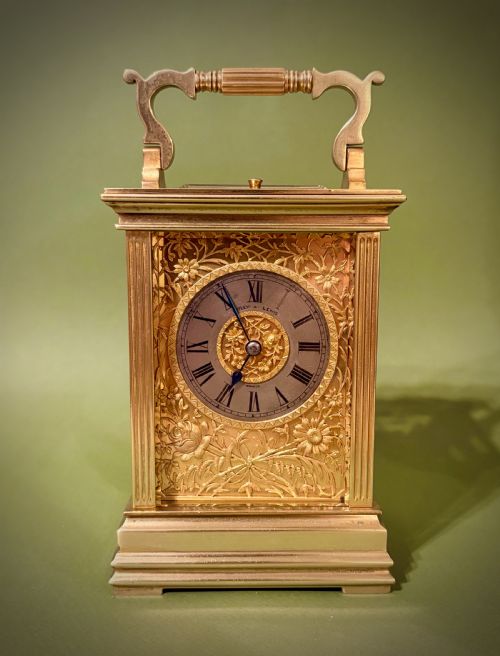
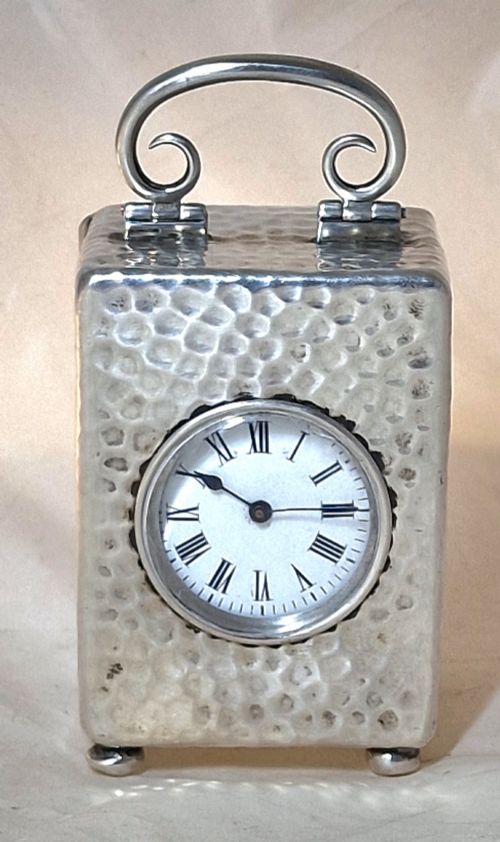
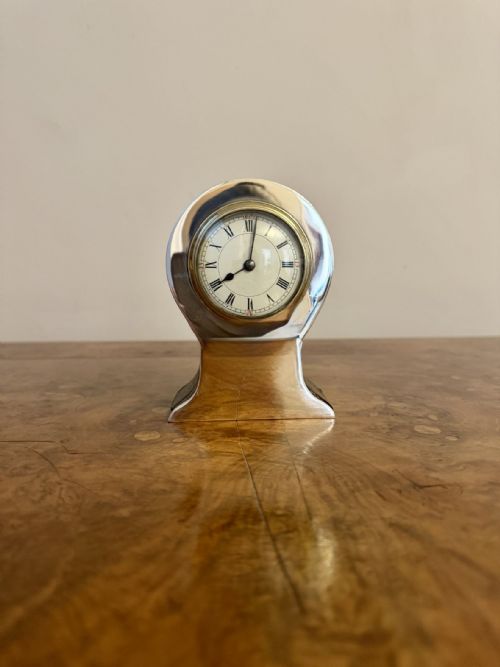
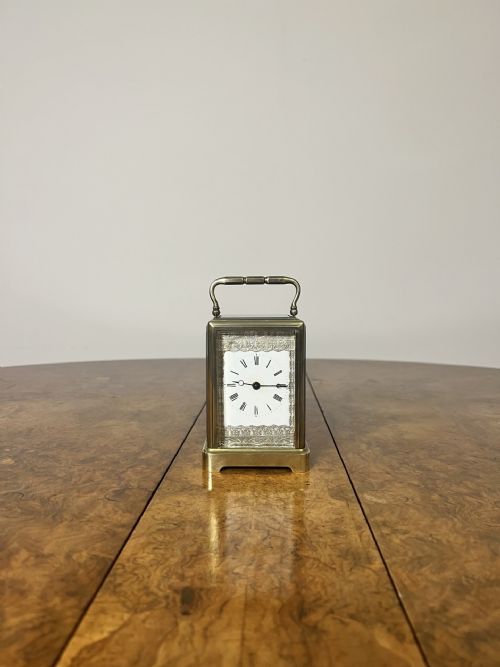


Vintage Silver Carriage Clock
A vintage silver carriage clock is a portable mechanical timepiece enclosed in glass and silver, prized for its intricate movement and travel-friendly design.
Vintage Silver Carriage Clock
When you search for a vintage silver carriage clock, you encounter portable timepieces designed for travel and domestic use. These objects combine utilitarian timekeeping with decorative metalwork and glazed panels.
The versions most common on this page span the Victorian and Edwardian periods, stretching into the early twentieth century. They appear in forms ranging from standard carriage clocks to miniature boudoir timepieces and larger mantle clocks.
Origins vary between British workshops, particularly London and Birmingham hallmarks, and French makers associated with nineteenth-century innovations. Many pieces integrate silver casings with brass frameworks or internal mechanisms.
What varies in quality
The distinction between standard examples and top-tier pieces rests on the complexity of the movement and the reputation of the maker. Repeating mechanisms, calendar work, and fusee trains elevate the standing of a clock.
Material execution dictates the grade of the object, from simple sterling silver cases to heavy silver gilt housings with detailed hand-chased ornamentation or complex enamel work.
Some miniature travel clocks include a chaff-cutter mechanism inside, adding an unexpected mechanical twist to the tiny desk accessory.
William Comyns·J Batson And Son·Thomas Cole And James Cole·Hunt And Roskell·Paul Garnier·Delépine·Le Roy Et Fils·Henry Matthews·Liberty And Company
The Vintage Silver Carriage Clock Glossary
- Carriage clock
- A portable spring-driven clock originally designed for use during travel. These timepieces feature glass sides and a top-mounted carrying handle.
- Fusee
- A conical pulley used in mechanical clocks to maintain even force on the gear train as the mainspring unwinds. This mechanism improves timekeeping accuracy.
- Guilloche enamel
- A decorative technique where an intricate geometric pattern is engraved beneath a translucent layer of enamel. It appears on miniature timepieces and dials.
- Repeating mechanism
- A complication that strikes the hours and quarters upon demand when a lever or pendant is activated. These movements represent advanced watchmaking skill.
- Hallmark
- An official stamp applied to precious metals indicating purity, origin city, and assay date. British silver pieces carry these marks to verify metal standards.
Vintage Silver Carriage Clock: Frequently Asked Questions
How do I wind a vintage carriage clock?
Winding requires inserting a key into the arbour located on the backplate or dial face. Turn the key gently until resistance indicates the mainspring is fully tensioned.
Avoid overwinding the mechanism, as excessive force can damage the internal spring components. Regular gentle winding preserves the longevity of the movement.
What is the difference between a timepiece and a carriage clock?
A carriage clock typically includes a striking mechanism to sound the hours or quarters. A timepiece functions solely to tell the time without any striking or chiming complications.
Both share the portable glass-cased format designed for travel. Collectors differentiate them purely by the internal complications present in the gear train.
How should I clean silver clock cases?
Silver components require a soft cloth and a specialised silver polish applied sparingly. Keep cleaning compounds away from the glass panels and the internal mechanical movement.
Enamelled or gilt surfaces need delicate dusting rather than liquid polish to protect the finish. Professional servicing is recommended for deep cleaning of the metalwork near delicate joints.
Were these clocks actually carried in carriages?
Original nineteenth-century carriage clocks accompanied travellers in horse-drawn carriages and trains. The sturdy brass frames and heavy glass panels absorbed the vibrations of transit.
Later Edwardian and miniature boudoir versions transitioned into static indoor decorative objects. Their portable handles remained as a traditional design feature rather than a practical necessity.