


Small Silver Table Clock
These small silver table clock examples are compact timekeepers with precious metal mounts, brass movements and glass panels that suit a desk or mantelpiece.
Small Silver Table Clock
A small silver table clock brings together portable timekeeping and precious metal work, most commonly seen in the carriage clock and miniature bracket formats across this selection. These pieces span periods from the eighteenth century through the Victorian and Edwardian eras into Art Deco designs.
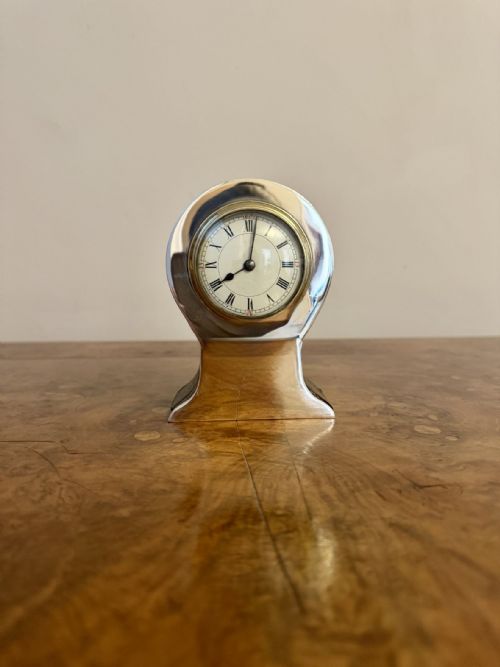
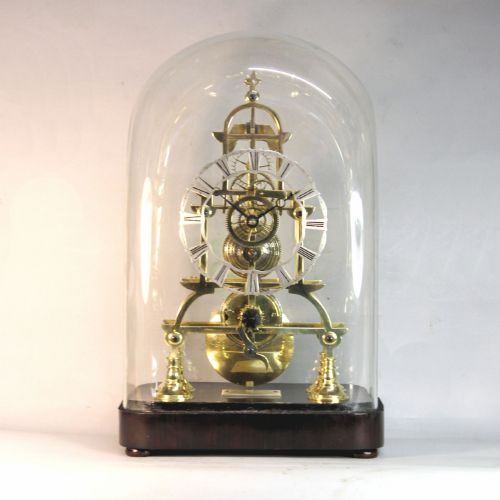
Carriage clocks dominate the offerings, often presented in miniature sizes with glass panels that expose the escapement within. Bracket clocks and timepieces also appear, housed in mahogany or mounted with sterling silver frames and enamel dials.
How they were made
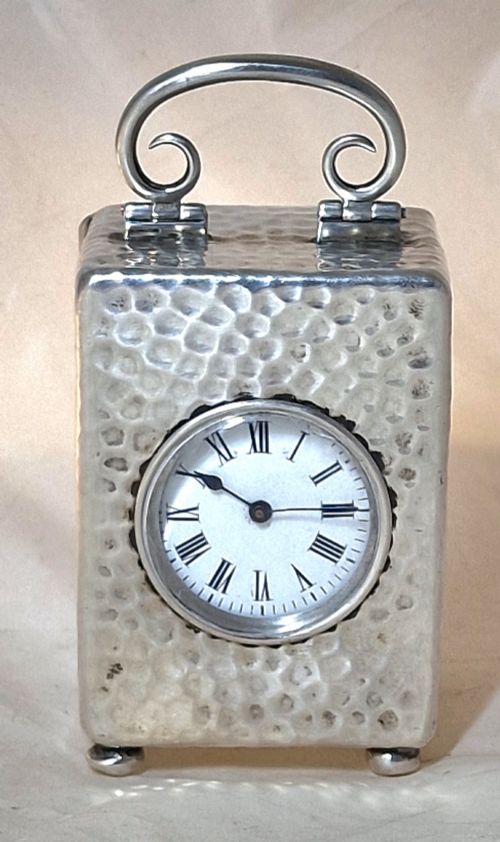
Maker workshops combined sterling silver cases, hammered finishes and brass movements, enclosing the mechanisms behind bevelled glass panels. Cases frequently employ timber carcases such as mahogany, alongside tortoiseshell or chrome elements depending on the period of manufacture.
Dials are typically silvered or enamelled with distinct numerals, driven by spring-driven mechanisms that include fusee or eight-day movements. Enamelling and fine metal smithing give these small timepieces their enduring structural integrity.
Listings feature pieces spanning the eighteenth, nineteenth, and twentieth centuries, incorporating materials like mahogany, tortoiseshell, enamel, and sterling silver.
What varies in quality
The distinction between standard production and superior work rests on the crispness of the hallmarking, the weight of the silver casing, and the finish of the internal movement. Hand-hammered surfaces and signed enamel dials separate individual artisan pieces from factory-produced items.
Proportion and material combination also dictate standing, where genuine mahogany and high-grade glass panels meet precise clockmaking traditions. Signed movements by known makers carry a different tier of craftsmanship compared to unmarked pieces.
Richard Winter of Chieveley·William Comyns·J Batson and Son·Perigal of London·A L Davenport
The Small Silver Table Clock Glossary
- Carriage clock
- A small, portable spring-driven timepiece originally designed for travellers. They typically feature glass sides to view the movement and a handle on top.
- Bracket clock
- A portable table clock historically designed to sit on a wall bracket or desk. These frequently feature wooden cases with metal dials and striking mechanisms.
- Fusee
- A conical pulley used in older clock movements to maintain an even pull as the mainspring unwinds. This mechanical addition improves timekeeping accuracy.
- Silvered dial
- A metal dial treated with a silver compound to produce a matte finish, usually featuring engraved or blackened numerals.
Small Silver Table Clock: Frequently Asked Questions
What is a carriage clock?
A carriage clock is a portable spring-driven timepiece built with glass panels so the inner mechanism is visible from multiple angles. They often feature a sturdy swing handle on top.
Originally made for travel, these clocks combine brass frameworks with silver or gilt outer cases. Their compact size makes them well suited for modern mantelpieces and desks.
How do I wind an antique clock?
Antique timepieces require a matching key to wind the spring barrels through the dial or back plate. Care must be taken not to overwind the mechanism.
Spring-driven clocks typically run for eight days or thirty hours depending on the movement. Regular professional servicing keeps the delicate gear trains operating smoothly.
What is a fusee movement?
A fusee is a conical pulley connected to the mainspring by a fine chain or cord. It compensates for the decreasing power of the spring as it unwinds.
This clever mechanical device ensures consistent force is delivered to the escapement throughout the running cycle. It is a hallmark of better quality British clockmaking.
Are these clocks suitable for daily use?
These timepieces function well as daily clocks provided they receive proper mechanical attention and gentle handling. Many retain their eight-day movements and keep reliable time.
Placing them away from direct sunlight and drafts protects both the delicate enamel dials and the exterior silver or wood housings.